Friday, January 04, 2013

Best-of for 2012

Only a slight departure from our regularly scheduled programming, I thought it would be nice to put up a formal listing of the best music I heard recorded from 2012.  I don't even want to call this a "best" list.
Rather, this is simply my favorite albums from the past year.

 Dr. John
"Locked Down"

Dr. John has had a long and illustrious career of pumping out bajou-flavored boogie jazz and the Dan Auerbach-produced "Locked Down" shows the world that the Doc is still a force to be reckoned with.
 Grizzly Bear
"Shields" 

Grizzly Bear got the public's attention a few years ago with the single  "Two Weeks" from their album "Veckitamest" but the album couldn't stand up under its own weight.
"Shields" doesn't yield any low-hanging fruit, but it does bind together with cleverly woven tapestries of sound with just enough hook to keep you listening.
 Yo-Yo Ma, Edgar Meyer, Chris Thile & Stuart Duncan
"The Goat Rodeo Sessions"

Yo-Yo Ma is arguably the only classical superstar left, a relic of a bygone era.  However, he's busied himself for the last couple of decades exploring musical cultures from around the globe. "Goat Rodeo" is his latest journey and he's joined by cross-over titans Edgar Meyer and Chris Thile who have forged their own existence in music-making.  The results are the best since "Short Trip Home."
 David Byrne & St. Vincent
"Love this Giant"

Once you hear these two experimental musicians together you realize how well St. Vincent's tableau weaves into New Wave.
These two great musicians twirl around each other in singing and songwriting, finding the most inventive uses for spare brass-playing musicians that I've ever heard.  Nothing quite compares to having your groove laid down by a tuba.
 Punch Brothers
"Who's Feeling Young Now?" 

Reviewed only a few days ago here, this is Chris Thile's second break into my "favorite albums" for the year.
The Brothers continue their musical evolution, crafting and re-creating tunes that are as at home with prog rockers as they would be with acoustic bluegrass troubadours.  If this is the direction "popular" music is headed, I'm all ears.
Jack White
"Blunderbuss" 

White, having set out on a mission years ago to convince the world of his musical superiority in every capacity finally gets around to recording a solo album full of songs that self-admittedly "didn't fit anywhere else."
I'll admit this one took me a while to warm up to, but now that I have I have to agree that his songwriting is one of the unique voices of this generation.

Thursday, January 03, 2013

Chick Corea & Bobby McFerrin
"The Mozart Sessions" (CD)

Bobby McFerrin has spent a good part of his career going against the grain of classical music tradition and customs.  It may seem contrary that he deliberately put himself on this collision course, but to listen to McFerrin speak about music is to have an eye-opening encounter with someone who bathes regularly in the pure essence of music.

This project, put together with jazz icon Chick Corea, was an attempt in the mid-90's to restore a kernel of playfulness and improvisation to the classical concert stage.  Corea performs Mozart's piano concertos nos. 20 and 23 very well, with a beautiful sound and more-than-capable technique, but it is tucked just behind the obvious that we see the point of this endeavor: Corea's cadenzas wander through 200 years of musical tradition, sounding often times "wrong" and McFerrin lends the occasional vocal interlude.  It is an interesting philosophical journey and well worth your time, but its only apparent if you're already well-versed in the traditions of classical music.

Posting on the blog may become more sporadic for a while.  I won't stop listening, but I'll just have to store up recordings before I'm able to post them in lumps.
Bob & Gene
"If the World Were Mine..."(Vinyl)

The stories behind some of these records is getting really amazing.

During the 1960's, in an effort to combat the economic and societal ruins in Buffalo, NY, William Nunn built a home-brew recording studio in his basement and encouraged the youth in his neighborhood to express themselves through music, rather than risk falling in with gangs.

One such youthful duo that did record was Bob and Gene, two teenagers who wrote original tunes and recorded them with area funk/soul musicians.

The album was recorded in 1967 and went unreleased until 2006 when the Brooklyn-based Daptone label released it.
The production and quality are questionable, but once you know the story behind the music, it's hard to resist its infectious, youthful charm.

Wednesday, January 02, 2013

OK GO
"OK GO" (CD)

I heard about this band way before you did.  That's doesn't make me a hipster. It only reinforces my status as a bonafide music dork.
I knew of this band years ago because the drummer is the brother of Stanley Konopka, violist in the Cleveland Orchestra. And Stan talks about his brother's band.

One thing led to another, and I found myself purchasing this, their debut album released in 2002.  The OK GO have never had a monster hit, but they have won a grammy for their clever music video which involved a billion treadmills all operating simultaneously.

This album isn't deep, but it is smart. Pop music, by definition is easily digestible and fun to play.  In that sense, this album is all of those things.  Beyond that, however, this album isn't memorable or ingenious.
Perlman, Zukerman
"Bartok: 44 Duos for two violins" (Vinyl)

There isn't an extensive amount written for two violins.  I suppose that's for good reason.  During the mid-20th century, however, there seemed a desire for composers to press into any unexplored orchestrations or instruments in hopes of finding a unique vein to plumb.  (Violists everywhere should be grateful for this attitude.)

Amongst the oddities born from this expedition are Bartok's 44 duos for two violins.   Published in order from least to most difficult, they are each only a few lines of music and can be performed in entirety in approximately 45 minutes.  They were published in a particular order, but Bartok left written instructions for any performers to arrange them according to achieve variety in the performance.

On this recording Itzhak and Pinchas chose to record them in sequential order, from nos. 1 - 44.  One can not really expect a finer recording of these pieces to exist.  It's fun hearing two of the century's great virtuosos playing with each other.
Happy New Year! Happy to be back at it...

Herbie Hancock
"Traces" (Vinyl)

I had no idea what kind of can o' worms I was opening when I googled "Herbie Hancock, Traces" As it turns out, the music on this album has been released and attributed to at least two other jazz artists on the recording.

This version, originally released in 1970 saw all three tracks released on an album called Kawaida by drummer Albert Tootie Heath. Since then, it's been in and out of print one labels from around the world.  By some accounts, this is a very hard-to-find Hancock record. Perhaps I should be excited to have found it for a mere $3.
The album was released on a rather flimsy looking/feeling Up-Front label.

The jazz on here is free-form explorations rooted in afro-centric rhythm and modes.  That might be the most expansive analysis for a jazz record for me yet.

Sunday, December 30, 2012

Benny Goodman, Munch, Budapest Quartet
"Mozart: Clarinet Concerto & Clarinet Quintet" (CD)

Benny Goodman will never be primarily associated with classical music.  His contributions to big band-era jazz is inestimable.  Somewhere on this blog his seminal 1938 Carnegie Hall concert has been/will be reviewed.
And yet, Aaron Copland wrote his (now famous) clarinet concerto for Goodman.  Additionally, we have this recording, made with three of the biggest names in classical music during the first half of the 20th century: Charles Munch, the Boston Symphony and the Budapest String Quartet.

I won't say that Goodman's playing is the cleanest or most musical I've ever heard, but this is a worthwhile signpost in the evolution of 20th century performance.  Also, it's good to note that a crossover artist is nothing new.
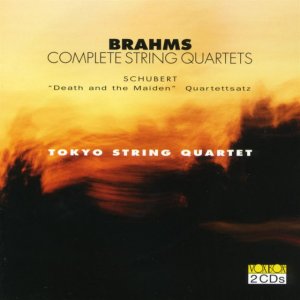
The Tokyo String Quartet
"Schubert: 'Quartettsatz'" (CD)

This 2-CD Vox Box set found its way into the CD player a couple weeks ago for their recording of Brahms' C minor string quartet.  Both the Brahms and Schubert's single-movement 'Quartettsatz' are going to be featured on a recital I have to play in a few months, so technically this is all a bunch of homework.

The Tokyo String Quartet is saying farewell during the 2012 - 2013 season as its original members have been at it for over 30 years now. This recording demonstrates why their presence will be sadly missed.

I think Schubert is a wonderful composer - except that he found it necessary to lengthen every composition to an unbearable length. Why must every two-page section be repeated?! I had the fortune of working with a very talented piano trio this summer that had just spent several weeks immersed in Schubert's piano trios.  They had a far more in-depth approach in their understanding, but a part of me still takes a small pleasure in this 7-minute stand-alone composition.  All killer, no filler.
I may start over-using that phrase.

Saturday, December 29, 2012

The Who
"Meaty Beaty Big and Bouncy" (Vinyl)

The original "greatest hits" collection, this album of previously released singles was issued in 1971.  The material and track order was organized by Pete Townsend.

This is really the perfect way for me to digest the Who.  I love what the Who represent.  I love their persona.  Sadly, I just don't think a lot of their music is that inspired.  Like a previous generation's Lenny Kravitz or Foo Fighters, when the Who were "on," there were few better.  Unfortunately there was just too much time spent "off."

This is precisely the sort of album that's perfect for enjoying the Who.  All killer, no filler.  There would be countless compilation albums of the Who's music in the decades to come, but the first attempt was a solid one.
Slatkin, St. Louis Symphony
"Rachmaninoff: Symphony no. 3" (CD)

While doing some homework listening, it occurred to me that Rachmaninoff's piano concertos are fare more famous as symphonic works than his symphonies are.  I think I've played his second symphony before, but after listening to his 3rd today, I don't think I've ever heard this work before.

I don't hold Rachmaninoff's orchestration in high regard; far too often the orchestra fights itself with unrealistic or uncomfortable writing.  Still, often these struggles are worth having for the incomparable melodies that Rachmaninoff was capable of.

Leonard Slatkin and the St. Louis Symphony are both known names in the game, so it puzzles me as to why this recording set was released on Vox, traditionally a home for back-catalog items that get bundled together for budget release.
Punch Brothers
"Who's Feeling Young Now?" (CD)

If you ever find yourself trapped in a car for a long drive (say, 1,000 miles or so) whatever singular CD you happen to have in the stereo will have to become your favorite music.  At least for the next 1,000 miles.

Such as it is with the Punch Brothers' latest album, released in February of 2012.   Sadly, I just got my grubby paws on it for Christmas.  Better late than never.
I watched the Punch Brothers' performance on "Austin City Limits" this year and knew that several of the tunes they were performing were from this album - most noticeably, the lead-off track, "Movement and Location" which has the sort of hypnotic patterns more commonly associated with experimental rock than with bluegrass.

That leads me to my main conclusion: the Punch Brothers are quickly becoming another incarnation of the musical spirit that gave us Radiohead.  The comparison is cheap right now, since PB actually cover Radiohead's "Kid A" on this album, but at its core, the Punch Brothers are defying and bending musical expectations in any direction they can find - there are a couple of tunes that sound traditional ("Patchwork Girlfriend") but you add in "Kid A" and "Who's Feeling Young Now?" and you realize that the Punch Brothers are far more interested in being taken seriously in any musical community; the only difference is that anything you hear on the record can be re-produced by the five musicians on stage acoustically.

This belongs in my best-of list for 2012.

Monday, December 24, 2012

Vince Guaraldi Trio
"A Charlie Brown Christmas" (CD)

Another one of the Christmas Classics Stack is the seminal recording made by Guaraldi and co. for the CBS television special in 1965.
Ever since then, the program has been a favorite for audiences every holiday season.

As a bonus, the soundtrack has gained its own notoriety and stands alone as a Christmas tradition.  Whether it's the Peanuts' signature "Linus & Lucy," "Skating" or "Christmas Time is Here," these tunes are as well known a part of the holiday tradition as is that round-headed kid.
Manheim Steamroller
"A Fresh Aire Christmas" (CD + Vinyl)

Merry Christmas Eve!

And hailing from my childhood, this Christmas classic which turns out to belong to everyone's childhood.  It's odd, having a familial connection to the Steamroller crew, learning that everyone in this country is familiar with the Christmas music that Manheim Steamroller produced.

Self-identifying as "electronic baroque" musicians, the MS crew lends their Korg-laced palette to famous Christmas tunes, making them simultaneously familiar and unique.

Barshai, WDR Symphony Orchestra
"Shostakovich: Symphony no. 9" (CD)

At the time, this was the only reasonably affordable box set of Shostakovich's complete symphonies. In the years since I bought this other sets have come onto the market including Bernard Haitnik and the Concertgebouw.  I still know almost nothing about this orchestra.  The conductor is actually known to me as the violist of the Borodin String Quartet which had the distinction of giving the premiere of several of Shostakovich's string quartets.

The performance captured on this album isn't the tightest, most polished performance, but I suppose we should take solace in the fact that a Russian conductor with a first-hand relationship with the composer would have some insights into the music's performance.

Friday, December 21, 2012

Percy Sledge
"The Best of..." (Vinyl)

The name Percy Sledge hasn't faded from household use, but it's well on its way.  A couple of names (Al Green, Marvin Gaye) will enjoy greater notoriety, but Mr. Sledge is quietly joining the column of names who's music is known, even if we can't attach a face to it.

With songs like "When a Man Loves a Woman" and "Take Time to Know Her," Sledge certainly hasn't enjoyed the same chart-topping success as Al Green or Marvin Gaye, but his contribution to soul/R&B is worthy of entry into our Book 'o Music.

This is an Atlantic pressing that was originally released in 1969 although it is still currently available on CD.

P.S. Happy Mayan Apocalypse Day.
The Ramsey Lewis Trio
"The In Crowd" (Vinyl)

Released in 1965, this album was recorded in front of a live audience over three nights' performances at the Bohemian Caverns in Washington, DC.

Ramsey Lewis is another one of those jazz pianist/composers that even the average music-listener owes a debt of gratitude.  Unbeknownst to most of us, we actually know Lewis' tunes.  Such is the story with the lead-off track (which is also the album's namesake.)
I know this tune, and I didn't know I knew it!

This album is a lot of fun to listen to.  Even if it is at low volume while you're waiting for your out-of-town guests to wake up so you can get breakfast...

Thursday, December 20, 2012

Leppard, English Chamber Orchestra
"Grieg: Holberg, Jorsalfar & Lyric Suites" (Vinyl)

I like Grieg's music.  It seems to occupy a tenuous range of tolerance with many musicians, and I think I understand why.  All of this aside, I still find his music to be beautifully melodic, nordic and memorable.
While "Peer Gynt" might be his most famous work, his piano concerto, (which we heard yesterday) his string quartet, and these works for string chamber orchestra are beautiful and challenging to perform convincingly.

The performance on this album is lush and sweeping.  It is a European release on Philips at the dawn of digital recording, yet the engineering feels very pure and unobtrusive.
Zino Francescatti, Mitropoulos, Ormandy
"Mendelssohn, Bruch: Violin Concertos" (CD)

Zino Francescatti, often overlooked amidst the litany of Russian and Jewish violinists that became household names in America during the 20th century, was an instructor at Indiana University and actually taught one of my personal musical heroes, William Preucil.

Performing on this disc what some today would call "student" concertos, this is one of many examples of what a work like Mendelssohn can become in the hands of a masterful player.
His playing is a bit more forward and agressive than audiences are accustomed to today, but the performance sparkles and his Stradivarius violin pokes through 70 years of recording technology to demonstrate why these instruments are so prized.

This 2-disc set is actually really fun in preserving original artwork and liner notes from the original LP recordings that accompanied the original release.

Yuri Bashmet, Moscow Soloists
"Music by: Reger, Britten, Hindemith & Schnittke" (CD)

Bashmet isn't necessarily one of my favorite violists, but he occupies one of the few seats of ambassadorship that the viola possesses.
In layman's terms, don't look a gift horse in the mouth.

This CD contains some well-known and lesser-known works for the viola.  Along with Britten's "Lachrymae" and Hindemith's "Trauermusik" there is an arrangement of a Max Reger suite (I'm not sure of this work's origins) and also a lengthy work by Schnittke that is undoubtedly important, but perhaps not for the most intrepid ears.

As a testament to our human condition, I don't mind Bashmet's performances or technique on this album. But I'm unfamiliar with these works.  On other CD's (Schubert's "Arpeggione") I am much more offended by his choice of articulation, etc.  This is an obviously silly thing to be upset by, but this is the nature of our fickle musical minds.  We're just giant babies, really.
Karajan, Berlin Philharmonic
"Beethoven: Symphony no. 8" (CD)

This performance is part of Karajan's 1963 cycle with the Berlin Philharmonic. (He recorded two.)

The Berlin Philharmonic, long regarded as one of the world's greatest orchestras (if not the greatest) was helmed by Karajan for 35 years.  An impressive tenure, particularly for a music director.

I believe Karajan warrants the purchase and absorbtion of a book.  Perhaps if there's a good memoir or biography learning more of this musical titan would be very worthwhile information.

Beethoven's eighth symphony, composed in 1812, is a comely light-hearted work sandwiched between two of Beethoven's heavier works, the fiery seventh and the monolithic ninth.  It's easy to disregard, but that would be a mistake.  Beneath its cheerful (and brief) epidermal layer lie the same sort of innovative techniques that show Beethoven to be leading the charge over the bridge towards Romanticism.

Wednesday, December 19, 2012

The Hampton String Quartet
"What if Mozart Wrote 'Have Yourself a Merry Little Christmas'?" (CD)

I'd occasionally see this CD flying around during the holiday season.
It made me laugh at the time. Actually, it still does.

A noble attempt to bridge gaps between classical and mainstream music, the arrangements twist together traditional Christmas songs and "greatest hits" moments from the great string quartet literature.

All in all, it's a good idea and the music seems to be well arranged.  The performances, on the other hand, could use some improvement.  In 1986 when this was recorded there were very few names in the classical lite-crossover game.  The Hampton String Quartet, better known for their work as session musicians backing everyone from Sting to Britney Spears, try to fill the shoes of a real quartet, but it's clear their chops aren't really up for the task.
What's amusing (read: sad) is that today you would find a handful of truly wonderful young string quartets that would be happy to use a project like this as a springboard to larger work.
Artur Rubinstein, Wallenstein, Reiner
"Greig: Piano Concerto, Rachmaninov: Paganini Rhapsody" (Vinyl)

This is a mid- to late-70's re-issue of a recording that would be phenomenal to have in it's original RCA Victor pressing.

Still, the performance is the same, even if the packaging and presentation isn't as thoughtful as it was originally.

The Grieg piano concerto is iconic and stands amongst those instantly recognizable works for the piano.

Rachmaninov's "Rhapsody on a Theme of Paganini" is perhaps my favorite work by that composer.
His ability to write luscious, romantic melodies was unparalleled. Sadly, his penchant for orchestration was lacking and most of the time the orchestra fights itself during his compositions.
Creedence Clearwater Revival
"Green River" (Vinyl + CD)

I used to have an allergic reaction to CCR.  There was a TV commercial that played whilst I was child that featured some "greatest hits" collection from the band and my dad would suddenly turn into some foot-stomping cowboy singing along.  It was embarrassing.

It wasn't until later that I realized that CCR was, in fact, quite a good rock n' roll band. During an age of glitz and glitter, CCR represented a Revival (see what I did there?) of country-fried bayou-based boogie rock n' roll that proved impossible to resist.

This album has some of the band's biggest hits including "Green River," and "Bad Moon Rising."  It was released in 1969 just after "Bayou Country."  It was the second of three albums they released in 1969.

Tuesday, December 18, 2012

The Chamber Music Society of Lincoln Center
"Mozart: Piano Quartet no. 2 in E-flat major K. 493" (Vinyl)

This 4-LP set represents the Original CMS ensemble as it was conceived in 1969.

The repertoire on these albums is wide-ranging from Bach and Beethoven to Elliott Carter and Moszkowski.

The Mozart piano quartet I listened to today features Charles Treger on violin, Walter Trampler on viola, Leslie Parnas on cello and Richard Goode playing piano.

Their performance is spirited and precise - this record set will be a fun one to return to to hear the rest of the performances on these records.

Sunday, December 16, 2012

13 months.
300 albums in 350 days
362 albums in 13 months.

The Composers Quartet
"Carter: String Quartets nos. 1 & 2" (CD)

The musical world mourns the passing of Dave Brubeck last week, but only a month before musicians lost another equally important voice in American music.  Elliott Carter passed away just weeks shy of his 104th birthday in early Nov, 2012.  Unlike some, Mr. Carter remained active in his work until the very end, completing a work for piano in August, 2012.

This particular recording is not recent, nor are the compositions.  Carter's first two quartets were written in 1951 and '59 (respectively) and were recorded by the Composers Quartet in 1970.
Issued on the Nonesuch label originally on vinyl, this is a digitally re-mastered issue (also on Nonesuch) which is a testament to the enduring appeal of Carter's writing.
The Detroit Cobras
"Mink, Rat or Rabbit" (Vinyl + CD)

Released in 1998, this was the debut album from the rough-hewn Detroit garage beaters.
Part of my college musical experiences, the Cobras were part of the "local" scene of music that extended from Cincinnati up to Detroit.

The Detroit Cobras' recipe consists of recording obscure b-sides from musical artists that came before.  The tunes on this album were released originally by artists such as the Shirelles, the Shangri-Las and Charlie Rich.

The Cobras put their own grungy spin on things, but there's an irresistible rock n' roll charm to the album.  The cherry on top is vocalist Rachel Nagy's smoky growl which causes most people to raise their eyebrows when learning that yes, it is actually a girl singing.

Thursday, December 13, 2012

Emerson String Quartet
"Bartok: 6 String Quartets" (CD)

I believe this is my third (and final) complete set of Bartok Quartets.
I'm compelled to pick these up when I find them.  I'm in agreement with those who say Bartok's six string quartets are the evolutionary bridge from the age of Romanticism and the Modern age.
I view Bartok's quartets as important to the development of the string quartet as Beethoven's evolutionary steps in the early 19th century.

Emerson's distinct recorded sound is still here: favoring a clarity over a blended, unified sound is sometimes a distraction, but with Bartok's fifth quartet this seems a more sensible choice.  Textures are painted clearly, the myriad of techniques that Bartok has the performers doing are evident rather than buried under a blanket of warmth.
The Greenhornes
"East Grand Blues EP" (CD)

Straight out of my college years in northeast Ohio, I'm very proud of the musical movement that swept America.
The White Stripes made the biggest impact with their brand of bluesy-garage rock, but following on their heels were the likes of the Black Keys, the Soledad Brothers and the Greenhornes.

This is the kind of music that gives you a peek at what rock 'n roll would sound like if the Beatles hadn't dismantled musical expectations for the rest of eternity.  Steeped in the traditions of Buddy Holly and Jerry Lee Lewis, this isn't meant to be an exploratory project; rather, think of it as a nostalgic postcard from a bygone era.

Detroit co-conspirator Brendan Benson produced this EP. It was released in 2005, right around the time the remaining vestiges of the Greenhornes was pirated by the Soledad Brothers and Benson & Jack White's "Raconteurs."  The Greenhornes will have an odd footnote in musical history for that.

Wednesday, December 12, 2012

Audio Adrenaline
"Bloom" (CD)

The third album from Kentucky Christian rockers, it was released in 1996, just before (my favorite) "Some Kind of Zombie."

Audio A (as they were called amongst the coolkids) held up one third of the tent of 90's Christian rock music.  Along with dc Talk and the Newsboys, AA wasn't afraid to have fun making creative music while still remaining very obviously a Christian rock band.

I applaud this band because they were able to craft a unique sound while retaining the fun spirit of rock n' roll without ever compromising their integrity as Christians.

This album follows some of the mainstream trends of the mid-90's a bit, with noticeable grunge influence and production ideas.  That aside, AA was still on their way to becoming one of Christian music's biggest acts.
Yoel Levi, Atlanta Symphony Orchestra
"Sibelius: Tone Poems & Incidental Music" (CD)

Sibelius is the only name in the classical tradition that even a well-informed listener can name from Finland.    For decades his symphonies have been part of any conductor's complete repertoire and his "Finlandia, op. 26" was actually my first exposure to the composer's music during youth orchestra.

Thanks in part to Finnish conductor Osmo Vanska's tenure as music director of the Minnesota Orchestra, Sibelius' music has enjoyed some time in the sunlight.

This disc features four works by Sibelius that I am completely unfamiliar with. Beginning with his "Karelia Suite, op. 11," "En Saga, op 9," and "Pohjola's Daughter, op. 49" we then get to the only work on this disc that I was familiar with aside from "Finlandia."  "The Swan of Tuonela, op. 22" is a salvaged overture from an opera that Sibelius abandoned before its completion.

The Atlanta Symphony has a uniquely (and so far indescribable) American qualities to its playing that are both incredibly clear, organized and so sonorous and pure.  Hopefully this will be one of those orchestras that I develop an "ear" for as time goes on.

Monday, December 10, 2012

Bing Crosby
"Merry Christmas" (Vinyl)

Released in 1945, this album in all of its incarnations has sold 15 million copies worldwide.  In addition, Crosby's "White Christmas" is the highest-selling single of all time (in excess of 50 million.)

Originally released on Decca on a series of 78 discs, I possess a 33 rpm version released on MCA which looks like it's probably from the 1970's.  In addition to countless vinyl pressings, the album has existed on CD, and probably will until the end of time.

The slower, gentler tunes are all dulcet and soothing; the up-beat tunes are chipper and playful, thanks in part to the Andrew Sisters' accompaniment on tunes like "Jingle Bells" and "Mele Kalikimaka."

Sunday, December 09, 2012

Herman's Hermits
"There's a Kind of Hush All Over the World" (Vinyl)

Released in1967, this was the Hermit's third release on MGM.
The pre-fab beat band was part of a friendlier, mom-friendly British invasion that favored shrink-wrapped accessibility and no controversy.

Not unlike the Monkees, Herman's Hermits sought to capitalize on Beatlemania by packaging their formula and running to the bank with it.  Herman's Hermits never achieved the same notoriety as the Monkees, but the Hermits enjoyed their own enduring impact on a generation of young listeners.

Saturday, December 08, 2012

Fennell, Eastman-Rochester Pops
"Leroy Anderson: The Music of... vol. 1" (Vinyl)

Leroy Anderson, best known for the holiday hit "Sleigh Ride" (and it's equestrian influences) is probably still the best known example of American light program music.

An arranger for Arthur Fielder and the Boston Pops, he also composed his own breezy classical fare which is often as much fun to play as it is listen to.

This album contains his hit "Sleigh Ride" as well as "Bugler's Holiday" but begins with a rather obnoxiously endearing number known as the "Sandpaper Ballet" which sounds like a soft shoe dance with a wire brush.


Friday, December 07, 2012

Sviatoslav Richter
"Schubert: Wanderer Fantasia, Sonata in A op. 120" (Vinyl)

This is an EMI/Angel release; methinks this is a re-issue of an earlier Richter recording.
This is borne of an age where digital recording studios were beginning to show up and the balance of power had swung from LP's to cassettes and CD's.  There's a drop in care and polish that was put into vinyl records at this point.

Richter is, of course, an amazing pianist.  I have little opinion on Schubert's piano works.  They probably go on far too long, just like his string chamber music literature.

Wednesday, December 05, 2012

The Dave Brubeck Quartet
"Time Out" (Vinyl + CD)

Today, Dec. 5 2012 we celebrate the life of an American jazz giant who passed, one day shy of his 92nd birthday.

Brubeck has always had a unique place in my affections for jazz; he was one of the few jazz musicians I had a knowledge of.
During my school days I had the priviledge of playing on stage with Mr. Brubeck and his trio where (with orchestral back-up) we breezed through a collection of his standard tunes.

This belongs on any top-ten list of the most important jazz albums.  With songs like "Blue Rondo ala Turk" and the seminal "Take Five" it is necessary in the collection of any music lover.  Thank you for the music, Mr. Brubeck.
Louis Armstrong, Ella Fitzgerald
"Gershwin: Porgy & Bess" (Vinyl)

It was quite a coup to discover this Verve double-LP pressing of the 1957 release of Gershwin's "Porgy & Bess" in such beautiful condition.

Produced by Norman Granz, the release of this album coincided with the theatrical release of an adaptation of the same musical.

This isn't the entire musical, but rather a deliberately cherry picked selection of the highlights.  Today they are tunes that we all know well ("Summertime," "It Ain't Necessarily So") that are performed by two of the era's most important jazz vocalists.

Russell Garcia arranged and conducted the orchestra on this album.

Tuesday, December 04, 2012

The Juilliard String Quartet
"Beethoven: String Quartet op. 59 no. 2" (Vinyl)

One of the mile markers every great string quartet must pass is a recording of the complete quartets of Ludwig van Beethoven.  Their scope is unique in breadth and challenge.  From his opus 18 (the sunset of classical traditions) to his (still) forward-looking late quartets, Beethoven used the string quartet as  laboratory of compositional techniques that give us an important look inside Beethoven's genius.

The Juilliard Quartet, an American staple since 1946, recorded this cycle in the 70's with Robert Mann, Earl Carlyss, Sam Rhodes and Joel Krosnick.

By the end of this listening adventure I'd love to be able to identify major string quartets by their stylings alone; I feel already I can identify some key differences between Juilliard and Emerson or Guarneri.  The sound of this quartet feels less unified, more a group of four individuals than four blended voices.  The sound of the lower strings doesn't seem to make any effort at matching the top (or vice versa) on this recording.  Not sure if that's a fault of this recording.

Saturday, December 01, 2012


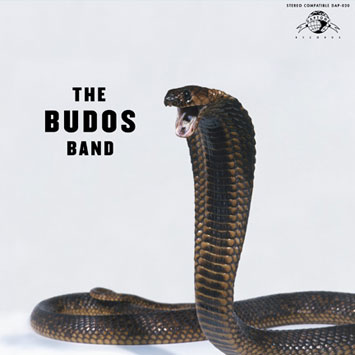
The Budos Band
"III" (Vinyl)

Released in 2011, the third album from the Dap-Tone label's funkiest wordless ensemble shows them digging even deeper trenches.

The moods are darker, the keys more minor and the saxophones are more baritone.  Either that, or they just use way more baritone saxophone.

Either way, in many respects, it's their best, most polished work to date.

Wednesday, November 28, 2012

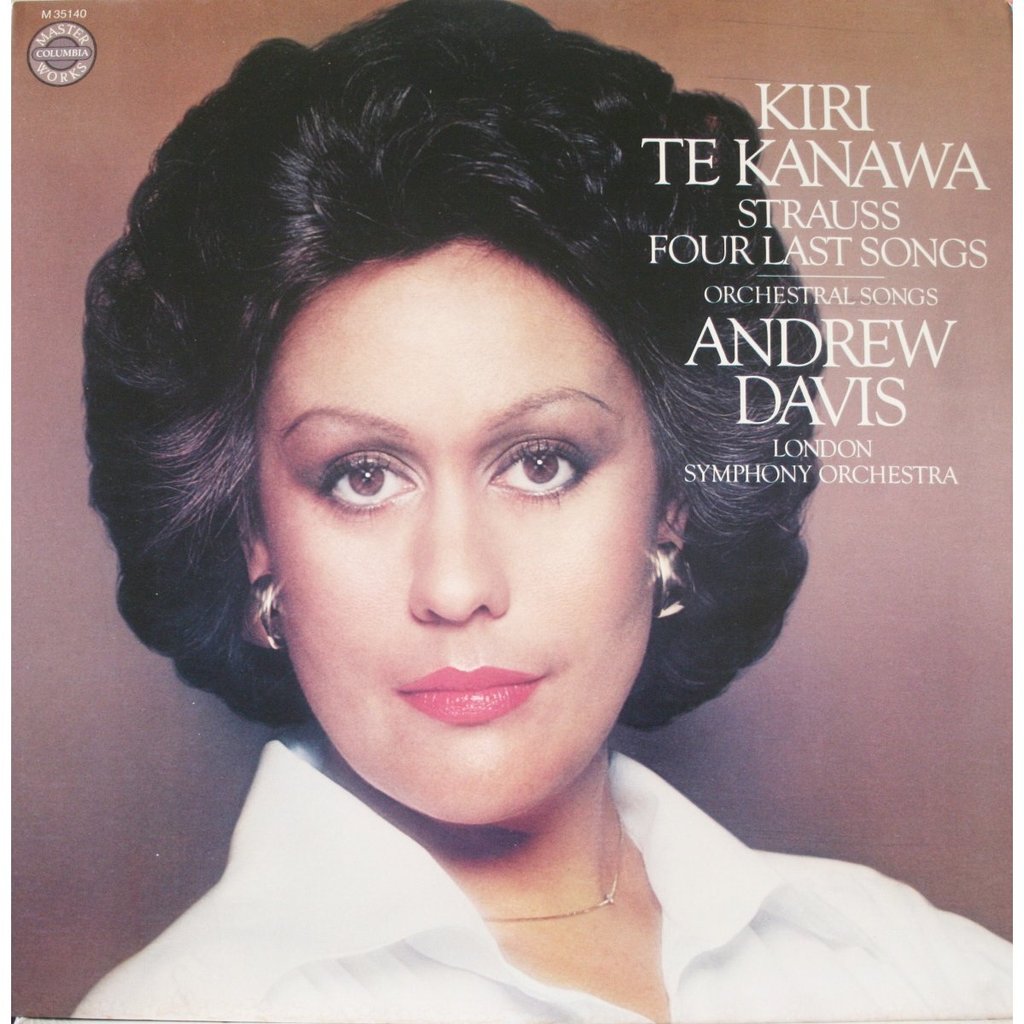
Kiri Te Kanawa, Andrew Davis
"Strauss: Four Last Songs" (Vinyl)

I must confess to a lack of knowledge of the symphonic art song.  Whether it be Strauss or Mahler or Wagner, these late-romantic German composers who advocated for a "more is more" mentality often grate on my nerves.

I fully suspect, however, that this is because I have never been in the midst of a truly great orchestra performing these works.  At that moment, music such as these ceases to be a labor of intonation and balance and becomes truly transcendent.  I'm still waiting for my time in the sun.

It is great to have one of her generation's greatest sopranos singing.  There are many famous singers whom don't care for terribly, but the color in Ms. Kanawa's voice is powerful without becoming fatiguing.  Maybe she's like that in person too. Maybe.
Boulez, New York Philharmonic
"Falla: The Three-Cornered Hat" (Vinyl)

Manuel de Falla is best known for a couple of orchestral works that endure in the symphonic literature.  One of them is the suite that Falla himself compiled from music he wrote for his ballet, "The Three-Cornered Hat."

Sergei Diaghilev (of the Ballet Russes) championed the ballet and this recording by Pierre Boulez and the New York Philharmonic is the unconventional full ballet-length recording.  While there are moments that make less sense, there is a fair amount of beautiful music that didn't make it into the orchestral suite.
Artur Rubinstein 
"Chopin: Preludes op. 28" (Vinyl)

Written in 1838, Chopin's twenty-four opus 28 "Preludes" are considered amongst the greatest of his works for solo piano.  Granted, he wrote a lot of greatest works for solo piano, so it is hard for this string player to differentiate a polonaise from a mazurka.

Artur Rubinstein was to the piano in the 20th century what Heifetz was to the violin.  A superstar during his life, he enjoyed a celebrity status for good reason.

Reviewed here earlier, his recording of Brahms' violin sonatas with Henryk Szeryng are my favorite recording of those works.

This is a beautiful shaded dog RCA Victor that shouts all of the tell-tale signs of golden age recording (now that I've learned what I'm looking for.)
Frank Sinatra
"All the Way" (Vinyl)

Released in 1961, this album showed a record label's ability to capitalize on an in-demand artist like Sinatra from an early age.

This entire album is made up of b-sides from previously released singles.   This is kind of shocking, especially when you realize that songs like "All the Way," and "Witchcraft," were originally b-sides!

Other songs, like "High Hopes" and "Old McDonald Had a Farm" are quirky and out of place, but Nelson Riddle's arrangements keep the good times flowin', no matter the tune.

The fit and finish of this album aren't as good as many of Sinatra's Capitol releases.  I couldn't find Riddle's involvement until the almighty internet told me; it's not printed anywhere on the jacket.

Tuesday, November 27, 2012

Jo Jones Trio
"Jo Jones Trio" (Vinyl)

This might be the only Everest jazz recording I'll ever find.  Just like their classical counterparts, not many survive in playable condition to today, and the jazz catalog was certainly put into the hands of more enthusiastic listeners than someone interested in Sibelius' second symphony.

This recording was released in 1958 and is one of the noisiest, dirtiest records I've ever put on my table.  I just couldn't help myself.

The quality of the recording is there; the drums sound particularly present and vibrant.
From the golden age of jazz to my hi-fi in 2012.  It's amazing what endures.
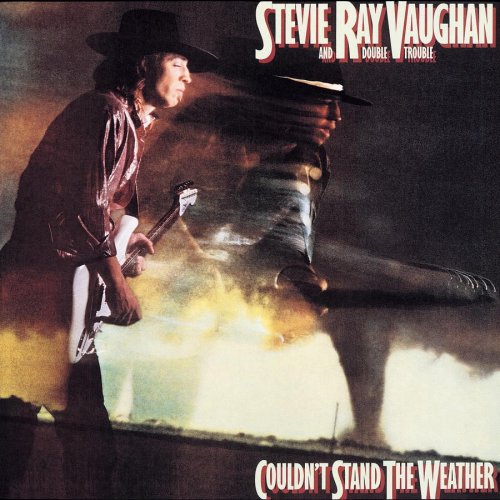
Stevie Ray Vaughan & Double Trouble
"Couldn't Stand the Weather" (Vinyl)

SRV has entered the Great Hall of rock n' roll legend. And it's not purely for his untimely death. During his lifetime momentum was garnered as one of the most inventive and influential guitarists of his generation.  Since his death in 1990 countless guitarists have cited him as an inspiration, copying, imitating and emulating him.

This 1984 album has some of his most classic tracks on it, including the title track, "Scuttle Buttin'" and his cover of Hendrix's "Voodoo Chile."

I'm not always in the mood for Stevie Ray Vaughan, but it is foolish (if not impossible) to acknowledge his importance for guitar-driven rock'n roll during a decade when everyone else was turning New Wave.

Itzhak Perlman, Samuel Sanders
"Perlman plays Fritz Kreisler" (Vinyl)

The first of three albums that would be released on Angel/EMI, this is Perlman the romantic showing off with a list of compositions by the renowned 19th century violinist, Fritz Kreisler.
Known today more for his compositions, Kreisler is still in heavy rotation amongst the violinists, primarily because of champions like Perlman that canonized the tradition of using Kreisler as an encore during recitals.

The image is from an EMI Classics re-issue on CD - I have a vinyl copy released on Angel from a few years earlier...

Monday, November 26, 2012

Nigel Kennedy
"Vivaldi: The Four Seasons" (CD)

Released in 1989, this is a multi-platinum selling recording of classical music's one of famous works.  For a classical album, the word platinum is quite a mountain to have climbed.

Kennedy's approach to these concertos is not very consistent with period performance; rather, he treats these works like a virtuosic springboard to dazzle and amaze.  He uses his own cadenzas which are mostly atmospheric and wander in and out of harmonic relevance.
It is their intention to dazzle, but in a generation of such renewed interest in period performance, to hear something so blatantly contrary is eye-brow raising.

Sunday, November 25, 2012

Casals, Stern, Hess
"Brahms: Piano Trio no. 1" (Vinyl)

Wrapped in an indistinct packaging, these recordings from Casals' Prades Festival are always treatises on mid-century chamber music perfomances, but they're easily overlooked.  I'm not sure what Columbia's strategy was in putting these recordings out in such unremarkable (albeit matching) sleeves.

The recording technology in this era isn't great, but like any great musician, you are able to hear through the recording to hear the performance that Isaac Stern, Pablo Casals and Myra Hess deliver.
A Claymation Christmas Celebration (Vinyl)

A CBS television special in 1987, I think I saw this program once and it stuck in my mind.  Both the dinosaur emcees and the California Raisins, but also the choir of the bells made quite an impression.

This soundtrack loses a lot as the visuals are non-existent. It would be fantastic to see this TV special again.

Happy Thanksgiving - back from a weekend away...
The Menahan Street Band
"The Crossing" (Vinyl)

The Menahan crew was one of the most appealing acts you'd never heard of a few years ago.  Jay-Z, ESPN and Cee Lo (to name a few) were all sampling the title track from their 2008 debut.  The infectious horn lick was an easy sell for universal audiences.  Then, Menahan kinda dropped back beneath the surface.
Charles Bradley, a re-incarnated soul godfather burst onto the scene in 2010 with his debut "No Time for Dreaming" and the Daptone folks decided to pair the Menahan Street Band as Bradley's backing and touring ensemble.   Since then the boys probably haven't gotten a whole lot of sleep as Charles Bradley's appeal has seen world-wide fame.

Thankfully, Menahan found the time to get back to the Dunham/Daptone studios and record their sophomore offering, 2012's "The Crossing."  While it's still spinning on its maiden voyage, I already feel a more dense tapestry being woven; instead of merely horns, bass and drums blasting along, Menahan has let strings, organ and effect-laden guitars into the clubhouse for this foray.   The result is a more complex, grown-up flavor.