Rudolph Barshai, Moscow Chamber Ensemble
"Bartok: Divertimento for Strings" (Vinyl)
This has a particularly boring album cover. It can't even snap a decent shot in Photo Booth!
Bartok's 'Divertimento' for strings is one of the most fun works to perform with a strings-only ensemble. Gratefully, talented composers pull out some of their most fun, memorable music for the ensemble and we have been given Mozart's Divertimenti, Holst's Holberg Suite, Britten's Simple Symphony and many more. While none of these pieces are particularly monumental they are all works that musicians are grateful for the chance to perform.
Bartok wrote this piece in 1939 while living in Switzerland and trying to decide whether he would leave Europe under the impending shadow of World War II. The work is surprisingly light-hearted for such troubled times.
Tuesday, February 05, 2013
Monday, February 04, 2013
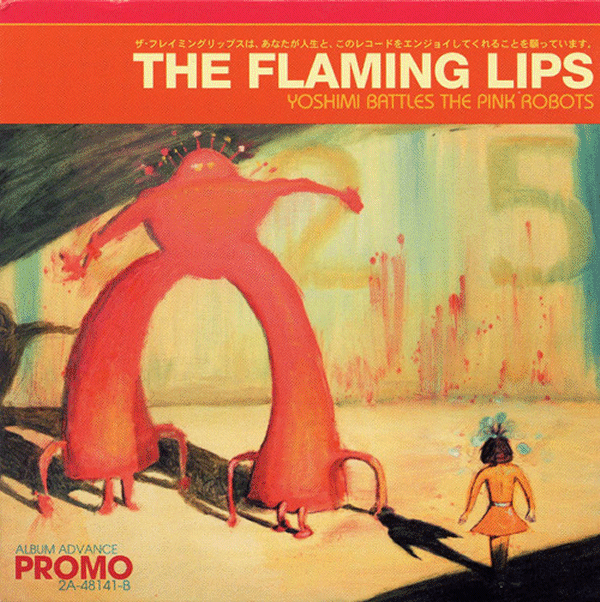
The Flaming Lips
"Yoshimi Battles the Pink Robots" (CD)
This is the Lips' tenth album released in 2002, three years after their break-through "Soft Bulletin." If it isn't their number one best-selling album, it's in the top three.
The Flaming Lips have found themselves occupying the same room in my musical mansion as Bjork. All of these musicians are respected, talented and creative, but for some reason their music has stopped being as relevant to me as it was 5-6 years ago. Was it ever relevant? That's a question I just consider too harsh to consider...
I'm a big fan of Steve Drozd and I still consider him the musical motor behind the Lips. Wayne Coyne will forever get the headlines for his zany...everything, but Drozd is the guy. The real guy.
This album is trippy, weird and a lot of fun. It's also full of musical genius, so when I'm in the right mood, there's nothing else like it.
Eric Clapton
"Slowhand" (CD)
This was Clapton's fifth solo album, released in 1977. Clapton's solo path had been cemented by this point, and this is regarded as the high-water mark for his solo ouput.
I've been trying to understand the cultural need to proclaim Clapton the King of Guitar. (I'm sorry, Clapton is god. I misspoke.) I'm a big fan of Cream and the giant, fuzzy riff-laden heavy rock phase the world stumbled through in the late 60's, but once Clapton struck out on his own, I find many of his big hits to be pretty mild in the hot sauce of life.
Clapton himself is the first to admit he acts as a mirror for his favorite influences, whether that be recording Robert Johnson's tunes or an entire album with B.B. King. Clapton is the first to speak up and tell everyone his stylings are often not his own. So why is people treat his music like is revolutionary or even new? I have a list of guitarists I adore and Clapton's not on it.
Still, this is an album I will keep on hand because I have the sense that I may come to grow into an understanding, an appreciation for the adult Clapton that I don't possess today.
Switchfoot
"New Way to be Human" (CD)
Many of my similarly-aged friends reference particular music as the soundtrack of their teenage years. One that comes up a lot is Sublime's self-titled album. Inversely, I don't think I've ever heard that entire album.
No, for me this is the soundtrack to my late high school years! Switchfoot: Christian-turned-mainstream surfer rock-pop trio from SoCal. This was before they made their attempt at the Top 40 market. At this time, it was simply two brothers and their amigo banging out tuneful pop songs that they (obviously) loved to play.
It was released in 1999, produced by Charlie Peacock, and, true to Switchfoot's m.o., all songs were written by Jon Foreman. Probably within the span of an afternoon.
Sadly, there's nothing earth shattering about this album. There isn't a weak, uninspired tune on here, but everything digests harmlessly and is remembered as fondly as an afternoon at the beach. For me, this is senior year of high school.
Ray LaMontagne
"God Willin' & the Creek Don't Rise" (Vinyl)
Ray LaMontagne's fourth LP was released in 2010. It was recorded in his home and is the first time that LaMontagne is credited with sole production duties and also the first time he recorded "with" anyone. (In this case, the Pariah Dogs.)
An AR rep for a record label once handed me LaMontagne's "Gossip in the Grain" after we discussed our mutual taste in music (and I complimented him on his Klipsch Cornwalls) and since that time I've been hooked on LaMontagne's cornsilk vocals and laid-back sentiment. I still think "Gossip" is his best work, but I've dutifully sampled his other works until now, where I unwittingly now own all four of his albums.
"God Willin'" is a little too kicked back for me. The tempos are all very relaxed, the lights a little too dim and there's far too much pedal steel. And by that I mean there is pedal steel, so therefore there is too much pedal steel. Ray's voice is as calming and soothing as ever, but I've yet to hear him rise to the same heights as 2008's "Gossip." I truly hope he does.
Sunday, February 03, 2013
The Brodsky Quartet, Anne sofie von Otter
"Respighi: String Quartet, 'Il tramonto'" (CD)
Crossover acts in the realm of classical music are an oddity, but hardly a rarity any more. Perhaps any hot young string quartet who gets to record on Alicia Keyes' latest album owes a debt of gratitude to the British Brodsky Quartet.
While they never leaned as far over the diving line as the Kronos or Turtle Island String Quartets, Brodsky has carved a name for themselves as purveyors of the finest repertoire while getting to enjoy exposure to mainstream audiences by recording with the likes of Elvis Costello, Paul McCartney and Björk. (Björk's "Hyperballad" with Brodsky is far superior to the original album version.)
This album features the quartet writing of the Italian impressionist Ottorino Respighi. Impressionism is a world almost exclusively owned by the French, but Respighi made his name known (most notably with his "Rome" tone poems.)
These quartets are not well known so I'm glad to have a recording of them. For one shorter work the quartet is joined by mezzo-soprano Anne sofie von Otter for Respighi's single-movement "Il Tramonto" which was a work very nearly performed by myself earlier this year.
Erykah Badu
"Mama's Gun" (CD)
Ms. Badu is probably best known for performing with the biggest head of hair. Who cares if it isn't really her own hair that's sculpted into a six-foot afro?
'Mama's Gun,' her sophomore album, was released in 2000 after being recorded in New York's Electric Lady Studios. Drumming sound particularly bad-a**? That's the Roots' ?uestlove creating a particularly thumpy groove.
It's groovy, it's jazzy, it's a window into black musical pop culture at the point when some important divisions were happening. Mainstream hip-hop was going in a new (lesser) direction and, much like today, real talent was being driven underground, known by those who knew and traded around like unofficial currency. Hipster before it was hipster. How hipster.
Lorin Maazel, Cleveland Orchestra
"Beethoven: Symphony no. 7" (Vinyl)
I have three cycles of the Beethoven symphonies recorded by Cleveland. Perhaps there are more (Rodzinski?) but my incomplete knowledge today knows only of the Szell, Maazel and Dohnanyi cycles.
Collecting recordings of the Cleveland Orchestra should be its own sub-hobby for me. The great affectation with which I listen to this ensemble not only recollects my college days, but I'm constantly able to learn from them about how to behave as a musician, both on and off stage.
Beethoven's seventh symphony is in my top three favorites. I was having a discussion to decide if I was really serious about this, and we decided it was a race between the third, the sixth and the seventh.
I wholeheartedly believe that if I was confronted with someone unfamiliar with classical music at all and needed to be taught of its value, all I would have to do is play the slow movement ('Allegretto') from this symphony. Not a word need be said.
Saturday, February 02, 2013
Jimi Hendrix
"Band of Gypsys" (CD)
The "eponymous" live album, released in 1970, just months before Hendrix's untimely death, is the last album officially released by Hendrix.
Recorded over two nights of New Years Eve shows at the Fillmore East, this represents the last stage of musical evolution that Hendrix achieved before shuffling off this mortal coil. Akin to Miles Davis' 'Bitches Brew,' this is an album that extends beyond the average listener's palette. If your traditional rock 'n roller loves listening to 'Voodoo Chile' he/she may never have heard the tunes on this album.
The Experience was gone, and in their place Hendrix was backed by Billy Cox and Buddy Miles. The feel of the ensemble is very different than with Hendrix's Experience albums.
Ella Fitzgerald
"Sings the Rogers & Hart Songbook" (Vinyl)
Released in 1956, this album features the one-and-only Ella Fitzgerald singing songs from the songwriting duo Richard Rogers and Larry Hart. Some of these songs are still known today ("Bewitched," "My Funny Valentine," "The Lady is a Tramp") but many of them have passed into obscurity. What's equally interesting is how there were so many musicals that have passed out of common knowledge.
I am coming to regard Ella Fitzgerald as one of the two most important figures in American songbook performance. The music penned by Rogers and Hart, the Gershwin brothers and Rogers and Hammerstein are quickly becoming canonized American art song tradition. The performances by Ms. Fitzgerald (and another fellow called Frank Sinatra) are the benchmark for jazz and contemporary vocal standards that everyone should learn from.
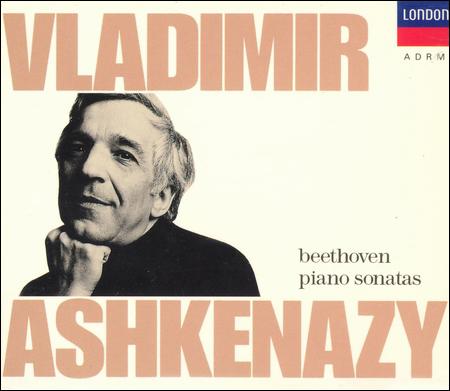
Vladimir Ashkenazy
"Beethoven: Piano Sonatas 17 - 20" (CD)
Beethoven wrote 32 piano sonatas over the course of 27 years. As a whole, the represent one of the most important bodies of musical work ever completed. Hans Bülow has called Beethoven's piano sonatas the "new testament" of music. I wonder if that's akin to John Lennon saying the Beatles were bigger than Jesus?
I possess this complete recorded cycle of the sonatas by Vladimir Ashkenazy, long regarded as one of the most important musical figures of his generation. I saw Ashkenazy conduct the Cleveland Orchestra on several occasions and had a classmate who religiously worshiped Ashkenazy's work. I consider it a great privilege to have seen this man work. Seeing this box set at Academy Records in New York City was a coup. I snatched it up; could there be a better set to own?
Borodin String Quartet
"Tchaikovsky: String Quartet no. 1 in D" (CD)
I mentioned in an earlier listening to some of these recordings that the Borodin made a rather excessive amount of recordings of Tchaikovsky's exhuberant "Souvenir de Florence" string sextet.
It makes me laugh to think about it.
Today, however, we are listening to Tchaikovsky's 1st string quartet, which was one of the pieces that I learned during my first proper time away from home at a music festival in 1998. I still re-live the memories fondly.
Today, especially, I pulled this recording out to hear the quartet's beautiful second movement, 'Andante Cantabile.' Music such as this was written for days like these.
Friday, February 01, 2013
The Tommy Dorsey Orchestra w/ Warren Covington
"Tea for Two Cha Chas" (Vinyl)
Today we have a beautifully preserved Decca stereo record that looks like its been played twice in the last seventy years. Yay for us!
Tommy Dorsey is a gold standard in big band jazz (we'll see other recordings of his on here) so it shouldn't surprise that, just like today, his ensemble would endure after his death in 1956. Warren Covington took over the leadership role and released this successful album in 1958.
Today this genre of music is more associated with ironic comedy, but in the day it was as innocent and pure as sunlight. To top it off, it's been recorded beautifully. It's fun hearing this era of music-making preserved so well.
Hugh Wolff, Saint Paul Chamber Orchestra
"Dvorak: String & Wind Serenades" (CD)
I had a music history teacher once proclaim Dvorak to be a B-grade composer. This was met by cries of derision from the room of music dorks, but in the subsequent years I've been forced to agree with her.
Dvorak has some of the most beautiful melodies ever written, but beyond this penchant, he often seems unsure of what to do with his accompanying voices that are often undeveloped when compared to other composers.
Still, Dvorak hit a couple of home runs. His cello concerto is a tour de force. Alongside that piece I would put his serenade for strings (op. 22.) Every movement is world-class, beautiful and interesting while also being very challenging to perform.
Hugh Wolff was the music director of the SPCO when I came into a musical awareness in the 90's. I think my teacher may have been serving as principal viola of this orchestra at the time of this recording.
Thursday, January 31, 2013
The Beatles
"Rubber Soul" (CD)
I'd better be careful. Reviewing an album like this is asking for trouble, no matter my opinion.
Released in December 1965, it was their sixth album and demonstrated the Fab Four's developing musical styles.
While 'Help!' (released in August of 1965) is still mostly reminiscent of the mop-headed Ed Sullivan pop superstars, 'Rubber Soul' begins the evolution from chart-toppers to musical icons. Within a few short years the Beatles would be producing music that musicologists will be teaching for generations to come.
'Soul' has its own notable successes, ("Drive My Car,""Michelle") but I think it's best to think of this album as a doorway into the Next. Even if you're not a hardcore fan, you wouldn't regret owning this album.
This particular CD (I'm presuming) to be the 1987 stereo re-mix that George Martin did. Let's put aside all of the mono vs. stereo '65/2009 talk until I own all of it. I'm sure it'll happen some day.
Rudolph Serkin, Ormandy
"Strauss: Burlesque in D minor" (Vinyl)
Remember that stack of six-eyes I found in the thrift store a few months ago? I'm still listening through them...today I re-found this album which contains two works that I'm not immediately familiar with, but I almost accept that as okay.
Neither Schumann or Strauss are favorite composers of mine. For different reasons: Strauss wrote some of the hardest music for an orchestra to play. Schumann I regard as a second-rate Brahms. Now let's see where such ignorant statements will get me...
Strauss wrote his 'Burlesque' for piano and orchestra when he was twenty-one, so it's a youthful work unlike his tone poems that would come in the subsequent decades. I think it's understandable that this composition isn't performed that often, it's an odd length (doesn't even use one complete side) so it'd be difficult to program.
This album reminds me why a disc washer wouldn't be the worst idea in the world. There is 70 years' worth of dust on some of these records that haven't been stored well by their previous owner.
Bruno Walter, New York Philharmonic
"Mozart: Symphony no. 39" (Vinyl)
Maestro Bruno Walter is a very important figure for classical musicians. He represents a very seldom seen bridge between the last seminal generation of classical music (Mahler) and our own.
German-born to Jewish parents, Walter was a protege of Gustav Mahler and actually gave the world-premieres of 'Das Leid von de Erde' and his 'Symphony no. 9' which both have been added to the canon of symphonic literature.
What makes Bruno Walter unique is that his first-hand knowledge and experience with Mahler was captured on recordings with the New York Philharmonic, the Columbia Symphony Orchestra and others. The generation of conductors that followed him, (Szell, Ormandy, etc.) would not share the same familiarity with the composers whose music they conducted.
This recording, a Columbia six-eye, is one made late in Walter's life with the New York Phil (listed as the Philharmonic-Symphony Orchestra of New York) which has drawn some criticism for not being as vital as his earlier recordings of the same work, but considering how one might only find these recordings on 78 rpm discs, I think we shouldn't quibble.
Dorati, Minneapolis Symphony Orchestra
"Delibes: Coppelia" (Vinyl)
As the inside of the LP jacket says, a successful light comic ballet is a rarity. Yet, Delibes' 'Coppelia' is considered such because of its uncommon endurance.
This was released previously on the Mercury label (not a double-LP 'Golden Import') with the fun colorful artwork and sturdy vinyl that I've grown to appreciate. Still, it's beneficial for me to have this in my collection as every once in a while a movement from this is requested for viola auditions. It's nice to be able to put the music into context.
Henry Mancini
"Original Soundtrack: The Pink Panther" (Vinyl)
Mancini was (and in some ways, is) the name in Hollywood film scoring. Arguably his most famous work is the main theme from 'the Pink Panther,' the 1964 Blake Edwards film starring Peter Sellers.
Call it cosmic fate, but not only is the film score amongst the most famous composed, but it created an immortal star of film, Sellers' Inspector Clouseau. Beyond that, the debut 'Pink Panther' film, 'A Shot in the Dark' is often cited as being one of the funniest films ever made.
Not bad for a day's work, I suppose.
All of the music on this RCA Dynagroove record is beautiful, jazzy Mancini fare. The jacket notes by Peter Sellers himself are an added bonus.
Wednesday, January 30, 2013
Joe Cocker
"Greatest Hits" (Vinyl)
I love this era in music more and more.
When else could an ugly, disheveled dude with a voice like a box of gravel enjoy mainstream success? Yes, I hear those of you mentioning Tom Waits, but I mean mainstream success. Tom Waits doesn't get played on top 40 stations. Cocker's cover of the Beatles' "(I Get By) With A Little Help From My Friends" did.
Anyway, the more I hear Joe Cocker I love his voice. Also, the music kicks serious butt. That is all.
Neville Marriner, Acaemy of St. Marin-in-the-Fields
"Mozart: Sinfonia Concertante K. 364" (Vinyl)
Perhaps its the egalitarian nature of the composition. Perhaps it's the single-star status of Sir Marriner. Whatever the reasoning, this is the most subdued presentation of Mozart's 'Sinfonia Concertante' I've seen yet.
You actually have to read the record's label itself to find the name of the two soloists. In an age where this work is treated as a concerto alongside Mozart's other concerti, to have such a non-descript presentation is surprising at best.
To support this point of view, the musical choices made by these musicians are also rather subdued. I've heard far more outlandish interpretations of this work.
For the record, the soloists on this performance are Alan Loveday, violin and Stephen Shingles, viola.
I believe this to be a re-release of previously recorded material. The date on this London LP is 1982, but the recordings themselves date to 1971 and 1973.
Sunday, January 27, 2013
Michel Beroff, Kurt Masur
"Prokofiev: Piano Concerto no. 3 op. 26" (CD)
I've spent this week playing and observing the music of one great Soviet composer, Dmitri Shostakovich. It seemed fitting to visit the work of his equally notable contemporary, Sergei Prokofiev.
While Shostakovich wrote deeply personal, almost programmatic works, Prokofiev wrote with a cinematic flair and enjoyed a deep romantic streak. I suppose the personality of both of these musicians lies on the surface of their respective works.
The piano concerto has long been a benchmark for composers: write a good one and your reputation is solidified. Don't, and you are taken less seriously by audiences. I'm not a scholar of Prokofiev's piano literature, but I have performed this concerto before and recall the fun of playing the work with pianist James Dick.
Friday, January 25, 2013
Peter Wispelwey
"Britten: Suites for Cello" (CD)
This is one of the few SACDs that I own. I'm ambivalent about that, since SACDs were intended to be the next evolutionary step in music-listening. And they were. A sampler disc included in an issue of Rolling Stone had me drooling over Norah Jones and Aerosmith tracks through my crummy Aiwa. I thought it sounded goooood.
But iTunes happened before the public began upgrading to SACD players in their homes. Ironically, culturally, we made a backwards step fidelity-wise.
But let's talk about this album. Britten dedicated his three suites for solo cello to Mstislav Rostropovich and were composed between 1965 to 1971.
I'm not sure where these fall on the "hard-o-meter" for cellists, but I'm very grateful that Britten wrote these works as they demonstrate the color palette and technical prowess of the instrument.
Mr. Wispelwey gives beautiful performances here, but for an album of solo cello music, you'd hardly expect anything less.
Thursday, January 24, 2013
Manny Roman
"Eras" (Vinyl)
I had no idea what this was when I picked it up. I only decided to take it because of the quality Decca record herewithin.
Again, it's not very common to find a record of this vintage in good condition.
Either you've found the remains of a very meticulous record owner, or a record that wasn't listened to. And we can all speculate as to why that might be...
Anyway, as it turns out, this is an album of Latin orchestral easy-listenin' crooning by the one, the only, Manny Roman. As it turns out, there's not a whole lot known on the interweb these days about Mr. Roman. ...that's about all.
Ginny Owens
"Without Condition" (CD)
This is yet another album that has been following me around for a long time. And when was the last time I listened to it? I can't even remember... And yet, this album has made it through multiple purges of the CD collection. So what is it about this record?
This is Ms. Owens' debut release on Michael W. Smith's Rocketown Records. It contains her biggest hit, the sublime "If You Want Me To," but it's also got the groovy personal favorites "I Wanna be Moved" and "Free."
This album is unapologetically Christian. All of Ginny's lyrics are poignantly relating another aspect of her faith and she does it much more effectively than a lot of Christian artists do.
Ms. Owens has never enjoyed massive success, but has continued to release records over the last 12 years including 2011's "Get In, I'm Driving." That's not funny until you know that Ginny Owens is blind.
Wednesday, January 23, 2013
G. Love & Special Sauce
"Electric Mile" (CD)
This CD was basically accidentally discovered in my CD collection. Sandwiched in with another disc, I vaguely remember buying this album once upon a time. Perhaps closer to when it was a new release in 2001.
Anyway, it's earned another listen if for no other reason than because its refused to go away.
Described as an "alternative hip-hop group" from Philadelphia, GL&SS should almost be offended by such a narrow description. Their influences encompass nearly everything you can think of: jazz, hip-hop, soul, funk, jazz, zydeco, folk, boogie, rock, etc.
It sounds a little bit like so many other things you've heard of. The question is: does it find its own voice?
I'll have to keep listening to this one before making a determination; its recipe sounds like so many things I'd be digging - if it's not immediately grabbing me by the lapel, perhaps I'm not hearing it in the right light.
Tuesday, January 22, 2013
Blind Faith
"Blind Faith" (Vinyl)
The follow-up supergroup (not the original supergroup, mind you) to Cream was a project consisting of Eric Clapton, Ginger Baker, Steve Winwood and Ric Grech.
With the break-up of Cream in 1968, the release of a new project only a year later by Clapton caused a huge buzz in the rock n' roll community.
The album sounds like it should: dirty, crusty bluesy rock with a whole mountain of musical skill just waiting around to explode at the right moment.
Oddly enough, this album is probably known more for its controversial cover art than for the music. As it turns out, if you put an naked eleven year-old on the cover of your record, people will pay attention.
Cream
"Goodbye" (Vinyl)
Following on the heels of yesterday's review of "Blind Faith," I was digging the vibe so much that I had to go dig through the late 60's heavy rock pile again.
This album was actually released after "Blind Faith" and after Cream had officially disbanded. I'm not sure if it was a contractual obligation for the band, or if the label just saw an opportunity to make some scratch. Either way, the album consists of three original, studio recorded tunes and three live takes of tunes that Cream was famous for. Beginning with "I'm So Glad" and "Politician" the album failed to live up to the standard of their other releases, and yet it's remarkable that there was an age in rock 'n roll when this would be sub-standard. I long for a return to music-making of such quality that this would be reviewed as "...meh"
Sunday, January 20, 2013
Red Hot Chili Peppers
"By the Way" (CD)
I once had a friend describe the Chili Peppers as "a great bassist, and a bad vocalist." I've decided that explanation is an over-simplification, but it points at the cracks that have appeared in the RHCP's armor in the decades since they first showed up.
This album was the first arrival of the mature incarnation of the Red Hot Chili Peppers. It's a band that began to show up during 1999's "Californication," but didn't insist on itself until 2002 when they released "By the Way."
I don't think this album ranks high on their output. "BloodSugarSexMagic" is still regarded universally as the high-water mark and everything since then has shown a Chili Peppers band that is getting slower and older, trying to convince its ever-youthful audience that it's okay that we're all getting older.
This is about as mainstream a band as we'll find on this blog. I never tread too close to Top 40 musical tastes and the Chili Peppers have drawn nearer to this idiom as the years go by. Rick Rubin has produced all of the RHCP's albums for a while now and his polished sound may be mass-consumer friendly, but its becoming less and less anything I listen to by choice.
Benny Goodman
"The Small Groups" (CD)
Highlighting music recorded between 1935-1944, this CD compilation highlights the different small quartet and quintet ensembles that Benny Goodman helmed.
For the era, these are notable for being racial de-segregated and gave musicians like Count Basie and Lionel Hampton and Cootie Williams exposure to a wider jazz audience.
These small groups are regarded by some to be the best ensembles that Goodman worked with. Other musicians accompanying Goodman on this album include Gene Krupa, Teddy Wilson and Charlie Christian.
The CD packaging (released by Living Era) gives a decidedly archival feel; there's nothing terribly sexy about its curb appeal. I feels like it was designed for use in college music appreciation courses.
Saturday, January 19, 2013
Abbado, Chicago Symphony Orchestra
"Mahler: Symphony no. 7" (CD)
I possess an outsider's opinion of Mahler. Whilst most orchestral players I know drool at the mention of performing Mahler, I must confess to a certain disdain for the "more is more" philosophy of the late-19th century German composers. Mahler, Strauss and Wagner all developed new levels of complexity in their music, but to do it they added fifteen additional horn players, doubled string sections, added a triple course and, in some examples, began inventing their own instruments.
I think the music is needlessly complicated and garish.
However, I'm willing to consider an alternative: it may very well be that I have never experienced this music surrounded by the (necessary) army of musicians capable of playing this music well.
More often than not I only see a bevy of trombonists more interested in seeing how far they can project their spittle across the hall than with producing the colors unique to Mahler.
I await a more evolved music-making experience with quiet anticipation.
There's probably no better ensemble to listen to Mahler symphonies than Chicago and their legendary brass sections.
Isaac Stern, Alexander Zakin
"Brahms: Sonata nos. 1 & 3" (Vinyl)
I love Brahms' first violin sonata in G major. It has some of the simplest, beautiful melodies ever. I first heard Henryk Szeryng's recording with Artur Rubinstein and I stopped dead in my tracks.
Since that time, I've made an excuse to perform the sonata myself and am always happy to find another, different recording of Brahms' violin sonatas.
This is a Columbia six-eye Masterworks that has seen a few rough encounters with fingernails because its condition is far from ideal, so it's relegated to my secondary system.
Knowing the quality of Masterworks recordings makes the shrill tone quality of Mr. Stern all the more decisively frustrating. It is another step towards the full blown comment: "I don't like Isaac Stern's" playing. But to be fair, many of the great violinists of his generation go against my grain. I'm still seeking out the root cause of this sentiment...
AC/DC
"Dirty Deeds Done Dirt Cheap" (CD + Vinyl)
The third album from AC/DC was released in 1976.
Chock full of necessary tunes, the album comes out swinging with the title track and also has their catalog favorites "Problem Child," and "Squealer."
Just as the sun rises in the East, I take comfort in the known quantity of AC/DC albums. There are no pretenses, just ballsy hard rock. It's comforting in a brass knuckled sort of way.
Cleveland Quartet & Yo-Yo Ma
"Schubert: Cello Quintet op. 163" (CD)
In plumbing the depths of string chamber music literature one doesn't get very far in the semester before you are introduced to this work.
It is a seminal work for Schubert, for string players and perhaps the only notable composition for this unorthodox ensemble.
The symmetry of two violins, a viola and cello has a certain divine harmony that composers have enjoyed exploiting since Haydn's day. A healthy percentage of the great classical literature exists for the string quartet. Adding or subtracting from this number has always been challenging. Yes, there are many fine trios and Mozart, Beethoven and Brahms all wrote for quintets involving two violins, two violas and a cello, but two violins, a viola and two cellos...well, that's just madness!
And yet Schubert shows us it can be done. In the hands of masters, the work is transparent and effortless. In the hands of mere mortals (like my own experience with this work) there is a great deal of fighting done by the viola since so much of its register is shared with one of the cellos.
Still, the work is a masterpiece by Schubert. This recording, made by the fantastic Cleveland Quartet is notable because Yo-Yo Ma, (a very strong, unique voice) blends seamlessly with the veteran forces. In fact, no where in the packaging does it indicate who is playing first or second cello - we're left to guess.
Wallfisch, Thomas, London Philharmonic Orchestra
"Kabalevsky & Khachaturian: Cello Concertos"(Vinyl)
I don't know where I found this recording. However, considering where I've dug for records (a fourth-floor storage space in San Antonio, for one) I think the better question is: who ever bought this record in the first place?
Don't get me wrong - it's actually a very fine recording with some very masterful cello-ing going on, but my question lies in who decided to record Kabalevsky and Khachaturian cello concertos and release them.
Chandos, that's who. A respected classical label that has found its niche in the recording and distribution of sort of underground unknown composers that don't see the light of day very often. It's because of such championing by musicians such as the Kronos Quartet that we know of Gorecki today. While neither Kabalevsky or Khachaturian are unknowns, both of these compositions I've never heard before spinning this record.
Friday, January 18, 2013
David Bowie
"Ziggy Stardust & the Spiders from Mars" (Vinyl)
Has there been a musician who has better capitalized on the public's appetite for spectacle than Mr. Bowie? Practically inventing the genre of glam rock, David Bowie went through numerous "personas" that impacted everything from his mannerisms, dress and stage productions.
"Ziggy Stardust" was the first such personality to arrive. Loosely based on rock n' roll flameout Vince Taylor, "Ziggy" is a loose concept album telling the story of the archetypal rock superstar, Ziggy Stardust.
The songs have gone on to be some of Bowie's greatest classics, including "5 Hours," "Suffragette City" and "Rock n' Roll Suicide."
I have had this album on my mp3 player for years and I never really listen to it. Then, I put my vinyl copy on and I find this album a joy to listen to. Something in my mp3 copy has made the sound very brittle and fatiguing. On vinyl, the sound is actually quite smooth and the production is colorful and lush. Kudos to Mick Ronson, guitarist on this album that recorded some of my favorite, understated guitar licks.
Beaux Arts Trio
"Smetana: Piano Trio in G Minor op. 15" (CD)
The Beaux Arts Trio is perhaps the most celebrated name in piano trio history. Over their astonishing 53-year career they became synonymous with elevating the piano trio literature to the same height as the string quartet.
Menahem Pressler played piano during the trio's entire 53-year span. For this particular recording of Smetana's piano trio, (recorded in 1970) Isidore Cohen is playing violin and Bernard Greenhouse is playing the cello.
This CD is part of a four-disc (so-called) "limited edition" set which features recordings made by the trio during the span of 1967 - 1974. Even if their output during those seven years was limited to what is included on these four CD's that could be considered prolific.
I intend to familiarize myself more with piano trio literature; my own (bad) joke is that since there's no viola in a piano trio I have no interest in the repertoire. This really is just a bad joke. This Smetana is quite a cool piece.
Thursday, January 17, 2013
Sir Neville Marriner, Acadey of St. Martin in the Fields
"Bach: Orchestral Suite no. 3 in D BWV 1068" (Vinyl)
This is a Danish release of a double LP that apparently has sold in numerous incarnations across the globe. I could not find a photo of my exact set, so I had to take my own.
The history behind a musical form like Bach's orchestral suites is lost but to a small group of academics who enjoy talking about these things.
It should suffice to say that the amount of entertainment-purposed orchestra works that Bach composed fit into a small pile. Most famously, his Brandenburg concertos, but also these suites which are more egalitarian in their approach.
The third suite contains one of Bach's most famous works, the Air on the G String. Today, in our limited understanding, is considered cannon fodder for wedding and funerals, but is truly an amazing work of simple beauty.
Wednesday, January 16, 2013
Stu Gardner, Grover Washington Jr., Bill Cosby
"Total Happiness: Music from the Cosby Show vol. II" (Vinyl)
This is kind of a strange album. Some of the music I recognize from re-runs of the Cosby Show (like "He Moves Funny" which was the theme song from 1986 - 1987) but most of the music on here I think is extended versions of bumper music; the snippets of music that would play between scenes or before and after commercial breaks.
I suppose most people don't consider that all of these tunes actually exist in entirety somewhere, and here they are. Beyond that, Stu Gardner, the composer, has enlisted the help of lost of 80's jazz all-stars including Grover Washington Jr., Ray Parker Jr., Billy Preston, Herbie Hancock and Brandford Marsalis. Bill Cosby himself even gets in on the percussion every once in a while.
As music goes, it's all contemporary latin-infused high-production stuff. I'm not sure I'll keep this rather odd album...
Roger Ericson & His Men
"Disney Meets the Wizard" (Vinyl)
It's been hard to find any real definitive information on this record.
Released in the US in 1962, the Richmond label was a subsidiary of the London record label and was often a budget release of previously released material.
This was one of twelve albums released on Richmond Percussive in the US but was abandoned due to poor sales.
I can find little or nothing about Roger Ericson (or his men.) This isn't the worst album - it's a jazzy big band cover album of tunes from Disney films and the Wizard of Oz.
Tuesday, January 15, 2013
Talking Heads
"Little Creatures" (Vinyl)
Released in 1985, this was the Heads' biggest selling album in America, going double platinum.
The Heads' musical exploration continued onward, (like 1983's 'Speaking in Tongues' use of looped African drum and chant) this one focused on American music styles and borrowed from country western music, including the pedal steel.
The album artwork (arguably amongst the Heads' most iconic) was done by Americana folk artist Howard Finster.
I won't say this is my favorite Heads album, but I'm pleased to have it in my growing anthology of Talking Heads music.
The Barchet Quartet
"Mozart: String Quartets K. 80, 155, 156, 157" (Vinyl)
I can find little to nothing about the Barchet Quartet being published online today. The only information published on the back of the LP jacket is that the Barchet was founded in the post-ww II years by the concertmaster of the Stuttgart Chamber Orchestra. This recording was made by all four original members.
They were particularly known for their recordings of Mozart's chamber music, and I have to say, I think I can see why.
The opening "Adagio" of Mozart's G major K.80 quartet is played with such a beautiful simplicity that resonates through the limited recording capability. It is refreshingly uncomplicated.
This is a sturdy Dover Press recording. My understanding is in later years the Barchet's catalog was released extensively by Vox in multi-disc sets. Today, you can still buy mp3 collections of the Barchet's entire Mozart cycle.
Monday, January 14, 2013
The Jeff Beck Group
"Beck-Ola" (Vinyl)
Think of this as a reverse rock supergroup - released in 1969, members of the Jeff Beck Group went on to play in Faces (Rod Stewart) and the Rolling Stones (Ronnie Wood.)
This must have been a crazy time in rock 'n roll. The community of musicians that played together in the psychedelic 60's traded partners into the 70's and many of them came out of the oven with some of the most important rock 'n roll music ever recorded.
There was a shift from the paisley-clad psychedelic rock to, simply put: heavy.
I'm very grateful for this changeover. It got rid of the Strawberry Alarm Clock and gave us Cream, Zeppelin...and the Jeff Beck Group. On the back of the sleeve they even admit: "Today, with all the hard competition in the music business, its almost impossible to come up with anything totally original. So we haven't. However, at the time this album was made the accent was on heavy music. So sit back and listen and try and decide if you can find a small place in your heads for it."
Sunday, January 13, 2013
The Doobie Brothers
"Best of the Doobies" (Vinyl)
Part of the string of AM radio-friendly hit-makers in the 1970's, the Doobie Brothers were the launching pad for the career of Michael MacDonald.
Fortunately, the DB's are memorable in their own rite with songs like "China Groove," "Long Train Runnin'" and "Listen to the Music" that put the Brothers solidly into the category of "Oh! I didn't know they wrote this song!"
It's safe to say future generations will be introduced to the Doobie Brothers' music through classic rock radio stations for a long time to come.
Friday, January 11, 2013
Grizzly Bear
"Shields" (Vinyl)
This is the last acquisition I needed to complete my own best-of 2012 collection. Hurrah!
Grizzly Bear's "Veckatamist" made an impression because of their single "Two Weeks" but little else on the album really stood up.
Grizzly Bear has apparently been learning from their own processes, fine-tuning their recipes and refusing to leave the kitchen until they came out with something truly delectable.
The vinyl pressing isn't mastered quite as carefully as I would've hoped (there seems to be some plasticky "space" surrounding the musicians; things don't really leap into the room as with some contemporary records) but it is good to see "normal" has bands releasing their albums on vinyl. I don't know how long this will last, but I'm happy to ride the train.
Richter, Karajan
"Tchaikovsky: Piano concerto no. 1" (Vinyl)
There are few names larger in classical recording than Herbert von Karajan and his Berlin Philharmonic. Slightly lesser known, (but no less revered) is Svlatoslav Richter, the Soviet Russian pianist who circumnavigated the troublesome political climate to concertize the world. His recording of Brahms' second piano concerto on this blog is regarded amongst the finest of that concerto.
This is a beautiful recording, wonderfully preserved in one of the stoutest album jackets I've ever seen.
I'll be playing this work in a few weeks; it seemed a good opportunity to get some homework done.
Wednesday, January 09, 2013
Ansermet, L'Orchestre de la Suisse Romande
"Prokofiev: 'Classical' Symphony, Borodin: 'In the Steppes of Central Asia'" (Vinyl)
I encountered this little-known work by Alexander Borodin earlier this season. It was used as a program opener, and I have to say, it really stuck in my ear.
The melodies are poignant and simple; on the whole, the work is not a complex or difficult one, so I'm surprised I've never seen it before now.
Ernest Ansermet was the conductor of the Orchestra of French-speaking Switzerland from 1918 to 1967. That's a phenomenal tenure in any generation of music-making. I'm not exactly sure when this recording was released, but aside from some questionable clarinet- and oboe-playing, the orchestra sounds wonderful and is beautifully captured on a London FFRR stereo recording.
Du Pre, Barenboim
"Beethoven: Cello Sonata no. 4" (CD)
I've become more familiar with a few of Beethoven's cello sonatas more than others. I think it's probably because CD's and LP's often begin with sonata number one. I suppose that makes sense.
Opting to put disc no. 2 into the Rega today means getting to hear sonatas nos. 4, 5 and the 'Macabeus' and 'Magic Flute' variations; works that I am not familiar with at all.
The tragically romantic story of Jaqueline Du Pre was immortalized in the film "Hilary & Jackie" which followed the cellists' life to her death in 1987 at the age of 42. Her longtime partner (professional and personal) Daniel Barenboim helms the piano for these recordings.
Friday, January 04, 2013
Babin, Goldberg, Primrose & Graudan
"Brahms: Piano Quartet in A op. 26" (Vinyl)
When Brahms wrote something that actually made it to the publisher, it was instantly part of the repertoire canon. This is largely due to Brahms' own harsh criticism that led him to destroy many many drafts of his compositions because he deemed them unworthy.
There is a great deal of Brahms' output that I'm unfamiliar with. There's no great reason for this; I'm simply lazy. Most of the time I only familiarize myself with a composition (particularly chamber music) because I'm going to be performing it. This piece of music should be known by me, regardless of whether or not I perform it.
The line-up is legendary: Victor Babin on piano, Szymon Goldberg on violin and the seminal William Primrose on viola. The only name I'm not familiar with is Nikolai Graudan - I'm not sure if I've seen his name before.
This is an RCA shaded dog in beautiful condition.
Billy Vaughn
"A Swingin' Safari" (Vinyl)
At the dawn of rock 'n roll most parental figures weren't running out to get their hands on Elvis' latest. What was spinning on the hi-fi was in the ilk of Jackie Gleason and Billy Vaughn.
Lush orchestral strings accompanied by a light peppering of exotic percussion and a lazy saxophone section was all you needed to have a swingin' cocktail hour.
The jacket for this London/Dot pressing is one of the flimsiest I've ever seen. The record is a wonderful heavy beast; I don't understand why the jacket is so cheap.
Subscribe to:
Posts (Atom)


.jpeg)