B.B. King & Eric Clapton
"Riding with the King" (CD)
Two generations' greatest blues guitarists didn't go into the studio together until 2000, 52 years into B.B.'s career and 38 years into Clapton's. What came out of those studio sessions is a glossy, well-packaged romp through several blues standards.
Underwhelmed is the word I'll use for this album. In theory, it should have been crazy nuts, but it feels tamed, middle-aged and overly produced. It sounds very nice on my stereo, but there a parts of me that feel it shouldn't sound quite so nice. There's no grit. No dirt under the fingernails.
It's not a bad album, but it's not great.
Tuesday, December 17, 2013
Heart
"Little Queen" (Vinyl)
Heart's sophomore album was released in1977. Sort of. Court battles with their previous label (Mushroom) meant that "Magazine" was technically released prior to "Queen." When the litigious dust settled, however, "Queen" is officially regarded as their follow-up to "Dreamboat Annie."
It contains their biggest hit, "Barracuda" and carried the hard rock torch the band earned on from their first album.
I'm developing a real soft spot for this band's early works. (Their later output is still up in the air) but I love the sound of these albums, the hard-hitting and inventive instrumental playing and Annie Wilson's throaty vocals.
"Little Queen" (Vinyl)
Heart's sophomore album was released in1977. Sort of. Court battles with their previous label (Mushroom) meant that "Magazine" was technically released prior to "Queen." When the litigious dust settled, however, "Queen" is officially regarded as their follow-up to "Dreamboat Annie."
It contains their biggest hit, "Barracuda" and carried the hard rock torch the band earned on from their first album.
I'm developing a real soft spot for this band's early works. (Their later output is still up in the air) but I love the sound of these albums, the hard-hitting and inventive instrumental playing and Annie Wilson's throaty vocals.
Leopold Stokowski, Philadelphia Orchestra
"Disney's Fantasia" (Vinyl)
This is the original vinyl release of the soundtrack to Walt Disney's seminal 1940 film that set popular classical works to film.
This whole project was a phenomenal technical feat, incorporating the performance given by the Philadelphia Orchestra with the fantastical visions playing out on the screen. This project was slated to become a recurring series, with additional classical musical masterpieces set to film. Sadly, it was abandoned, save for the one-off 'Fantasia 2000' that revisited the idea.
"Disney's Fantasia" (Vinyl)
This is the original vinyl release of the soundtrack to Walt Disney's seminal 1940 film that set popular classical works to film.
This whole project was a phenomenal technical feat, incorporating the performance given by the Philadelphia Orchestra with the fantastical visions playing out on the screen. This project was slated to become a recurring series, with additional classical musical masterpieces set to film. Sadly, it was abandoned, save for the one-off 'Fantasia 2000' that revisited the idea.
Wednesday, November 27, 2013
Gidon Kremer, Martha Argerich
"Beethoven: Violin Sonatas nos. 9 & 10" (CD)
I'm auditioning some new speakers by KEF and a modern-day Marantz home theater 5.1 receiver this week. It seemed a good time to pull out this ridiculously crazy recording made by two of the crazier, enigmatic members of the classical music world.
I've listened to this particular recording of the 'Kreutzer' sonata before, and I have to say, it sounds pretty good on these speakers.
Incidentally, my off-the-shelf Samsung blu-ray sounds pretty fine as a CD player also.
They are by no means low-end, but research online amongst the HT nerds didn't yield that much helpful information. They do accept bi-amping and seem very well-built, so as far as home theaters go, this is a very respectable set. As hi-fi speakers, they seem to hold their own. It's got me debating the amount of gear I've accumulated in the last couple of years.
Let's debate that further while we put another CD in.
"Beethoven: Violin Sonatas nos. 9 & 10" (CD)
I'm auditioning some new speakers by KEF and a modern-day Marantz home theater 5.1 receiver this week. It seemed a good time to pull out this ridiculously crazy recording made by two of the crazier, enigmatic members of the classical music world.
I've listened to this particular recording of the 'Kreutzer' sonata before, and I have to say, it sounds pretty good on these speakers.
Incidentally, my off-the-shelf Samsung blu-ray sounds pretty fine as a CD player also.
They are by no means low-end, but research online amongst the HT nerds didn't yield that much helpful information. They do accept bi-amping and seem very well-built, so as far as home theaters go, this is a very respectable set. As hi-fi speakers, they seem to hold their own. It's got me debating the amount of gear I've accumulated in the last couple of years.
Let's debate that further while we put another CD in.
Wednesday, November 20, 2013
Artur Rubinstein
"Schumann: Carnaval op. 9" (Vinyl)
This relatively early work from Schumann's output was considered by Chopin to be "less than music" while Clara and Robert Schumann themselves thought this music too difficult for public audiences. Let's all ponder why Schumann wrote it the way he did then.
The piece is intended to depict Robert and his friends at a masquerade ball at a carnival. Each musical motive represents a different person and is encoded into each movement of the work. I'm not sure if Robert intended his friends to care enough to examine the work closely enough to find out if they are talking to the cocktail waitress or partying on the dance floor, but the 22 short movements take up 1.5 sides of this RCA shaded dog.
Rubinstein is undoubtedly one of the most recorded pianists in history. The number of recordings you can find of his are astonishing. Partially due to his proficiency and partially due to the quality of the RCA recordings I snatch them up when I find them in good condition. I'll never regret their purchase.
"Schumann: Carnaval op. 9" (Vinyl)
This relatively early work from Schumann's output was considered by Chopin to be "less than music" while Clara and Robert Schumann themselves thought this music too difficult for public audiences. Let's all ponder why Schumann wrote it the way he did then.
The piece is intended to depict Robert and his friends at a masquerade ball at a carnival. Each musical motive represents a different person and is encoded into each movement of the work. I'm not sure if Robert intended his friends to care enough to examine the work closely enough to find out if they are talking to the cocktail waitress or partying on the dance floor, but the 22 short movements take up 1.5 sides of this RCA shaded dog.
Rubinstein is undoubtedly one of the most recorded pianists in history. The number of recordings you can find of his are astonishing. Partially due to his proficiency and partially due to the quality of the RCA recordings I snatch them up when I find them in good condition. I'll never regret their purchase.
Tuesday, November 19, 2013
Average White Band
"AWB" (Vinyl)
The sophomore release from the Scottish funk/R&B band was their breakthrough hit. It sold millions of copies and the single "Picking Up the Pieces" went all the way to number one.
I suppose this more than qualifies as 'blue-eyed' funk music since these guys are from Europe, but it's fun to see these uniquely American traditions picked up by other parts of the world and (often times) done better. (Think of the UK blues revival with the Rolling Stones and Led Zeppelin.)
I've collected a few of AWB's albums because they're a friendly, head-boppin' good time every time.
"AWB" (Vinyl)
The sophomore release from the Scottish funk/R&B band was their breakthrough hit. It sold millions of copies and the single "Picking Up the Pieces" went all the way to number one.
I suppose this more than qualifies as 'blue-eyed' funk music since these guys are from Europe, but it's fun to see these uniquely American traditions picked up by other parts of the world and (often times) done better. (Think of the UK blues revival with the Rolling Stones and Led Zeppelin.)
I've collected a few of AWB's albums because they're a friendly, head-boppin' good time every time.
Monday, November 18, 2013
The Alberni String Quartet
"Britten: String Quartets nos. 2 & 3" (Vinyl)
Certainly not the best recording I have. In fact, the recording techniques that were used for this poor quartet rival a Pfizer promotional recording of a Beethoven string trio that I reviewed here a couple years ago.
The microphone favors the first violin heavily and the other three instrumentalists sound like they're sitting across the room.
This is certainly NOT how the quartet performed. I've never heard or dealt with this record label (CRD) before. This particular album was imported from the UK.
Regarding the performance itself, I enjoy listening to these old quartet recordings when editing was not possible like it is today. I think it gives us a much greater sense of the natural capability of the ensemble. In contrast to this, today's recordings (particularly chamber music) are pulled a part with tweezers until ever piece is in the 'perfect' place. While this makes for pristine sounding recordings, the performances can feel sterile and unnatural due to the superhuman cleanliness.
The Alberni Quartet isn't perfect on this recording, and whether or not they're happy about that, it's a useful reminder to have around.
EDIT: Britten himself coached the Alberni Quartet on his quartets. Perhaps their interpretation could be considered somewhat authoritative. Additionally, the Alberni Quartet gave the British premiere of Shostakovich's ninth and tenth string quartets.
"Britten: String Quartets nos. 2 & 3" (Vinyl)
Certainly not the best recording I have. In fact, the recording techniques that were used for this poor quartet rival a Pfizer promotional recording of a Beethoven string trio that I reviewed here a couple years ago.
The microphone favors the first violin heavily and the other three instrumentalists sound like they're sitting across the room.
This is certainly NOT how the quartet performed. I've never heard or dealt with this record label (CRD) before. This particular album was imported from the UK.
Regarding the performance itself, I enjoy listening to these old quartet recordings when editing was not possible like it is today. I think it gives us a much greater sense of the natural capability of the ensemble. In contrast to this, today's recordings (particularly chamber music) are pulled a part with tweezers until ever piece is in the 'perfect' place. While this makes for pristine sounding recordings, the performances can feel sterile and unnatural due to the superhuman cleanliness.
The Alberni Quartet isn't perfect on this recording, and whether or not they're happy about that, it's a useful reminder to have around.
EDIT: Britten himself coached the Alberni Quartet on his quartets. Perhaps their interpretation could be considered somewhat authoritative. Additionally, the Alberni Quartet gave the British premiere of Shostakovich's ninth and tenth string quartets.
The Mothers of Invention
"The Worst of the Mothers" (Vinyl)
After a lengthy unintended hiatus, I am actually home for a few weeks. Let's listen to some music!
This 1971 release was a compilation released by MGM intended to coincide with Frank Zappa's rise in popularity after he moved to another label and began releasing much of his best work.
There's a great deal of vitriol on the interweb about this and other similar "greatest hits" albums released of Zappa's music. Frank Zappa had nothing to do with the music that was included on this album and it was released purely to cash in on Zappa's success.
The music on this album is from the Mothers' early work (including "Freak Out!") and isn't nearly as famous as Zappa's output in the 1970's.
"The Worst of the Mothers" (Vinyl)
After a lengthy unintended hiatus, I am actually home for a few weeks. Let's listen to some music!
This 1971 release was a compilation released by MGM intended to coincide with Frank Zappa's rise in popularity after he moved to another label and began releasing much of his best work.
There's a great deal of vitriol on the interweb about this and other similar "greatest hits" albums released of Zappa's music. Frank Zappa had nothing to do with the music that was included on this album and it was released purely to cash in on Zappa's success.
The music on this album is from the Mothers' early work (including "Freak Out!") and isn't nearly as famous as Zappa's output in the 1970's.
Wednesday, September 11, 2013
Various Artists
"28 Top-Hits in Super Stereo" (Vinyl)
Another German-printed super hi-fi stereophonic gimmick record recorded and pressed by EMI for P4.
It is a (nearly) comical collection of popular tunes done in a traditional German folk style. Instrumentals only. While it's funny to hear 'Crocodile Rock' done like in a Burlesque, it's a little to obscure to justify keeping on the shelf right now. I think there's a reason the record is in such good shape after all these years.
"28 Top-Hits in Super Stereo" (Vinyl)
Another German-printed super hi-fi stereophonic gimmick record recorded and pressed by EMI for P4.
It is a (nearly) comical collection of popular tunes done in a traditional German folk style. Instrumentals only. While it's funny to hear 'Crocodile Rock' done like in a Burlesque, it's a little to obscure to justify keeping on the shelf right now. I think there's a reason the record is in such good shape after all these years.
Aerosmith
"Draw the Line" (Vinyl)
Released in 1977, this was Aerosmith's fifth studio album.
It features a memorable caricature portrait of the band by Al Hirschfeld on the album cover. Later pressings slapped the album title on the front cover along with the band name.
The copy I have is actually a promo copy so it has the giant Columbia Records 'Not for Sale' sticker on it as well as a generic white label on the LP itself.
When people discover the music of Aerosmith, it's probably through one of their top-selling greatest hits collections. Unlike many other bands who enjoyed certain periods of creative prosperity, Aerosmith has a knack for stretching out their hits over decades. ("Dream On" in 1973, "Sweet Emotion" in '75, "Come Together" in '87, "Amazing" in '93.)
For my money, all I really need of Aerosmith is a greatest hits compilation album that stretches from their early days through the heyday 90's. This band has enjoyed an enviable combination of chemistry between guitarist Joe Perry and front man Steven Tyler, but their songs never possessed the bone-crushing power of Led Zeppelin or the memorable charm of Queen. They've always been left somewhere in the middle.
"Draw the Line" (Vinyl)
Released in 1977, this was Aerosmith's fifth studio album.
It features a memorable caricature portrait of the band by Al Hirschfeld on the album cover. Later pressings slapped the album title on the front cover along with the band name.
The copy I have is actually a promo copy so it has the giant Columbia Records 'Not for Sale' sticker on it as well as a generic white label on the LP itself.
When people discover the music of Aerosmith, it's probably through one of their top-selling greatest hits collections. Unlike many other bands who enjoyed certain periods of creative prosperity, Aerosmith has a knack for stretching out their hits over decades. ("Dream On" in 1973, "Sweet Emotion" in '75, "Come Together" in '87, "Amazing" in '93.)
For my money, all I really need of Aerosmith is a greatest hits compilation album that stretches from their early days through the heyday 90's. This band has enjoyed an enviable combination of chemistry between guitarist Joe Perry and front man Steven Tyler, but their songs never possessed the bone-crushing power of Led Zeppelin or the memorable charm of Queen. They've always been left somewhere in the middle.
Monday, September 02, 2013
Earth, Wind & Fire
"Gratitude" (Vinyl)
Released in 1976, this double-LP album was a monster success for the ensemble, having been registered triple-platinum by the RIAA, spending weeks on top of the charts and earning them a Grammy nomination.
While the party-down feel-good aspect of Earth, Wind & Fire can't be undersold, nothing quite compares to hearing Maurice White & Co. tear it up live (which constitutes 3 of the 4 sides.)
Hearing a band this tight with such vocal power and energy is unlike anything else.
"Gratitude" (Vinyl)
Released in 1976, this double-LP album was a monster success for the ensemble, having been registered triple-platinum by the RIAA, spending weeks on top of the charts and earning them a Grammy nomination.
While the party-down feel-good aspect of Earth, Wind & Fire can't be undersold, nothing quite compares to hearing Maurice White & Co. tear it up live (which constitutes 3 of the 4 sides.)
Hearing a band this tight with such vocal power and energy is unlike anything else.
SAIL
"Steppin' Out on Saturday Night" (Vinyl)
I can't find out a whole lot about this band or this album. It was released in 1978 during the height of disco and it's influence is clearly noted.
The liner notes suggest this ensemble was created out of the pieces of many other bands, but I've never heard of any of the musicians in SAIL.
The album is a collection of soul/funk/disco tunes that seem to be generic enough. Not staying in my collection.
"Steppin' Out on Saturday Night" (Vinyl)
I can't find out a whole lot about this band or this album. It was released in 1978 during the height of disco and it's influence is clearly noted.
The liner notes suggest this ensemble was created out of the pieces of many other bands, but I've never heard of any of the musicians in SAIL.
The album is a collection of soul/funk/disco tunes that seem to be generic enough. Not staying in my collection.
Yellow Magic Orchestra
"BGM" (Vinyl)
Another entry from the Saito collection, this 1981 album was released by the Japanese electronic music pioneers. It includes the band's earliest recorded work using a couple of seminal pieces of equipment: the Roland TR-808 and Roland MC-4.
BGM stands for Back Ground Music. While maybe it would be suitable to have pumping in the background of your lavish penthouse pool party it wouldn't be very comforting during an elevator ride.
Very interesting stuff and another facet of musical development in the age following the jazz fusion explosion of the late '70's.
"BGM" (Vinyl)
Another entry from the Saito collection, this 1981 album was released by the Japanese electronic music pioneers. It includes the band's earliest recorded work using a couple of seminal pieces of equipment: the Roland TR-808 and Roland MC-4.
BGM stands for Back Ground Music. While maybe it would be suitable to have pumping in the background of your lavish penthouse pool party it wouldn't be very comforting during an elevator ride.
Very interesting stuff and another facet of musical development in the age following the jazz fusion explosion of the late '70's.
Sunday, September 01, 2013
Various
"Stereo a la carte 3" (Vinyl)
Phase 4 Stereo was a concoction brewed up by the London record label as a series of "gimmick" records to promote the new-fangled "stereo" hi-fi's that were beginning to gain popularity in homes.
This particular record is a collection of groovy swingin' arrangements of popular tunes ranging from "La Bamba" to "Lady be Good."
London (and Decca) recorded these on state-of-the-art 10-track consoles and meticulously mixed to highlight the stereo effect.
As an advertisement goes, it's pretty radical. This particular album was released in German. There's hardly a word on the front or back I can make sense of.
"Stereo a la carte 3" (Vinyl)
Phase 4 Stereo was a concoction brewed up by the London record label as a series of "gimmick" records to promote the new-fangled "stereo" hi-fi's that were beginning to gain popularity in homes.
This particular record is a collection of groovy swingin' arrangements of popular tunes ranging from "La Bamba" to "Lady be Good."
London (and Decca) recorded these on state-of-the-art 10-track consoles and meticulously mixed to highlight the stereo effect.
As an advertisement goes, it's pretty radical. This particular album was released in German. There's hardly a word on the front or back I can make sense of.
Keller Quartet
"J.S. Bach - 'The Art of the Fugue'" (CD)
Bach wrote his treatise of counterpoint for an unspecified instrumentation. At the time of Bach's death, the work was left incomplete. Since his death in 1750, debate has continued over the intended recipient of his piece and it's generally agreed that Bach wanted the harpsichord to perform this work.
But, that didn't stop the rest of us from getting in and mucking about. Once the string quartet was canonized as a standard musical vehicle, performances of the work inevitably followed soon after.
This recording was made by the Hungarian Keller Quartet in 1997 and was released in 2000.
The quartet does a remarkable job capturing the sonorous and open qualities of Bach's Baroque sensibilities and captures some of the most in tune, non-vibrated chords I've heard from a string quartet.
If you're looking for a great CD to put on while you're productively bumbling around your home, this is probably it.
"J.S. Bach - 'The Art of the Fugue'" (CD)
Bach wrote his treatise of counterpoint for an unspecified instrumentation. At the time of Bach's death, the work was left incomplete. Since his death in 1750, debate has continued over the intended recipient of his piece and it's generally agreed that Bach wanted the harpsichord to perform this work.
But, that didn't stop the rest of us from getting in and mucking about. Once the string quartet was canonized as a standard musical vehicle, performances of the work inevitably followed soon after.
This recording was made by the Hungarian Keller Quartet in 1997 and was released in 2000.
The quartet does a remarkable job capturing the sonorous and open qualities of Bach's Baroque sensibilities and captures some of the most in tune, non-vibrated chords I've heard from a string quartet.
If you're looking for a great CD to put on while you're productively bumbling around your home, this is probably it.
Spryo Gyra
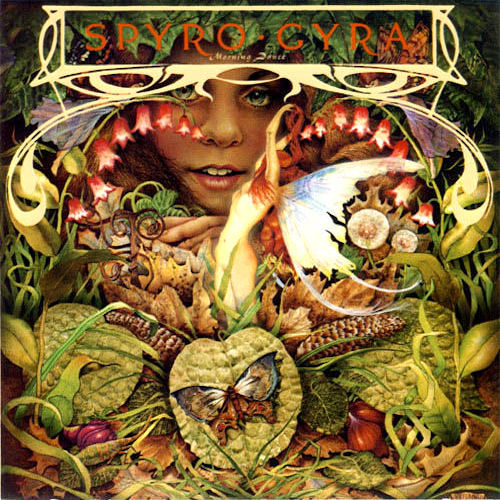
"Morning Dance" (Vinyl)
Spyro Gyra's sophomore (and most commercially successful) album was released in 1979. It contained one of the band's most successful chart-topping songs, "Morning Dance."
Another venture into the foray of late-70's jazz fusion groups, Spryo Gyra at least can claim that they came from a very unglamorous beginning playing bars and clubs in Buffalo, NY. Unlike their California-born counterparts, there's a blue collar street cred to these boys.
The lineup on this album is considered their most successful. While Gyra still performs today, there are only a handful of original members.
"Morning Dance" (Vinyl)
Spyro Gyra's sophomore (and most commercially successful) album was released in 1979. It contained one of the band's most successful chart-topping songs, "Morning Dance."
Another venture into the foray of late-70's jazz fusion groups, Spryo Gyra at least can claim that they came from a very unglamorous beginning playing bars and clubs in Buffalo, NY. Unlike their California-born counterparts, there's a blue collar street cred to these boys.
The lineup on this album is considered their most successful. While Gyra still performs today, there are only a handful of original members.
Charlie Fox & the Ring of Sound
"All" (Vinyl)
It's been another lengthy haitus this summer. I think we're back for a while this time. I think.
This album is kind of a rarity, according to the Interweb. There's very little information easily found about this album. There's also little information about Charlie Fox. Or the Ring of Sound.
What is this? It's an album full of poppy jazz arrangements of popular favorites (including "Greensleeves" and "Eleanor Rigby") and apparently it's a fairly rare record even though prices on eBay range from $10 to $50 for a copy of the record.
"All" (Vinyl)
It's been another lengthy haitus this summer. I think we're back for a while this time. I think.
This album is kind of a rarity, according to the Interweb. There's very little information easily found about this album. There's also little information about Charlie Fox. Or the Ring of Sound.
What is this? It's an album full of poppy jazz arrangements of popular favorites (including "Greensleeves" and "Eleanor Rigby") and apparently it's a fairly rare record even though prices on eBay range from $10 to $50 for a copy of the record.
Sunday, August 04, 2013
Dr. Hook
"The Best of Dr. Hook" (Vinyl)
The first of many compilation album from Dr. Hook and the Medicine Show was released in 1976.
These guys didn't take too many things seriously as evident by their lyrics, musical arrangements and album artwork.
How many bands get a one-eyed cowboy for their frontman?
His voice is as distinctive and interesting as any I've heard.
"The Best of Dr. Hook" (Vinyl)
The first of many compilation album from Dr. Hook and the Medicine Show was released in 1976.
These guys didn't take too many things seriously as evident by their lyrics, musical arrangements and album artwork.
How many bands get a one-eyed cowboy for their frontman?
His voice is as distinctive and interesting as any I've heard.
Ruth Welcome
"Zither Magic!" (Vinyl)
This album is exactly what it looks like.
I can't honestly say I would ever listen to this again, but because of the album artwork, I can't really bear to get rid of it.
Some things are just worth hanging up on the wall.
This isn't one of those things.
But it makes me laugh.
"Zither Magic!" (Vinyl)
This album is exactly what it looks like.
I can't honestly say I would ever listen to this again, but because of the album artwork, I can't really bear to get rid of it.
Some things are just worth hanging up on the wall.
This isn't one of those things.
But it makes me laugh.
.38 Special
"Rockin' Into the Night" (Vinyl)
The Southern rocker's third album was released in 1980. It also yielded the band their first big hit, the title track "Rockin' Into the Night" which resembles most closely KISS-worthy arena rock.
Lead singer Donnie Van Zandt is brother to Skynyrd vocalists Johnny and Ronnie Van Zandt. Imagine calling someone's name around the dinner table in that house.
Unlike Lynyrd Skynyrd, this album feels more closely tied to arena and riff-heavy rock than any Southern-fried Bayou-born boogie. Whether or not it's memorable is another question...
"Rockin' Into the Night" (Vinyl)
The Southern rocker's third album was released in 1980. It also yielded the band their first big hit, the title track "Rockin' Into the Night" which resembles most closely KISS-worthy arena rock.
Lead singer Donnie Van Zandt is brother to Skynyrd vocalists Johnny and Ronnie Van Zandt. Imagine calling someone's name around the dinner table in that house.
Unlike Lynyrd Skynyrd, this album feels more closely tied to arena and riff-heavy rock than any Southern-fried Bayou-born boogie. Whether or not it's memorable is another question...
Subscribe to:
Posts (Atom)