Sunday, July 02, 2006


So, what’d you do this weekend?

…oh, not much of anything, really.

(That is my thinly veiled attempt to be sarcastic, of course.)

I am not the happiest of birthday boys on this, my birthday.

Facebook.com is a wonderful thing. It allows us negligent and forgetful college students the opportunity to say “happy birthday” to our friends, which not only helps us feel better, but it also makes the birthday-ee feel as though he/she actually has friends that would remember his/her birthday. In reality, of course, we never have any idea of when anyone’s birthday is.

This is why Facebook is helpful. It sends us little notices when our friends’ birthdays are approaching, allowing us the false foresight to write them a little note, wishing them a happy birthday. The birthday boy feels happy to have heard from so many of his friends, and the world continues to exist.

Anyway…

This past week has been a struggle as far as the weight loss goes; virtually all of my effort has gone into finding decent menu choices and having the time to get some running in.

What is the reason for this madness?
Well, it is work, actually.
Because of the fourth of July, there have been a lot of extra gigs happening, since everyone wants to share in the patriotic fervor of the season. This means an endless procession of Sousa marches, more than a dozen numbers with the word “stars” in the title, and a goodly number more which feature music written for the silver screen. And if you’re good, we may even throw in some Beatles arrangements.

All in all, not the most stimulating of repertoire, from a musical standpoint, but fun none the less, and it is fun to see the audiences turn out wearing umbrella hats, red,white and blue t-shirts and black socks with sandals. Plus, they really get into it. You’d think it was like they didn’t hear John Philip Sousa ever single year. Over and over again. Ad nauseum. Every. Single. Year.

So there are two orchestras that have conspired to try and destroy my weight-loss efforts. By their forces combined, they seek the destruction of my valiant effort to join America’s Armed Forces.

The culprits:

The Lima Symphony Orchestra
The Ashland Symphony Orchestra

Both of these cities reside in South-Western Ohio, a good 1.5 hour drive minimally, a 3.5 hour drive maximally.

The observed conclusion: There is nothing in this gosh-forsaken part of the state.

Nothing.

We saw a Pamida once, but we spooked it, and it ran away into the brush, never to be seen again. Too bad. It had Coke 12-packs on sale for $2.59.

So the past five days had seen me spend nights in two different cities, driving approximately 22 hours, spotting precisely 15,304 corn silos, and playing for audiences whose medium age averages around 93.

The breakdown:

Thursday: First rehearsal with the Lima Symphony. Drive with amiga Lala to forsaken town no. 1: Lima. Over three hours in the car over one deserted country road to the next, sharing a single-lane road with spatially-unaware semis and senile Oldsmobile operators.

We arrive at the lovely theater in Lima, sharing a stage which was once graced by the likes of the traveling production of Bedknobs & Broomsticks and the Second City touring company. It boggles the mind.

Fifteen hours later, having exhausted the complete catalog of Sousa marches, we are freed from our imprisonment, only to discover that we must make the lengthy traverse back to the Land which is Cleve in the dead of night, when were-tractors and their minion stalk the countryside, preying on those foolish enough to travel through their dominion.

Despite the overwhelming odds, we make it home in the dead of night.
Waking up the next morning, we realize we have to repeat the entire ordeal.

At the end of this evening’s rehearsal, the idea of returning home proves too much for Lala, and we instead take a safer route to the land of Bowling Green where we stay with a friend of Lala’s who offers us her couches in exchange for spending the late-night hours awake in various establishments of debauchery and sinister behavior, imbibing beverages and smoking like a chimney. Our hero reluctantly agrees, thinking of how hard running in the morning will be in his flip-flops.

The next day is our first concert. We travel even further into the desolate forsakenness that is Ohio. We see endless carcasses of those who have gone before, unknowing victims of the merciless were-tractors.

Our heroes arrive in the little town of Van Wert, recently devastated by were-tractors, but more relevantly, news that Honda has decided to put its new factory in Indiana, instead of in the basement of the local United Methodist church. The entire parsonage is weeping, and the orchestra is forced to listen to endless diatribes lamenting the loss, yet self-congratulating themselves, yearning to find the silver-lining to the cloud that was pouring acid rain down upon them.

Another night in Bowling Green, another endless vigil at a similar house of debauchery, engaged in pointless conversation about an ex-girlfriend who turned out to be a lot more insane than I ever thought. Our hero is immediately glad that we decided to cut things off with the Amazing Insano.

Saw a most curious example of genetic engineering gone wrong:

In Bowling Green, a local, (or Flatlander, as they’re affectionately referred to by the superior out-of-towners,) will stop for an emergency vehicle. Now this is a normal, conditioned, law-abiding response, but not if you’re a PEDESTRIAN!

What a moron.

We return late Saturday morning to find things quite the way I left them, (i.e. a complete mess) and am curiously disgusted to find my right knee is no longer capable of supporting my flabby frame on long runs. This is not a good development.

Sunday comes, brings my birthday with it. Unceremoniously beats the snot out of it, and leaves it for dead on my doorstep. I unwittingly find my day of birth on my doorstep when I leave the house for my daily run, and decide rather quickly that this is a bad omen.

I race out of the house to Ashland, hopefully evading the deadly Sunday who enjoys killing birthdays, only to find myself stranded in another sinkhole of civilization. There is a Wal-mart here, but its sandwiched between a Tractor Supply store, (probably the same place where those stupid were-tractors are nesting during the day) and a Payless Shoe Source. All tell-tale signs of white trash. Let all who enter beware.

We find ourselves in the four-hour break between rehearsal and concert. In another hour we will begin our set of patriotic tunes, bookeneded by, what else?
Sousa death marches.

May the star-spangled banner be soaked in the blood of were-tractors forever.

And can I please get some sleep tonight?!! Those who are three hours ahead of me on the clock can take notice!!!

T.

Tuesday, June 27, 2006


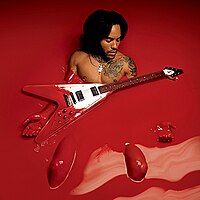
Music Review: Lenny Kravitz: Baptism

Lenny Kravitz has become something of a institution in the modern free-for-all known as rock ‘n roll. His cover of the Guess Who’s “American Woman” will have him enshrined in rock lore for a long time, while original tunes like “Fly Away” showcase his ability for assembling a great hard rock song.

When Lenny Kravitz is on, he’s classic.

However, try as he might, Kravitz can never seem to come away with more than two great songs on any given album. I fear his attention is mostly given to creating his hit singles, and the rest of the tracks he spends time baring his soul with limp-legged uninspired tunes.

When Lenny Kravitz is off, he’s forgettable.

Baptism is proving to be no exception to the rule. Blasting on to the charts powered by his lead-off single “Lady,” it was then followed up with the more impressive “Where Are We Runnin’?” which then proved to be the last we heard of Lenny for the meanwhile.

The other eleven tracks on this album prove to be easily skipped over on the CD, because there just isn’t anything there which is that inspired.

The one late highlight to the disc is Kravitz’s duet with Jay-Z who makes a notable guest appearance.

Aside from “Lady” and “Where Are We Runnin’?” I fear this album will slip into the $4.99 bin at Wal-mart soon enough, joining many of his other works like Lenny, Mama Said and Are You Gonna Go My Way?

Kravitz has a phenomenal persona. His image and his style add up to being truly larger than life. Sadly, I just don’t think his talent or vision is capable of keeping up.

Final Grade: C-

Movie Review: A Prairie Home Companion

Starring: Garrison Keillor, Kevin Kline, Maya Rudolph, Meryll Streep, Lily Tomlin, Lindsay Lohan, John C. Reilly, Woody Harrelson, Virginia Madsen, Tommy Lee Jones, the Guys All-Star Shoe Band
Directed By: Robert Altman

This is a film that will be on the must-see list for any fan(s) of:

Prairie Home Companion, Garrison Keillor, Meryll Streep, Kevin Kline, St. Paul, MN, F. Scott Fitzgerald, Tommy Lee Jones, Virginia Madsen, Cowboys, Film Noir, Lindsay Lohan, Bluegrass Music, NPR, Robert Altman,The Guys All-Star Shoe Band, Tim Russel, Radio, Dirty Jokes, Old Theater Buildings, Lily Tomlin, Maya Rudolph, Spaguetti Sauce, Minnesota, the Midwest, or Gym Socks.

I don’t know how big of a fan of NPR’s Prairie Home Companion Robert Altman is, but judging by the way he crafted this film, you would think it was a labor of love for the veteran director.
Altman, having achieved legendary status as a director with such classic films as M*A*S*H* and Gosford Park turns his eye to the world of public radio, and a beloved radio program which still broadcasts most Saturday evenings from the F. Scott Fitzgerald Theatre in downtown St. Paul, Minnesota.
Featuring a A-list roster of actors, many of whom play characters which regularly appear on PHC, the show is stuff to the rim with an endless variety of things for the eye and ear to take in.

The Premise: We follow the events at what proves to be the very last broadcast of a Prairie Home Companion on WLT because of a recent corporate buy-out, and the current owners feel the show has outlived its time. Various characters react in different ways, but it is, despite their resistance and struggle, the last time a broadcast airs from the Fitzgerald stage.

From the first few moments this film was such a joy for me to watch. Often times studios will find it much easier to recreate a location inside a massive sound stage in Hollywood, which allows their camera and lighting crew a much easier task, not to mention not having an entire cast and crew displaced to a new city for the duration of shooting.
But it becomes very clear quickly that the F. Scott Fitzgerald theatre itself is going to be a main character in this film, which ends up being of the great delights of the picture.

The theatre, (particularly the backstage area) is not large, so the camera is never far away from its subjects, often pressing you into the midst of their conversation, almost by accident. The surroundings become part of the story, not only because of their uniquely individual architecture and decorations, but because it forces you to stay close to the character, to the story by not letting the camera ever take a wide-angle shot.
Even in the main theatre, (which is not a very large auditorium) you never swing away to a dizzying height on a crane shot, showing you the grandeur of the hall. We are meant to feel close to the cast, as though they were old friends who have come for dinner, and they all brought banjos.

Most dialogue scenes are filled with Altman’s signature overlapping dialogue, which some would argue is an attempt to have more seemingly organic conversation, but in the case of the mayhem of a concert backstage, it helps to heighten the chaos and confusion, allowing the individual’s ears to choose what it wants to listen to.

As I mentioned before, many of the characters that have been created during PHC’s tenure on the radio are characters in the film. The casting for this film was really excellent. Chosen are a roster of actors whom share many Oscars between them. Whether it be an honor to work with Altman, or belief in the story they’re telling, or perhaps its just love of the game, but the actors all seemed to be having a great time working their craft.

Guy Noir, the radio detective in the vein of the Shadow, is played by Kevin Kline, who heads up security for the Fitzgerald, and spends his time in the movie searching for the elusive Virginia Madsen, who turns out to be the death angel. Kline definitely got to play the most comically with his character. It was fun to see his impressions of Guy Noir, probably having listened to the entire recorded history at least once to get an idea of how Garrison Keillor made him talk, which in turn gave him an idea of mannerisms and level of basic intelligence. (Which as it turns out, is rather low.)

Dusty and Lefty, the trail hand cowboys are played by John C. Reilly and Woody Harrelson. The radio PHC usually depicts them on the lonely dusty trail somewhere herding cattle somewhere in Minnesota or Iowa, but for the purposes of the movie, Dusty and Lefty wander around backstage in full regalia, looking reminiscent of the Marlboro man, complete with faces that looked like they haven’t seem soap in weeks.

Meryll Streep and Lily Tomlin play fictional characters created for the film. The Johnson Sisters are gospel-singing sisters from Wisconsin one of whom has a history with Mr. Keillor (or as the film refers to him, GK.) They perform on the show (using their real voices) and try to crash-land one of the faux-commercials involving duct tape. All in all their presence is a lot of fun, and Streep again accomplishes the task of creating such an organic character, that you feel as though you have known her your whole life.

Garrison Keillor really does steal the show, however. It is his ship, after all.
I wondered how they were going to handle his role in the movie. PHC is a one-man show in many respects, and it was comforting to see that they did very much keep him in the center of attention.
He took on all the responsibilities we’re used to hearing him do on the radio, singing, hosting, monologuing, and quite surprisingly, being exactly the same person on screen that we hear on the radio.

This begs the question: is Garrison Keillor ever not Garrison Keillor?

In the film, GK is constantly being distracted by one conversation or another, a seemingly bottomless well of subtly humorous stories, usually involving “pants around his ankles” as a punch line.

It is true: Garrison Keillor is an ugly man. He looks sort of like a carp. An old carp.

(Side Note: Saturday Night Live’s Maya Rudolph makes her most impressive and human performance with this film – too bad she doesn’t get to do this on SNL.)

This film is worthy of remembering come Awards Season again. Altman should get a nod, as well as art production, set design and a slew of other technical awards for the work accomplished filming inside the F. Scott Fitzgerald.
As far as acting goes, we have a long year ahead of us, so it’s too early to tell.

The Grade: A+

Saturday, June 24, 2006


Movie Review: Nacho Libre
Starring: Jack Black, Hector Jimenez, Ana de la Reguera
Directed by: Jared Hess

If any of you have read this blog for a while you’ll remember my first reaction to hearing of this film’s production. I believe it went something like this:

“The greatest idea for a movie. Ever.”

Perhaps I am paraphrasing slightly.

I had the honor of watching an early screening of this film with my mother (the poor girl) the night before it was released.
I’m afraid I have to say that this film joins a growing category of films where my concept for the film ends up being funnier than the film produced.

This film has been anticipated by millions for two different reasons:

1. The return of Jack Black. Ever since School of Rock, audiences have fed out of Mr. Black’s hand. The promotions for this film looked beyond ridiculous, and finally gave reason for any comic’s coup de grace: wearing tights. (Think Elf.)

2. The return of Jared Hess. The now infamous director of Napoleon Dynamite, 2004’s cult comedy hit makes his sophomoric return with Nacho.

2(a). Mike White, writer of School of Rock and Orange County reunites with School alum Jack Black for both a writing and a producing credit.

The premise: Black plays a monk (Nacho) in a Mexican monastery who tries to fulfill his childhood dream of being a Luchidore, even despite the warnings by the head priests that wrestling is evil, and he would certainly be dismissed from the monastery for his actions.
Despite the warnings, Black’s character begins an adventure to become the greatest luchadore that Mexico has ever known.
Oh, and Nacho falls in love with a nun, Sister Encarnacioin, (de la Reguera.)

Simple plot, and for a director such as Hess, whose success was entirely based upon his ability to point the camera at his actors and let them do the work.
The reciepe worked wonderfully, and it should be a formula that works again if Mr. Hess gets the right combination of tools to work with.
I say it should work again, because sadly, just like Nacho, this film falls flat on its rear several times.

Jack Black single-handedly attempts to carry this film from start to finish. From opening sequence to finish, he is rarely out of sight of the camera, and sadly, when he is, the film often falls flat on its face.

Jared does try to follow the same formula for success he found with Napoleon, choosing unique and bizarre looking characters, surrounding them by sometimes obscene and hilarious surroundings, trying to let what sits in front of the camera do most of the work for him.
For one reason or another, however, the film staggers across the finish line, dragging its feet behind itself.
There are numerous sequences which I laughed out loud at, but sadly, these parts were too few and far between to consider the film cohesive.

On another note, the writer's obsession with making Nacho fall in love with a nun is both alarming and against all logic. Nacho may want to be a wrestler, but would he really desire the love of a woman as well? Perhaps he didn't pay attention in any of the monastery classes. Either that or the Mormans have an axe to grind with the Catholic church.

Jack Black’s performance is memorable for many different reasons, and it will certainly go down among his funniest, but Nacho Libre will be shelved next to other films whose potential exceeded the product.

Grade: C

T.

Music Review: Red Hot Chili Peppers: Stadium Arcadium

This is a little late in coming. The Peppers’ new album has been on the shelves for well over a month now, but I am only now getting around to talking about it. Why is that?
Lazy?
Disinterested?

Well, it could be that the whole album is 28 songs long!
It has officially been released as a two-disc album, which of course means you have to pay more for it, which could very well translate to being more Chili Peppers than you ever thought you could’ve wanted.

The real reason that its taken me this long to mention it is simply that I didn’t feel ready to say anything about it. Due to the mystical forces of the internet, I did have this album in my iPod before it was released to the public. A few listen-throughs and I knew that this was going to require more attention than I have given other albums.

Most reviews of this album by real critics have largely been glowing. Not only citing a forward-looking, cutting-edge Chili Peppers, but because of its length, calling it a “milestone” and a “tantamount achievement.”

No offense, but most of this seems that someone's trying to blow sunshine up someone's......

I am a huge fan of the Chili Peppers’ more recent works, including Californication and By the Way, and have recently fallen in love with their earlier (and arguably finest) album, BloodSugarSexMagik.
The Chili Peppers blasted onto the scene in the 80's with a unique blend of funk, punk and rock sautted with just a pinch of hard metal. Their more recent works have shown a softer, more melodic side, showcasing frontman Anthony Keidis’ ear for tuneful melodies and heart-felt lyrics.

Stadium Arcadium is the Chili Peppers’ most important effort to marry their two personalities together, coupling songs that recall their early funk-rock years with their more recent style.
Being a real fan of their music, and with so much going on in this album, I had to be sure I gave as fair a review as I could.
Because my readers deserve nothing less. Awww...

The album is separated on two discs titled Venus and Mars. As I mentioned before, this album is the Chili Peppers’ most obvious and blatant attempt to have some sort of marriage between their songwriting styles.
The first single off of the album, Dani California,represents their older style, while potential future singles like Slow Cheetah or Torture Me showcase a milder, more contemplative style.

The lowdown: All of the songs on here are as interesting and intriguing as any the Chili Peppers have ever written.

The problem: With 28 songs, after a while, you just don’t care. Several songs could flash by before you finally come across something that actually catches your ear again.

I can honestly say that as stand-alone tracks, these are finely written, crafted and produced tracks, but I do wish the Chili Peppers had chosen another way of releasing this material. They could have followed System of a Down’s example, and released their material in two separate albums at two different times. (In contrast, both of the Peppers’ albums would be worth listening to.)
After having been in the game for so long, I think it would’ve been better to have a different strategy in seeing this material released. At two solid hours of music, perhaps even the Peppers should know when enough is enough.

Key Tracks: Dani California, Torture Me, Hard to Concentrate, Desecration Smile

The Inevitable Grade: Because of its length, Stadium takes a step down to a C+

Thursday, June 15, 2006


Movie Review: United 93

Seldom does a film that is required to say so little or so much say only exactly what it must.

The subject of this matter of this film was the subject of a previous post where we debated the need of this film, but mostly focused on the artistic merit of such a project.
I was fortunate enough to find myself in a theater that was still showing this film. I imagine the number of screens showing this film has shrunken to almost none by now, since it has been months since its initial release.
This film was written and directed by Englishman Paul Greengrass, and most of the production took place in London. For such a uniquely American story, it is frustrating that the work had to fall into the hands of an ally just to be done with dignity and clarity.
This film was shot using a great deal of hand-held camera shots. Popularized by documentary filmmakers, the practice has been adopted by studio pictures as a way of heightening reality. We are used to seeing grainy, wobbly news footage on CNN, and filmmakers do their best to recreate that sense of uncertainty using a very basic and primitive camera method. Sadly, this technique was really over-used, and I left the theater feeling nauseous just from the jerky camera.

I am pleased to report that this film is everything it should have been. Obviously a hot-button topic for a film, I was pleased to see that the story was the star of the show. All of the actors in the film were unknown, which was an essential choice to make, since any well-known actors would act in counterpoint to the story’s impact. This film’s greatest success is how it allows you to be a fly on the wall in all of the different locations affected that day. Whether it is the air traffic control room, where you hear the confused and chaotic chatter of a dozen controllers shouting commands, or the Air Force’s command center when orders and being hurled right and left, you are left to hear what you choose to hear, to pay attention to what you find intriguing. I think this is a large part of the film’s success, because it simply allows for us to watch the story unfold in as natural a re-creation as I could imagine.
The film wastes no time in throwing you into the middle of the action. The passengers are quickly boarded, and then shortly after that, air traffic controllers begin to lose contact with several airplanes. You watch helpless as the first two planes crash into the World Trade Center, angered and enraged at being unable to help. The pace of the film doesn’t let up until the very end. With mounting confusion we follow the actions taken by hundreds of air traffic controllers and military personnel as they seek to understand what is happening, and then seek to react to it. Numerous members of the cast were actually playing their real-life roles on the screen, which not only demonstrates their character, but also the urgency and importance of their decisions. It also made me feel encouraged to see these men and women so carefully tend to their duties even in the midst of an absolute chaos, they never forgot their jobs, and never abandoned their posts.

The story of the passengers aboard United 93 only emerges later in the film, after three of the planes had already hit their targets and the terrorists aboard United 93 finally made their move. It was inspiring and heart-wrenching to watch a group of men begin to organize and plan their assault on the cockpit, knowing full well that the chances of survival were slim. One by one any able-bodied man collected their minds and finally launched their assault up the narrow aisle, bodies tumbling and churning as the pilot dove and spun in effort to throw them off their feet. Finally though, as we all know, they made it to the cockpit, and the final seconds of the movie are an insane flurry of flesh and cloth as hands struggle for control of the aircraft; all the while, the sunny Pennsylvania landscape rushes towards the audience.

I believe this is a film all American should see. It is constantly chastised for being “too soon” and “insensitive” to those who mourn the loss of loved ones, but at a time when most Americans have seemingly already forgotten why we fight a war, this is an essential tool that we must use to remind those who would dismiss the evil against which we struggle.
I will buy this film on DVD the day it is released, and I will share it with as many as will watch it.
Overall Grade: A+

T.

Movie Review: Cars
Starring: Owen Wilson, Paul Newman, John Ratzenberger, Larry the Cable Guy, Cheech Marin
Directed by: John Lasseter

Pixar’s first film under their new marriage with Disney has been anticipated since their last film was in theatres. In the dawning age of CGI garbage, Pixar has stood as a lone bastion of quality entertainment, innovated story-telling and above all: creativity.
The early reviews for Cars promised that the highest of expectations would be filled. Pixar had created yet another classic. I must admit, I was hoping it to be the case.

Cars is a technological triumph in and of itself. Now that every movie studio who seeks to make family films has converted to CGI animation, Pixar has had to raise the bar every film to prove why they remain the standard-bearer. Many of the lighting effects are stunning, and the dozens of different stages of dirt that gets caked onto the cars’ bodies would’ve made animators cringe even a few years ago.
Yet the measuring stick for Pixar is not only for their technological prowess, but also for their care of a great story line. Pixar films have been one of the few places where stories are the only reason a film is made. Films like Toy Story, Monsters Inc. and theIncredibles mix the fantastic with the mundane in such a real way that we can see the possibility in our own lives of the toys coming alive behind our backs, or that there really might be a monster in our closet. (Benevolent, of course.)
That being said, Pixar has raised the bar for so long that it begins to be an impossibility that they will continue to astound and amaze us. Sadly, Cars is a step back for Pixar.
Alike Bugs Life, I believe it will be a film worthy of the Pixar name, but overshadowed b those who came before and (hopefully) those who follow.

The story follows Lightning McQueen (Owens) a rookie race car who is poised to win the Piston Cup, the highest accomplishment for any race car. He seeks to take the crown away from the King, long-time veteran of the race track (voiced appropriately by Richard Petty.) However, en route to a tie-breaker race in California, Lightning is lost in the desert of Arizona where he accidentally destroys the main street of a little town called Radiator Springs. He then finds himself trapped there until he repairs the road. In the meanwhile, he not only falls in love with the tiny little town and its inhabitants, but also with a Porsche.

This film ultimately has a very uplifting and charming moral. The appeal and value of small-town life is far more important than getting somewhere fast. Aside from the friendships that Lightning makes with the residents, he also falls in love with the land and the history of the region. It is eventually learned that everything we think we need may be right under our noses the whole time.

The downfalls with this film lie in the very nature of its characters. Automobiles are often anthromorphic and are projected with various human characteristics, but even from the first preview I had certain reservations about all of the characters of this film being cars. I hoped that the film would change my mind, but I’m afraid I left feeling unsatisfied with the whole affair. I raced my Hot Wheels as a kid, and then had a fantastic crash. But I never made them talk to one another.
This point aside, I can’t say that this story has been their strongest. There are timeless elements to the story, but overall, I can’t say I feel this movie will achieve the same legendary status as their other films. I just don’t feel it’ll be as memorable.

One of the funniest moments in the film occurs when Lightning and Mater (Larry the Cable Guy) go Tractor Tipping, a vehicled version of cow tipping. The other moment that really stands out is when John Ratzenberger’s character finally confronts the other several characters he has played in the other Pixar films.

Overall Grade: C+

T.

Monday, June 12, 2006


CORVALLIS, Ore. — A main ingredient in beer may help prevent prostate cancer and enlargement, according to a new study. But researchers say don't rush out to stock the refrigerator because the ingredient is present in such small amounts that a person would have to drink more than 17 beers to benefit.

Oregon State University researchers say the compound xanthohumol, found in hops, inhibits a specific protein in the cells along the surface of the prostate gland.

The protein acts like a signal switch that turns on a variety of animal and human cancers, including prostate cancer.

Cancer typically results from uncontrolled cell reproduction and growth. Xanthohumol belongs to a group of plant compounds called flavonoids, which can trigger the programmed cell death that controls growth, researchers say.

Xanthohumol was first discovered in hops in 1913, but its health effects were not known until about 10 years ago, when it was first studied by Fred Stevens, assistant professor of medicinal chemistry at OSU's College of Pharmacy.

Last fall, Stevens published an update on xanthohumol in the journal Phytochemistry that drew international attention.

Stevens says it possible for drug companies to develop pills containing concentrated doses of the flavonoid found in the hops used to brew beer.

He also says researchers could work to increase the xanthohumol content of hops.

There are already a number of food supplements on the market containing hops, and scientists in Germany have developed a beer that contains 10 times the amount of xanthohumol as traditional brews. The drink is being marketed as a healthy beer, but research is still under way to determine if it has any effect against cancer.

The latest Oregon State University research was published in a recent issue of Cancer Letters.

Saturday, June 03, 2006

A New Record...Faster, Stronger...

Today I ran five miles in 39:40

Mile average: 7:56

yay!

I'm quite happy with this. My diet is stalling on me again, but we'll get it figured out.

T.

Thursday, June 01, 2006

The Fitness Plan Week 7....

Progress Made:

Weight Lost: 21 lbs

Fastest Mile: 7:30 min

Fastest Average: 8:30 min

Fastest 1.5 Mile: 10:40 min

Average Rate: 9 min

Average Distance: 6-7 miles (5 in morning, another 1 to 2 in the evening)

Sit ups: 50 (one set)

Push-ups: 34 (one set)

Caloric Intake: 1200 - 1300 calories daily

The trick is proving to be to choose the most pure forms of fuel to put in, since I only get so many calories, what is going to give me the biggest bump in nutrition, energy and satisfaction? It's become something of a game. I don't crave too many junk foods any more. Average meals: 5-6 throughout the day, although its a bad idea to eat anything after 8 o'clock.

How will this change over the next few weeks as my routine is interrupted? I will simply have to find a new routine, and not make any compromises. Especially on the diet.

Tomorrow's my light work-out day. I'm going to help my friend move instead of going to the gym... Carrying a desk down seven flights of stairs should prove to be adequte.

T.

P.S. Secret bonus: The veins running the length of my biceps are reappearing. I find it terribly exciting. Testosterone at all time highs.

Music Review: The Black Keys: Chulahoma EP: the songs of Junior Kimbrough
Junior Kimbrough was a bar owner in Mississippi and died in the 1970’s. In addition to fathering an enormous family, he was also a blues song-writer. This homage by the Black Keys features six of his songs.
I must confess that I had not previously heard of Junior Kimbrough, nor any of the songs that are featured on this EP. Being very familiar with the Black Keys’ signature sound, I was curious to see how the Keys took on another artists’ songs, since most of their work is original material written by guitarist/singer Dan Auerbach. It was pretty apparent that they had a deep respect for these songs, so it was interesting to see how carefully (or carelessly) they decided to handle these songs.
Knowing these songs would’ve originally been played on acoustic guitar and voice, the Black Key’s recipe of voice, electric guitar and drums would seem a drastic change. And indeed, it has taken several listen-throughs for me to become comfortable with the adaptation of their sound. The Keys’ original tunes usually are built around Pat Carney’s funkified drum stylings, so the scaled-back approach to his playing on this project was a little surprising. Indeed, if there is a weak point to this project, I would have to say it is the drum line, which at times I feel was a little tacked on. The other elements, (voice and guitar) were already written. The only truly concocted part of this project was the drum beats, and Pat Carney’s decision to play down his presence is understandable, but it is a sad misuse of his unique drum stylings.
The songs themselves are sprawling, relaxed and slow-paced. It is an easy picture to envision Junior sitting outside his bar in Mississippi singing these songs. Obviously Junior didn’t have anywhere to go real quickly, but the Keys’ interpretation adds a restrained intensity. In part to the drum’s insistence, but also Auerbach’s fingers seem reluctant to let go of any note, giving a great tension to the songs.
I would not consider this the Black Keys’ greatest work. In fact, I would put it last on the “need to own” list for the Keys’ works. But it is obviously a labor of love for the boys from Akron – a project that they felt very strongly about doing, and in honoring one of their favorite songwriters. And as the band's final release under their contract with Fat Possum records, it is a fitting swan song. The Black Keys have moved to Nonesuch and are opening for Radiohead in the next several months. Now there's a weird concert to go see...
Grade: B-

Tuesday, May 16, 2006


Music Review: The Raconeurs Broken Boy Soldiers

Lauded as "Jack White's other (insert 'better') band," stands poised to take the title of rock supergroup of the year. Who they're taking it from is another less interesting story.

Jack White (of the White Stripes) teams up with fellow Detroit native Brendan Benson for this collaborative effort which also features rhythm being provided by members of the Greenhornes, their personalities and names inconsequential. All we are concerned with is the genius of Jack White and the melodic wanderings of Mr. Benson.

I speak tongue-in-cheek, of course. Reading reviews over the last few months about this anticipated release has allowed music critics to let it slip that they would've always much preferred the White Stripes had it actually had a better drummer and a bass line. Shame on you all.

But we are here to discuss the Rac Pack...

Benson and White take a total 50/50 credit on the writing of these songs. Listening through the whole album, each of their hands is very clear. Knowing Benson's Alternative to Love and virtually all of Jack White's output, it is fairly apparent when one songwriter takes the helm from the other. Their styles are vastly different, but do work together to create a genuinely unique and unusual sound. Some of the songs harken back to an older generation, such as Store Bought Bones which recalls early psychadelia, or the closing track Blue Veins which is straight-foward blues.
The majority of these tracks, however, are truly a hybrid style of White's growling guitar riffs and howling vocals and Benson's melodic turns. Add to it the solid but never over-powering backbone from the Nameless Ones, and you have a collection of songs that really doesn't sound like anything else on the shelves right now.
On the track Broken Boy Soldiers, Jack White shows why he is still one of the best blues rock singers going at it right now. But this time, enough vocal damage has occured so that White sounds more like an old woman than a 31 year old man.
On the track Yellow Sun, Benson's ability to create a captivating melodic/chordal combination plays out nicely in a chorus that catches the ear every time.
Oddly enough, only three of the tracks on this disc start without any sort of weird ambient lead-in or studio noise. What's the deal? Also, the art design for the CD case is decidedly disappointing. The photograph on the front cover looks as though the band took a cheap polaroid photograph of themselves in poorly done makeup, with no attempt made to clean up the photograph, sharpen the image or to deify them in any way. The disc itself as well as a border around the photograph features a great deal of golden script filagrie which seems to have no pattern. In short, it's confusing to the eye and I found it more of a distraction. Often times I'm able to tell what sort of design influence a package has had, but with this album, I am confused. There seemed to be little thought put into the look of the bands image. Even looking at the band's publicity stills I get the sense of four men standing in frame together, but there isn't a cohesive sense of uniformity between the bandmates. If the band's intent is to remain a coalition of individuals, that is fine, but at least shoot the photographs in black and white so we don't have to enjoy your clashing choices of clothing.

The Grade: Music: B+ (Because of a few weak tracks)
Art Design: D

The T. has spoken.

Friday, May 12, 2006


I've Realized There are a Few Things I Could Do Now...

...now that I have the time...


...there are a few things I would like to try my hand at:

Learn Karate
Learn to Dance
Knife Fighting
Learn Guitar
Learn Drums
Learn the Stock Market
Juggling Axes
Raquet Ball
Bull Fighting

...I think I might keep myself pretty busy...

Wednesday, May 10, 2006


This is my sister...

...and she is worried about climbing on an airplane?

The First Taste of Summer...
I felt it today as I was moving through my house.

You usually have to be moving in order to sense these sorts of things. If you sit still, the air itself can't breathe.

I felt it as I was going up and down my stairs. It was there.

That humidity. That sticky resistance between the skin of my foot and the wooden stair.

And I could feel it when I stood still.

The heavy stillness of air laden with summertime rain, waiting for the right moment to soak the earth.

I could smell it as I moved through my house. Flowers smell differently in the summer.

I enjoy it now because one day I will realize it is summer. It will be too warm and still, and I will go around with the perennial moist spots beneath my arms and between my shoulders.

I can enjoy this stillness now. I can enjoy it and I can see ahead.

T.

Tuesday, May 09, 2006

In effort to memorialize my current circumstances a little bit
...I ran around the house with my camera and snapped these pictures. Some of them turned out pretty well... the sum is more interesting than the parts. Enjoy

T.


I'm Still Rather Proud of Myself...


Movie Review: Mission Improbable III

When will the super-spies learn? The minute you have a wife, girlfriend, children, puppy, sportscar, or a goldfish, your nemesis will exploit it and seek your downfall by holding your beloved hostage.
You would’ve thought that any of the other spy/thriller movies where the hero’s lover is taken prisoner and held hostage at the hand of some diabolical and fantastic instrument of death would begin to be a roadmap to destruction for the spies who would follow later. But as smart as they are, they don’t seem to learn. This leaves the helpless movie-going audience no choice but to shout out advice to the characters on the screen hoping they’ll learn from others mistakes.

Interestingly enough, this movie managed to be just as entertaining as MI: II with only a fraction of the plot.

Thinking back, I can’t even remember what the plot was intended to be. Quite obviously, it was inconsequential. What was important was the elaborately conceived action sequences which effectively destroyed one-quarter’s worth of the gross national product. And then when they blew up all they could, they went to Shanghai and started chipping away at the Chinese industry.

The Premise: Tom Cruise revisits the ready-made American hero Ethan Hunt, star agent of the IMF (“Impossible Mission Force”? Does that really sound as retarded as it looks?) who is now training other agents to go out into the field. Apparently battling John Voigt inside the Chunnel just adds a few too many grey hairs. Know what I mean?
This time around Ethan has found a nurse that he wants to marry, so the early scenes are spent establishing Ethan’s relationship with her family at an engagement party. Ethan is eventually convinced to go back into the field to rescue an agent he trained. She dies in his arms (how poetic) and sends Ethan on a hunt to find the black market wizard Davien (played by Philip Seymour Hoffman before he got his Oscar) who is set to make a $800+ million dollar sale of something elusively called the “Rabbit Foot”, which we frustratingly never learn what it does. Since Ethan has disturbed Davien’s nefarious going-ons, Davien uses Ethan’s wife as leverage to get Ethan to find the Rabbit Foot for him.
The fact that this is the extent of the plot should give you a sense of how important probability and plausibility is in this film.
The first MI film was accused of being too confusing and too hard to follow, so director John Woo’s second installment was the antithesis, featuring an abundance of slow-motion shots of Tom Cruise walking amongst flames with doves slowly flying from beneath his feet…truly a poetic chaos.
The third film exchanges Woo’s graceful choreography for the currently popular hand-held camera use, which makes for grainy, out-of-focus and unsteady footage. Obviously meant to de-stabilize the film and add to the tension of the scene, it has been over used. Filmmakers need to uncover new techniques.
Early criticism of this film said that the character-building scenes were weak and just strung between one action sequence and the next. I didn’t feel that to be the case, though. You don’t sit down in this movie expecting to delve into the psyche of Ethan Hunt, we want to watch him blow stuff up. And on that bill, the film delivers.
To its credit, the action scenes did stay rather creative and memorable, and I could probably recall most of the individual scenes and mention something cool about them.

As far as the acting goes, we haven’t seen any new tricks out of Tom Cruise since the Last Samurai, (a good film) but now whenever Tom feels it necessary to truly be emotional, he puts on the same waterworks show combined with a heavy breathing. By this point, its not effective any more. Knowing Tom Cruise’s pride at doing all of his own stunts, and knowing his recent bizarre behavior, I found myself wondering if he ever took a nose dive off the roof of the Chinese skyscraper and the film crew just watched him go ‘splat’ on the ground 400,000 feet below. Everything we’ve seen at the film’s promotion is actually a cyborg, built out of state-of-the-art bionics and what they managed to scrape off of the sidewalk.
Philp Seymour Hoffman’s character has obviously been examined closely since his win for the film Capote, but I would have to say you would be disappointed if you were looking for a great film character to be born here. Hoffman’s character is sadly one-dimensional. The film knows that he’s there for us to hate, and we need not know anything more about him than that. His character actually devolves through the course of the film. His dialogue is more revealing and lengthy early in the film, and then by the end of the film he is reduced to the evil mastermind clichés including kicking Ethan Hunt in the face while he’s laying on the ground.

Overall, the film entertains. It’s a popcorn muncher, and if its any indication of what the summer season will look like, then we’re in for another high-octane low-content season.
Yippee!
Eventual Grade: C+

T.

Sunday, May 07, 2006

Quick Reviews of Music I’ve Chewed Through Recently
A lot of classic bands and their recordings that I really knew nothing about, and my valiant effort to try and rectify that.


Talking Heads: 77
I was attracted to the Heads’ music because of their place in the lexicons of rock ‘n roll. I kept running into their names and images during a casual flip-through of any “history of” book that I might find on a shelf.
So I get a hold of a copy of 77, which I didn’t purchase, thankfully, and I have to say, I just don’t think this is my bag, baby.
As I often tell myself, “as important as knowing what you like, is knowing what you don’t.”
I think I can safely say that I don’t find the music of the Talking Heads all that appealing. So this isn’t so much a review of the album as it is an impression of their music all together. Sorry Talking Heads…
Grade of all things Head Talking: D


Black Sabbath: Paranoid
Discovering the classics is so much fun.
For those of you who read my luke-warm review of Wolfmother a few days ago, we all have this album to blame. Had I encountered Wolfmother a week before I discovered Sabbath, Wolfie might’ve been spared its C+ songwriting.
From the authoritative and extensive search I did to find the greatest Sabbath album I was lead to Paranoid, which was the first release by the band with a younger, more entertaining Ozzy Osbourne on lead vocals. Guitarist Tommy Iommi created some of rock’s most memorable and inextinguishable riffs on this album, and he did it with only two actual working fingers.
The story behind Sabbath’s sound is really a fun one to tell, but its too long for this moment, so if we ever get really bored on this blog, perhaps I’ll endulge you all…
As with any study, its important to know your historical timeline, so that the beginnings and endings of things can be traced.
Knowing that Sabbath was the first in so many musical styles and tastes really makes you appreciate their altering of musical taste all the more. So many bands owe their sonic palette to Black Sabbath, its amazing.
Aside from their inventive stylings, the thing that stands out was how quickly they mastered their new-found toys. These songs are really fun to listen to and despite an obviously limited style, their songs never get old.
Grade: A+


The Yardbirds: Roger the Engineer
More classics…
I mostly picked this one out because it’s the Yardbirds. Another band that has its place held in history for them. If for no other reason, than certainly to be known as the starting place for the likes of Eric Clapton and Jeff Beck
Of course this record has their hit Over, Under, Sideways, Down, but what I found myself listening to the most was the stylings of guitarist Jeff Beck on songs like Jeff’s Boogie and the Nazz are Blue which really showed off the young guitarist’s ability, and ultimately foreshadow music’s departure from the Beatles formula of song-writing.
Entertaining, yet does not engage you song-for-song the way even an early Beatles album still can.
Grade: B-


Jamiroquai: Emergency on Planet Earth
Hands-down the best name of any band I’ve listened to recently. (Pronounced Jam-ear-o-kwai)
Known for back-to-the-roots funk stylings, Jamiroquai has been turning out dance hall hits for quite a while now. This album, released in the earlier ninties is perhaps one of the better samplings of Jamiroquai’s talents and abilities. Even jogging to this music made me step a little bit faster and higher. Reminiscent of the by-gone days of the discotheque, Jamiroquai has perfected a recipe for funked-out disco that combins the Bee Gees with James Brown. Not a bad idea. . .
Grade: B


Motion Picture Soundtrack: The Life Aquatic
A musical supervisor has one of the most overlooked yet influential roles in a movie’s construction. Pick the right tunes, and a simple scene of dialogue can have unexpected tensions or emotions that would otherwise never be explored.
Wes Anderson’s Causteau-esque comedy about washed-up and washed-out oceanographic explorers features some of the most unique music I’ve heard in a while. What attracted my ear most was the tracks contributed by Mark Mothersbaugh, who wrote all original tracks for this film. Mostly of narrative nature, his tracks have titles like “Let Me Tell You About My Boat” or “We Call Them Pirates Out Here” and are used in specific moments throughout the film. His signature use of electronic sounds used with great restraint and control makes his music feel very controlled and tense, even though they are tremendously fun to listen to. Round out the soundtrack with several selections from Seu Jorge, a French singer who covers only David Bowie sung in French, and you have a zany collection of familiar and not-so to accompany perhaps Anderson’s best film.
Grade: A

T. out...

Tuesday, May 02, 2006


Music Review: Wolfmother

I mentioned this band a few months ago as the greatest thing to come out of Australia since kangaroos or something, but I wish now to make ammendments to that statement.

They are almost the greatest thing to come out of Australia in a while.
Today is the release date of Wolfmother's first full-length album in the U.S.
If my information serves me correctly, they've already had one release overseas, which received warm reviews. This U.S. release is a lot of reassembled materials from that first album, plus a few tunes from their already released EP.

Now that we've covered their history, its safe to say that Wolfmother is still a relatively new band. We're not talking about a band that has had three albums cut already. This is why I have great expectations for Wolfmother in future years. I expect their songwriting to only improve and their music to gain depth and breadth.
This is a fun, easy to listen to taste of retro-rock, but all of this is said to imply that this album falls short on a few key areas. Mostly, that of creativity and exploration.

Wolfmother has a built-in fan base by choosing to make music in a style alike Black Sabbath or the Who or Led Zeppelin or any other number of bands that have enjoyed a resurgence in popularity in recent years (partially due to crummy contemporary music, and partially because everyone's been wearing Stones' t-shirts, someone finally decided they should actually know what their music sounded like.)
This being the current trend, Wolfmother could very easily play off as opportunistic and kitschy if they're not careful.
The problem with this album is that the songs don't show the musicians actually having any fun with what they're doing. The songs all sound formulaic and scripted. It's a fun ride, but in another year or so, I doubt many people will be listening to this, simply because its not that creative or interesting.
I will look forward to their next release. If the trio is going to stretch it legs at all, this will be their opportunity to show us what they're capable of. But if they stick with the reciepe-for-success formula, watch their album end up in the $5.99 bins within 12 months.

Final Grade: Catchy, bubble-gum rock with no bitter after-taste: B