Monday, September 03, 2012
"Mozart: Early String Quartets" (Vinyl)
One of yesteryore's prominent quartets, the Amadeus Quartet enjoyed its moment in the spotlight during the 60's and 70's.
Lately, however, they have fallen out of the spotlight and, while still regarded amongst those who know, have been relegated to the "budget collection" of CD releases as record labels re-re-release their back catalogs of classical recordings.
Now you're more likely to encounter the Amadeus Quartet as part of a "complete string quartets of Mozart" for $50.
The first violinist, Norbert Brainin, is not amongst my favorite players; I find his color to be too shrill and brittle for my taste. But, I am a violist. What do you expect?
"What You Hear is What You Get" (Vinyl)
Released in 1971, this was by no means the first live record for the infamous Turner duo. (It was, in fact, their 9th.)
Sizzling with energy, it covers the gambit of Ike & Tina's hits while also enjoying the benefit of a live audience at Carnegie Hall that was enjoying the ride as much as the musicians.
Tons of fun; this has to rank high(er) on the list of over-priced records I've found in thrift shops that really paid off.
Saturday, September 01, 2012
"Best of Friends" (Vinyl)
One of the happier "accidental" projects, Kenny Loggins and Jim Messina found themselves working together on Loggins' debut for Columbia records with Messina as producer.
Near the end of this project they realized that Jim Messina had contributed so much to the music that it had become Loggins and Messina.
This best-of album, released in 1976, is a laid-back collection of L&M's biggest hits including House at Pooh Corner, Your Mama Don't Dance and more. Their music is uniquely identified by the well-played assortment of acoustic "folk" instruments they bring into the studio with them. Songs like Vahevala will momentarily break down into free-form jam sessions.
It doesn't possess as strong center of gravity, but it is a lot of fun to listen to. Perfect for reclaiming your apartment from the dust bunnies...
Friday, August 31, 2012
"Carl Nielsen: Symphonies no. 2 & 5" (CD)
Being personally most familiar with his "Inextinguishable" 4th symphony, I am really enjoying this recording of the 2nd symphony.
Based on the ancient psychological philosophy of the four temperaments, (which is the symphony's subtitle, interestingly enough) each movement explores the idea of the different personality trait.
Filled with just enough 20th century tonality to keep it compelling yet with enough traditional form and harmony to remind you of everything that had become before.
The 5th Symphony has no subtitle or programmatic leanings. It was written nearly 20 years after the 2nd symphony, and unlike the 2nd, the 5th is divided into two large, sweeping movements that seem to share less with the traditions of before.
Wednesday, August 29, 2012
"Sings/Play" (Vinyl)
Imagine "Now! That's What I Call Music!" in the early 1960's and you have a guess at what Guest Star Records was shooting for.
Side A is Trini Lopez doing his early rock 'n roll thing (ala Elvis) and side B is the instrumental Exotic Guitars doing theirs (ala Ventures.)
The record is not well made. Neither is the recording. It is a budget record.
And I'm fairly convinced the record can't keep a constant pitch center. I don't think I want to/can blame that on my 1950's record player...
"In Concert, 1966" (Vinyl)
Horowitz, regarded as one of the pre-eminent pianists of the 20th century, presented a series of recitals at Carnegie Hall in 1966. Over the course of these three recitals these live recordings were selected for this double-LP release.
I'm not sure when the "formula" for a traditional piano program was born, but its already ensconced on these records; each recital featured Baroque, Classical, Modern and Masterworks, almost exactly in that order. The culture is a bit different amongst pianists; there's an unwillingness (and perhaps a lack of necessity) to adapt programs even today outside of this mold that samples from each important era of composition.
These recordings are beautifully done and one can sit back and enjoy the mastery of Horowitz as a mature, seasoned musician at the height of his power.
Monday, August 27, 2012
"Beethoven: Symphony no. 7" (Vinyl)
One of the six-eyes found in the thrift store trove a couple weeks ago, this is a beautifully preserved copy of a now-nearly complete Walter Beethoven cycle.
I'm currently on a phone call so I'm unable to listen too closely to the recording, but what I'm constantly struck by is the quality of these recordings.
Having grown up in an iPod-toting mp3 culture of near constant musical inundation, the concept of sitting down with a recording to listen through an entire side of a vinyl record represents a culture shock of sorts.
But when I do I'm rewarded with some of the most beautiful, warm and realistic sounding recordings of classical literature I've ever heard. This "golden era" of recording (which I would estimate spans from the mid-50's through the entire 60's) was a fleeting moment when recording technology and techniques yielded amazing results and before rock n' roll, digital recording and cheaper production methods made the concern for a pristine recording secondary.
Monday, August 20, 2012
Saturday, August 18, 2012
Thursday, August 16, 2012
Thursday, June 14, 2012
Beck
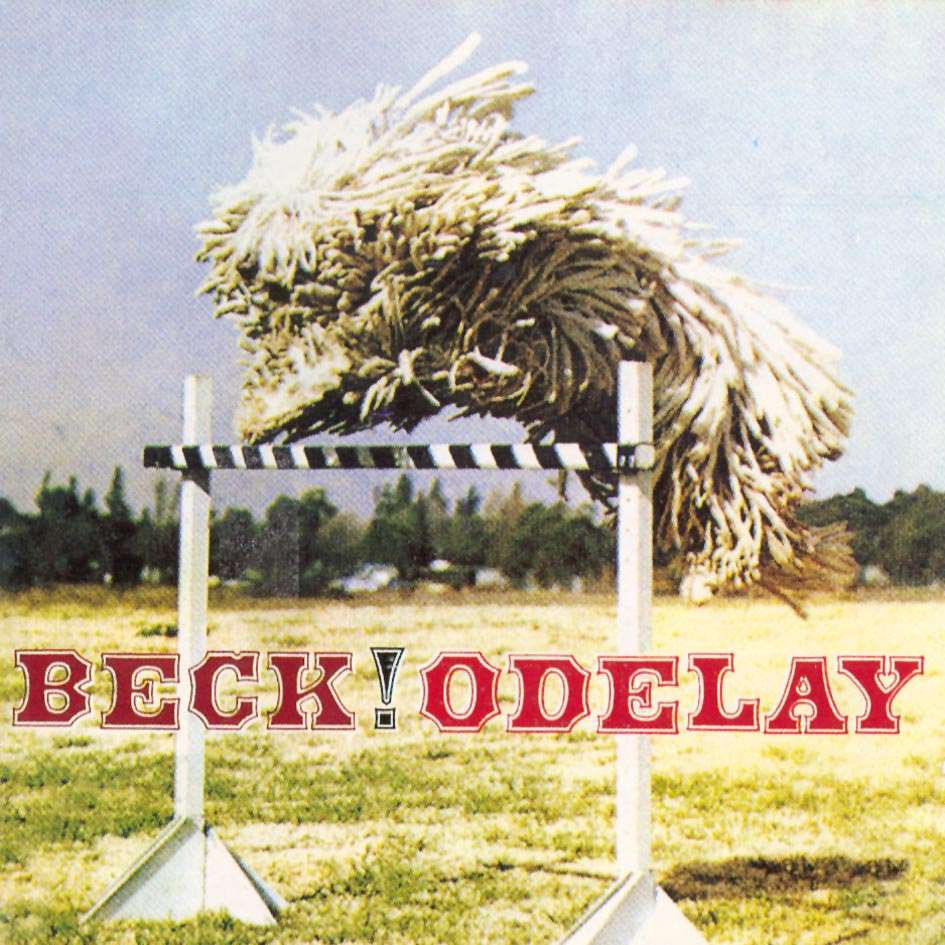
"Odelay" (CD)
Beck was hipster before people really knew how to define hipster. Beck was one of those musicians that other musicians were glad to know and even happier other people didn't know about him.
Then Beck released "Odelay"Beck has put out several albums since (seven, to be exact) but the truth is "Odelay" wasn't his first album (it was his fifth, to be exact.) I've listened to this record a lot over the years, but there has been quite a vacation since the last hearing.
Not surprisingly(?) I still feel this is the high-water mark that Beck is still constantly striving to return to. He has never been funkier, weirder, poignant or inventive as on this record.I still regard "Midnite Vultures" as my personal favorite album, but I must concede that "Odelay" is a better record over all. Here's hoping that Beck is able to surpass it still.
The George Lewis Band
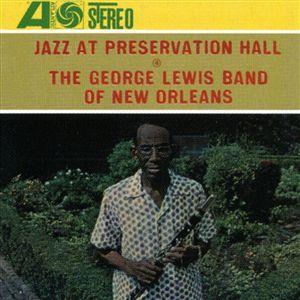
Jazz at Preservation Hall (Vinyl)
I'm leaving for a much-needed vacay in a couple hours, so this may be the only post for a couple of days. I'll return. ...eventually.
This is pure Dixieland jazz at its best. I found a couple of these Atlantic records "Jazz at Preservation Hall" series and I don't know much about them except that they obviously feature some of the original heroes of New Orleans' jazz. Everyone pictured is old, crusty, and usually standing in their front yard proudly holding their instrument.
While I'm not the biggest Dixieland guy, I have to guess that these are a couple of records worth holding onto.
Tuesday, June 12, 2012
Johnny Hodges & Wild Bill Davis
"Wings & Things" (Vinyl)
Dating from 1965, this is a swingin' jazz record on the Verve label that is pretty awesome yet unmentionable except for one thing: this swingin' jazz combo is accompanied by the organ.
In an age where Mitch Miller had the organ tenured for sing-along use only, this is an example of how the organ was being pushed into more current forms of musical expression. After listening to this its easy for me to hear the groundwork being laid for John Medeski.
Rainbow
"Long Live Rock and Roll" (Vinyl
By 1978 people had figured out what rock n' roll was. The Beatles were long gone, Zeppelin had reached its apex and Black Sabbath lost the first spectacle front man. Metal was coming into its own in the industry having discovered the musicians, producers and audiences that wanted to bask in the spikey, leather-clad operatic drama that was heavy metal. Rainbow was a supergroup of sorts, featuring Richie Blackmore (of Deep Purple) and Ronnie James Dio (um, of Dio.) Sadly, like many metal records of the era, there isn't a great mix on this album. Dynamics feel flat and everything feels far away. Like the Pretenders' album earlier today, this is an album I would like to hear in its remastered release.
Prince
"1999" (Vinyl)
So here's where I start getting myself in trouble.
The list of popular, influential musical artists that I don't like is short, but I'm afraid to say that Prince is on that list. I generally regard his music as overly produced, (as everything was in the 80's) radio-friendly and in the age of Michael Jackson and Madonna, enjoyed the controversy and spectacle as much as the music. I found several Prince albums in a shop once. I bought them all. Now I'll find out if any of them are worth keeping.
The Pretenders
"The Pretenders" (Vinyl)
This is the 1980 debut from New Wave legends the Pretenders. I'm not the biggest New Wave guy in the world (that's an understatement) but when New Wave is done well (Talking Heads) I'm all over it. This album is full of entertaining, poppy/punky tunes, and I can see why they would be an influence on so many people that came after them. This is an album that I really would like to hear the remaster. The vinyl mix is...peculiar. Chrissie Hynde's vocals feel very present while the whole band is pushed into the background, muted. For a rock n' roll record it's not very noisy. I'm not quite sure yet if the Pretenders will retain their place on my wall or not.
Monday, June 11, 2012
The Police
"Outlandos d'Amour (Vinyl)
The debut by Police, released in 1978, shows a band springing from the womb practically fully-formed. Their first album contains some of their most well-known and enduring hits including 'So Lonely,' 'Roxanne,' and 'Can't Stand Losing You.' Demonstrating a mastery of the Punk ethos, the Police aren't content to only serve dishes created in the Punk kitchen; 'So Lonely' jumps into reggae with enthusiasm. I first encountered Sting (and the Police) as part of a best-of album I bought while at a music festival in Ohio. From the very beginning I have always been struck by the Polices' melodic sensitivity and awareness.
Sunday, June 10, 2012
Harry Belafonte
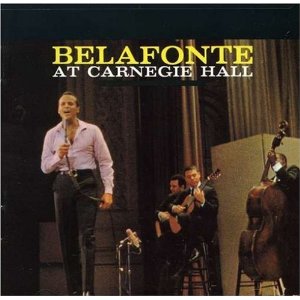
"Belafonte at Carnegie Hall" (Vinyl)
Recorded in 1959 over two nights, these concerts were benefits for two different schools. The double-LP is divided into three acts: "Moods of the American Negro," "The Caribbean," and "'Round the World." Belafonte's voice is beautifully captured on this recording, as is his backing band which plays tightly, unobtrusively and creates the perfect bed for Harry to work his magic upon.
I made a road trip a couple of weeks ago with my sister to visit some colleges, and I took an entire shoe box full of recordings along. After staring at my collection for five minutes these are the only three I could remember that we listened to. Pretty sad.
M.I.A.
"Kala" (CD)
Already five years old, this record gets better and more complex every time I listen to it. Fresh off of her break-through "Arular," fame was being thrust upon M.I.A. who decided she wanted none of it. To make things harder for everyone, she made "Kala" full of irresistible hooks, samples and drum loops. Taking flavors from (literally) the entire globe, M.I.A. visits India, Africa, Australia plus a heaping dose of American urban seasoning. The songs aren't just interesting in their construction, they're thoughtful too. M.I.A. actually has something to say. I gained a lot of respect for M.I.A. with this album; not only is the album great, but her response to fame and fortune has restored some faith that true musical artists still exist in the mainstream.
The Fugees
"The Score" (CD)
Released during the initial heyday of hip hop ("What do you mean, rap is here to stay?") the Fugees joined an impressive list of MC's that had blazed a trail into the public consciousness (thanks in no small part to endless airplay by Mtv) but you sensed with the Fugees that these were musicians who very much wanted to be taken seriously and had something they wanted to say.
Wyclef Jean was the break-out star with Lauryn Hill nipping closely at his heels.
It's too bad this group wasn't able to put its differences aside. This is one of the most memorable and interesting hip hop albums of the mid-90's.
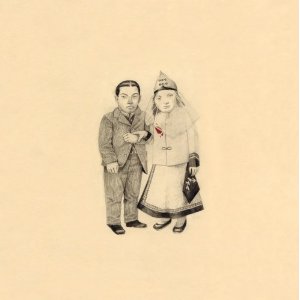
The Decemberists "The Crane Wife" (CD) Released in 2006, this isn't considered the Decemberists' break-through, but in my opinion this is where they really hit on a successful recipe. Call it smarty-folk-rock or pop-for-the-intelligentia, but the Decemberists found an NPR-listening crowd that was waiting for this milieu: carefully crafted songs that were as beautiful as they were smart. I've listened to a fair portion of the Decemberists' catalog and no other album has struck me the way this has. If someone can explain that to me, I'm all ears.
Casals, Katims, Schneider, etc.
"Casals Festival at Prades: Schubert Cello Quintet" (Vinyl)
This dusty old recording isn't the best example of recording technology, but what is captured is a moment in time with four great musicians simply enjoying one of the literature's greatest works.
I'm not the biggest Schubert advocate, but he really hit a home run with his cello quintet, which is neither laborious or pedantic but rather luxurious and inspired.
The Casals Festival began in the mid-20th century as an excuse for musicians to have an excuse to go play with the deposed Spanish cellist Pablo Casals (who was unable to visit the US.) Any recording from these encounters will surely be of a more intimate and poignant nature, as if everyone in the room recognized that this might be a one-time opportunity.
Saturday, June 09, 2012
Ray Bryant
"Live at Montreux '77" (Vinyl)
A live recording from the 1977 Montreux Jazz Festival shows an energetic and creative Ray Bryant doing his thing with fire and vigor.
Stan Getz
"In Concert" (Vinyl)
Released in 1966 on the Pickwick label, this shows Stan Getz at the height of popularity. The latin jazz craze had reached fevered pitch with Jobim's "the Girl from Impanema" and Getz was there to run to the bank with it.
R.E.M.
"...And I Feel Fine - Best of the I.R.S. Years" (CD)
I'm not a huge REM fan, and there are certainly other places where you could read volumes of information dedicated to this hugely influential band.
This compilation catalogs their early existence with the IRS label during a more rough-edged incarnation. Stipe had hair and their music had grit in it.
Its a good CD for me to have to help remind me of the entire family of music-making that REM helped spawn with their crafted melancholic anthems.
Queen
"News of the World" (Vinyl)
It seems to be very couture in any generation to lambast anything that jumps too wide of a gulf of expectation.
Queen's "News of the World" was their second self-produced album and they deliberately sought out a more mainstream friendly sound with the record, which I find interesting, because how often do you hear of a wildly successful rock band trying to appeal MORE to the sensibility of the average listener?
Either way, at the time this record was not well received, but like rebellious children eager to stake our territory away from our ancestors, current music critics suggest that this and its predecessor ("A Day at the Races") might be among Queen's most important output. Go figure.
This album has "We Will Rock You/We Are the Champions" on it, in case you were afraid you've never heard anything from this record.
Neil Diamond
"Just for You" (Vinyl)
I've always been down with Neil Diamond's vibe. In the age I know him, he seemed like a hip grandpa that played guitar and sang some cool songs in a pleasing warble.
Then it turns out he put out all of his best stuff early on. This was his second album, and it contains "Girl, You'll Be a Woman Soon," "Red, Red Wine" and (my favorite) "Cherry Cherry." Most of what I've seen Mr. Diamond do since hasn't captured the acoustic rock n' roll spirit quite the way this album encapsulates it.
Stern, Istomin & Rose Trio
"Schubert: PianoTrio" (Vinyl)
I'm embarrassed to say I can't even remember which Schubert piano trio this is, and I can't read it off of the photograph.
I'm sure it was lovely. It doesn't involve a viola, however, so what do I care, really?
B.B. King
"Live & Well" (Vinyl)
Perhaps the last remaining thread to the origins of American blues, B.B. King made this album in 1969. The LP features live cuts on one side and the other features studio recorded tracks. If you like the blues, you could probably obtain your doctorate doing nothing but writing on Mr. King's output.
The Juilliard String Quartet
"Beethoven: Op. 131, 132 & Grosse Fugue" (CD)
A noble recording of some of Beethoven's last string quartets, this recording is one of the last made to feature Robert Mann on first violin before his retirement from the ensemble.
I have listened to this recording dozens of times and it is almost like sitting in a church built to the genius of Beethoven's late output.
Vanksa, Minnesota Orchestra
"Beethoven: Symphonies 3 & 8" (CD)
Recording a Beethoven cycle in this age is a borderline redundant task. With so many options bursting of the shelf, why add to the pile?
Still, Vanksa leads the Minnesota Orchestra into battle with his Finnish banner waving wildly through performances which can best be described as fiery, and (at times) animalistic.
My Morning Jacket
"Circuital" (Vinyl)
This album came on two 12" 45 rpm discs which confused me greatly at first. I tried playing it at the standard 33 rpm and thought "well, these guys certainly are mellow!"
Upon repeated listening I've decided that My Morning Jacket deserves congratulations for beating the odds: creating interesting music within the big-label system. I await excitedly to see what this band does next.
Audioslave
"Audioslave" (CD)
The self-titled debut from my generation's most anticipated rock supergroup was probably as big a hit as could have been expected. Sadly, for my own tastes, this project was unable to live up to the quality of its predecessors (either Rage or Soundgarden) and its existence will probably be relegated to a foot note in the career handbook of Mr. Morello or Mr. Cornell.
Evgeny Kissin
"Mussorgsky: Pictures at an Exhibition" (CD)
This is the original composition as penned by Mussorgsky, unlike the brilliantly orchestrated version that Ravel completed which is played annually at least 1,204 times. Mr. Kissin's performance is powerful, nuanced, in a word: beautiful
Lena Horne
"Give the Lady What She Wants" (Vinyl)
Released in 1958, this is a beautiful collection of jazz/big band vocals in the vein of Sinatra that stands out to me. After listening to Peggy Lee I recall feeling underwhelmed. Ms. Horne, however, has a sparkle in her voice that made me listen and enjoy every tune.
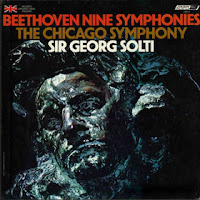
Solti, Chicago Symphony Orchestra
"Beethoven: Symphony no. 6" (Vinyl)
In line with the above conversation of the Minnesota Orchestra's recent Beethoven symphony cycle, here is a great argument: one can still obtain (easily) the complete symphony recordings by Georg Solti and the CSO. I have mine on LP, but they're available on CD for quite reasonable prices.
These are benchmark recordings. Whether you like them or not, comparison to them is unavoidable and knowledge of them is essential for any young conductor.
Menuhin, Dorati, Minneapolis Symphony
"Bartok: The Violin Concerto" (Vinyl)
Recorded early enough (during Bartok's lifetime) that this was THE Bartok violin concerto instead of concerto no. 1 (which it became) is enough of a reason for me to keep this recording around.
I'm not the biggest fan of Menuhin's playing, but this recording is an important musical artifact and the engineers at Mercury did a fantastic job capturing both the soloist and the orchestra.
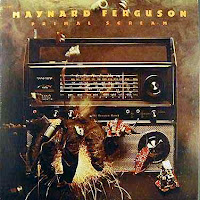
Maynard Ferguson
"Primal Scream" (Vinyl)
A wild collection of tunes by jazz trumpet legend Maynard Ferguson, this is nonetheless a weird concept. Proving that disco had infiltrated every facet of music-making in the 70's, this album sounds like equal parts funk, disco and jazz.
At one point Mr. Ferguson is imitating the high-pitched synthesizer parts (in their own register, of course) and later he's playing Pagliacci.
Brick
"Good High" (Vinyl)
I can't remember if I've reviewed this on this blog before or not, but here it is again.
A funky album that sounds like a prolonged trip to the car wash (remember that song, right?) is fun, animated and has a couple of high water marks like "Southern Sunset."
Band of Skulls
"Sweet Sour" (CD)
Released this year, (2012) it is a noteworthy follow-up to their under-valued debut. Full of sincere rock n' roll tunes, they get away with a line up of traditionalist thinking by being absolutely serious about it.
Despite the rock n' roll, there's an intimate quality to this music. Think of it as really loud music for your next chamber music gathering.
Soul Coughing
"Ruby Vroom" (CD)
This 1994 debut put Soul Coughing on the map for their "deep slacker jazz." Whatever the environment was like in the 90's when this band inhabited it is one thing. Now is now, and having only recently discovered this band, I am really into the stream-of-consciousness lyrical content, the trippy samples and fat drum beats. Highlights: "Bus to Beelzebub" and "Screenwriter Blues."
Sunday, April 01, 2012
We also hit post #150 for the year 2012 on April 1. Spooky.

The Mamas and the Papas
"If You Can Believe Your Eyes and Ears" (Vinyl)
The 1966 debut from the Mamas and the Papas was quite a smash hit, receiving both critical acclaim and introducing their sound to the very receptive radio waves. I do have one of the original versions of the album artwork featuring the horribly indecent toilet. The M&P's sound is still influencing bands today. I feel like I can hear a lot of their influence in bands like the Shins.

Ramsey Lewis
"Keys to the City" (Vinyl)
In the 80's all jazzers (apparently) were obligated to dabble in synth-fusion jazz. Images of Spinal Tap's foray into free-form jazz odyssey spring to mind. One thing I've learned for sure since beginning this project: I don't have much room for synth-based anything in my repertoire.

Rush
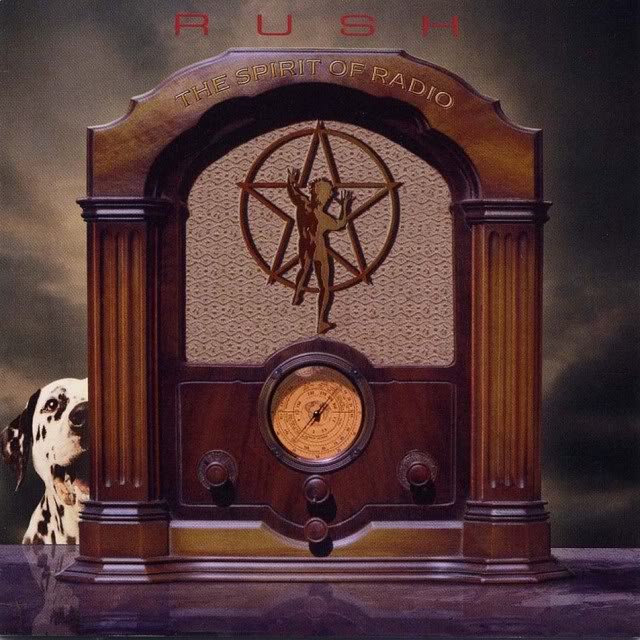
"The Spirit of Radio" (CD)
A "best of" released just a few years ago spans the entire output of Rush's prodigious output. It hits all of the big tunes including 'Closer to the Heart' and 'Tom Sawyer.'
I think I've realized that as much as I'd like to be a huge Rush fan, the "best of" approach is probably the best thing for me. I guess my "Caress of Steel" will have to take a trip to the thrift store...