Wednesday, November 14, 2012

Ashkenazy, Perlman & Harrell
"Beethoven: 'Archduke' Trio" (Vinyl)

In the piano trio literature, there can be few more famous than the "Archduke."  Other names might get thrown out like "Dumky" (Dvorak) or Schubert's two towering compositions in the genre, but Beethoven set a benchmark for whatever area he touched, and the piano trio is no exception.

I wonder how hard it was convince these three to wear matching turtlenecks on the cover of the album?
The Black Keys
"The Big Come Up" (Vinyl + CD)

The 2002 debut by Akron duo the Black Keys was the beginning of a career that I'm not sure even Dan & Pat saw coming.  Currently nominated for Grammys, regular air play on Mtv...and this is where it all started.

The first four albums from the Keys followed a simple but effective recipe: grungy blues, minimal fuss.  It is these albums (from 'Come Up' through 'Magic Potion') that rode a wave of blues-based garage rock that the Keys (and the White Stripes, the Strokes, the Vines) helped start.  

Monday, November 12, 2012

Jackie Gleason
"The Gentle Touch" (Vinyl)

In addition to being one of his generation's most successful, sought-after comedic actors, Jackie Gleason managed to find time to produce a series of all-instrumental easy listening albums that served as...well, baby-makin' music before there was such a thing as baby-makin' music.

The arrangements, performances and production are all top-notch. Just the sort of thing you'd put on the Grundig hi-fi and shake a few martinis to while you're waiting for the Carlyles to arrive.  American personified, ala Dick van Dyke.

Sunday, November 11, 2012

The Mars Volta
"Amputechture" (CD)

The Mars Volta's third album, released in 2006 was Jon Theodore's final appearance with the prog-rockers.  Already on this album a feel there was a signaled change from the hurled velocity of their previous albums.

The engaging thing about the Volta (for me) was always their stop-on-a-dime sense of rhythm and tempo, falling (seemingly) haphazardly from one blistering self-destruction to the next.  This album loses a lot of that focus and intent.  It was the last album I paid the group much attention.
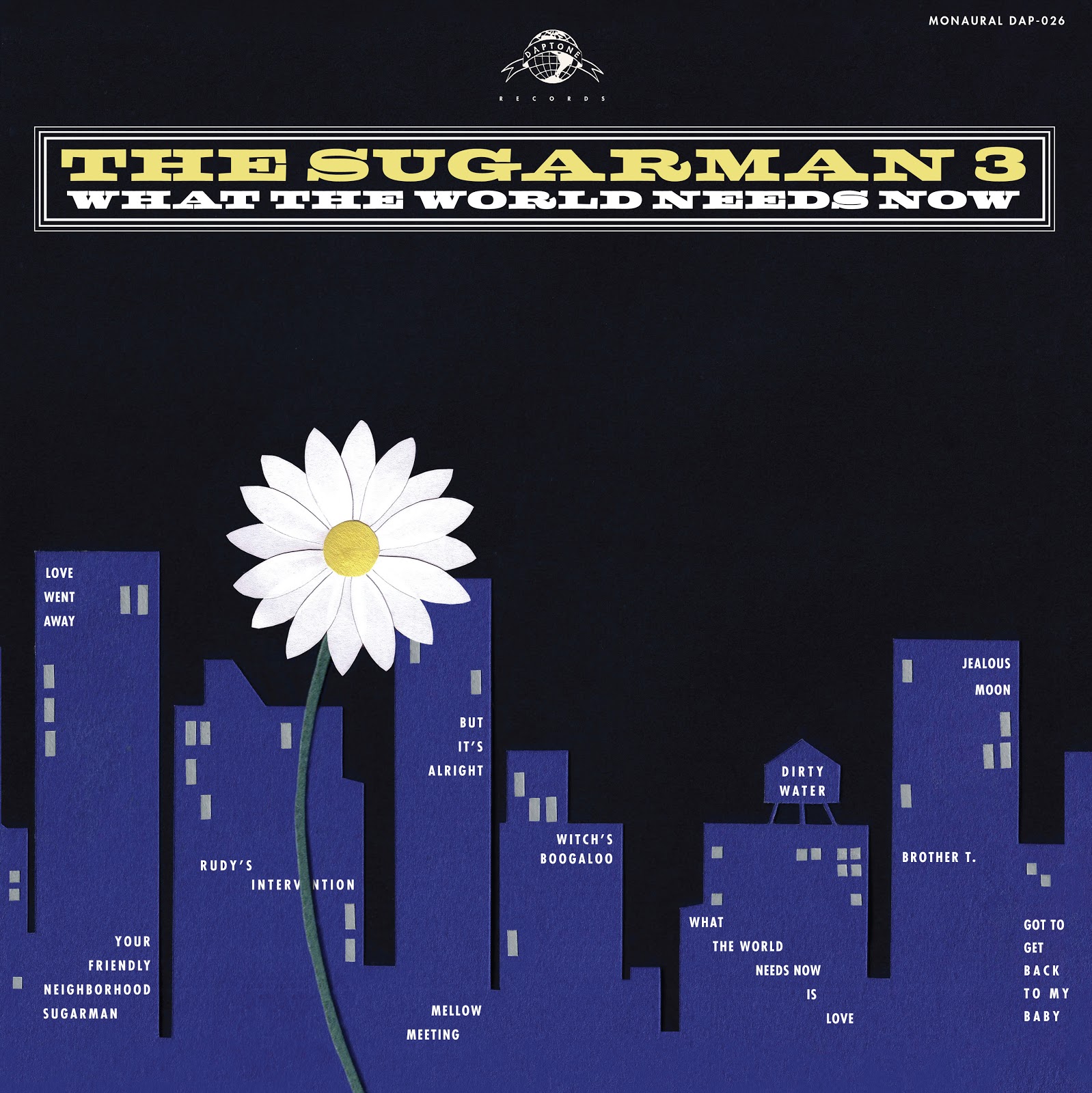
The Sugarman 3
"What the World Needs Now" (Vinyl)

Another Dap-Tone release, the Sugarman 3 have released three albums on the Brooklyn-based label.

This was released in 2012 and features the unusual line-up of organ, saxophone and drums holding the funky beats that sound like they should've been on the early seasons of the Cosby Show.

Saturday, November 10, 2012

The B-52's
"Wild Planet" (Vinyl)

Released in 1980, the sophomore album was regarded as a successful follow-up to their self-titled debut (reviewed here earlier.)

The B-52's traveled to the Bahamas to record this album; I'm not sure if that was convenient for the producers who wanted to lounge about on the beaches, or, for some more cosmically weird reason, the caribbean helped to nurture the bee-hived retro-rockers.  The world may never know.
Quartetto Italiano
"Beethoven: op. 130, 'Grosse Fugue' op. 133"(Vinyl)

The Quartetto Italiano (or, it could be surmised, "the Italian Quartet") was founded in 1945 and disbanded in 1980.   This recording was made with their second violist, Piero Farulli, who served from 1947 - 1977, unquestionably the longest-serving violist of the three they employed.

I know of the Quartetto Italiano because of their extensive recording on the Philips label which has been very good in keeping their back catalog available on multi-CD sets (aka: the complete Brahms quintets)

Friday, November 09, 2012

Paray, Detroit Symphony
"Suppe: Overtures" (Vinyl)

The Austrian-born Franz von Suppe was known for his operettas during his lifetime, but since then, I must confess I've only heard of him because of a couple of his overtures. Most notably, the "Light Calvary Overture" and "Poet and Peasant" overtures.

This is a monophonic pressing on the Mercury label; usually I'm fan of the recordings of this ilk, but there's something about the high registers of the orchestra that feel squashed somehow.  It gets tiring to listen to.

The Detroit Symphony sounds great on this record; their ensemble is notable and the Viennese waltz-esque marches that Suppe was fond in breaking into are carried along at a good clip, violinists and all.
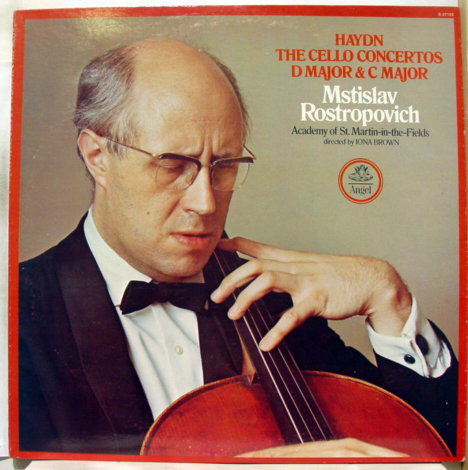
Rostropovich, Academy of St. Martin-in-the-Fields
"Haydn: The Cello Concertos" (Vinyl)

My format is screwed up.  I don't know why.  Occasionally Blogger.com just decides to have freak outs.  It's cute.

One of the 20th century's greatest cellists, (made all the more infamous by the Soviet block that prevented the free travel of so many great musicians) Rostropovich may be amongst the most prolific musicians of his era, performing, recording and conducting over a span exceeding fifty years.   He died in 2007 at the age of 80.  The mythos left behind is probably only exceeded this generation by Pablo Casals.


Thursday, November 08, 2012

Leinsdorf, Boston Symphony 
"Beethoven: "Eroica" Symphony no. 3" (Vinyl)

This is an old-school shaded dog, mono pressing RCA dynagroove.
Sweet.

Of Beethoven's symphonies, his third ("heroic," not "erotic") symphony surely clambers for the title of most-recorded work along side his ever-popular fifth and monumental ninth.

The third was the first Beethoven symphony I ever played and I still feel like such a child at understanding it's significance.  I love it because Beethoven symphonies may be my favorite symphonic literature of all time, but I know that I'll be learning to appreciate over a lifetime the genius, beauty and ingenuity of Beethoven's "Eroica" symphony.
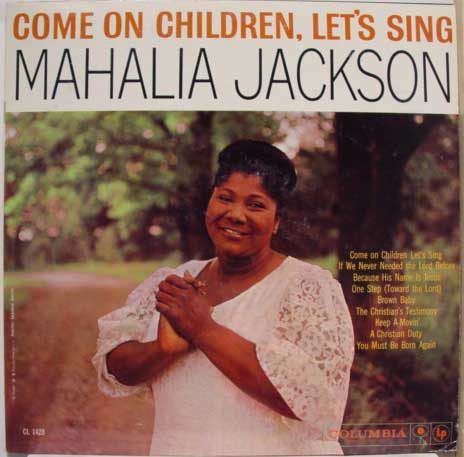
Mahalia Jackson
"Come on Children, Let's Sing" (Vinyl)

Fortunate to find this on a Columbia six-eye.

The "Queen of Gospel" was born and raised in New Orleans and spent most of her life known only to negro audiences in the deep southern Baptist churches.  But talent has a way of finding its way to the top, and sooner rather than later she was performing nationally, mostly through Baptist churches, and it was this same faith that would not allow Mahalia to sing in bars, clubs or theatres.

This album, (1960, I believe) comes soon after Duke Ellington successfully pleaded with Ms. Jackson to record with his orchestra on his album "Black, Brown & Beige."

I let Mahalia's own words sum up her attitude towards her music:

"I sing God's music because it makes me feel free," Jackson once said about her choice of gospel, adding, "It gives me hope. With the blues, when you finish, you still have the blues."


Wednesday, November 07, 2012

Frank Sinatra, Rita Hayworth, Kim Novak
"Pal Joey: Soundtrack" (Vinyl)

The 1957 film adaptation of Roger & Hart's broadway musical "Pal Joey" (where Sinatra took over the role played on broadway by Gene Kelly) was a big hit, netting Sinatra a Golden Globe award and being nominated for several Academy Awards.

The songs penned by Roger & Hart for this film yielded a couple of tunes that have become standards in the American song book; "Bewitched," "My Funny Valentine" and "The Lady is a Tramp" all started with this musical.
Little Richard
"Original Rock & Roll" (Vinyl)

Back in the golden age of Rock n' Roll, it wasn't common for an artist to release a full-length LP.  45 rpm singles were the soup du jour, whether they were headed to the radio station, the juke box or the teeny-bopper's basement hi-fi.

To compile an album of Little Richard's music isn't hard, (he certainly had enough hits to fill both sides of this record) but it's important to remember that there really won't be any "original" LP to be found of this music.    This particular example is a Canadian pressing.  Some basic internet searches show that this same album was released in different world markets with different art work.


Tuesday, November 06, 2012

Mark Knopfler
"Sailing to Philadelphia" (CD)

Part of me wants to believe that I'm just not quite old enough to really appreciate Mr. Knopfler.
I enjoy his work with Dire Straits.  I enjoy his dulcet baritone.  I enjoy his guitar pickin'.

Part of me just can't help but feel that this album (released in 2000) is a very mature collection of songs by a veteran songwriter/performer that no longer feels the need to write songs that anyone else will like. This works in my favor half the time.  The other, half I'm quite bored.

There are guest vocals by the likes of James Taylor and Van Morrison, but really I just want to get to the closing track, "Sands of Nevada."
Talking Heads
"Speaking in Tongues" (CD)

Speaking of David Byrne (see previous post) I realized I forgot to include this album in the list even though I listened to it a couple weeks ago.

Released in 1983, its fair to call this the Heads' biggest main-stream hit.  Containing the song "Burning Down the House," it proved to be the group's highest song in the U.S.
It was also in the subsequent tour for "Tongues" that the famous concert-movie "Stop Making Sense" was filmed.


David Byrne & St. Vincent
"Love This Giant" (Vinyl)

I'm not sure how a label promotes a project like this:
Former Talking Heads frontman and indie songstress record album with every spare brass player they can find.

I don't really care.  I love both the Talking Heads and St. Vincent, so this was a pretty easy sell.
The opening track (and lead-off single) "Who" is a microcosm of what I expected: great production, quirky arrangements and Byrne's distinctive vocal harmonies.

The rest of the album doesn't feel quite as clearly organized, but I have a feeling if I just listen to this one for a while I'll fall in love.
John Williams, London Symphony Orchestra
"The Empire Strikes Back: Original Soundtrack" (Vinyl)

Orchestral musicians owe John Williams a bittersweet thank-you.
His scores for films like "Star Wars," "Jaws" and the "Indiana Jones" saga (practically) single-handedly enshrined a symphonic orchestral score as one of the core elements of a Hollywood blockbuster.

As a result, orchestras all across the country are obligated to do annual performances of Williams' scores.  These concerts will be eternally popular and provide a boost in ticket sales that most orchestras badly need. In fact, I see a reality blooming where musicians might excel in specialized performance areas like Brahms. Or Hans Zimmer.

To separate this score from the film is hard; the film practically plays along in my head while I'm listening.  That being said, it's fun, dramatic music performed by a truly great ensemble.

Monday, November 05, 2012

Fernando Ortega
"The Shadow of Your Wings" (CD)

It's been 5+ years since my short multi-city tour playing backup for Mr. Ortega. Playing this CD this morning gave me a chance to reminisce about my whiff of the glamorous life of a touring musician.

Mr. Ortega is living proof that a recipe doesn't have to be complex to be effective.  Particularly when dealing with Christian music.  I like the description he uses on the cover: "hymns and sacred songs."
These aren't worship choruses.  Nor are they pop ballads with screeching guitar.  They are a collection of songs by a man and his piano.
Every once in a while we're joined by a few instrumentals (including the Turtle Island String Quartet) but for the most part this album was conceived and executed as an intimate portrait.  The album's mix feels like Fernando is sitting in the room, as opposed to on stage with his accompanying ensemble.
The Raconteurs
"Consolers of the Lonely" (CD)

I must admit, amongst all of Jack White's projects (the White Stripes, the Raconteurs, the Dead Weather and solo projects flying every direction) the Raconteurs have had the hardest sell with me.

After learning of the close friendship White had with fellow Detroit songster Brendan Benson (well before the Raconteurs were conceived) I had purchased one of Mr. Benson's albums ("The Alternative to Love") which I appreciated greatly for what it was: finely crafted pop songs.  When the Raconteurs' first album came out, (after the initial gushing) I decided that the 50/50 approach that Jack and Brendan took towards collaborative song-writing did not serve them well.  Their second album ("Consolers") came out in 2008 and showed a much more cohesive blend of the two contrasting artists' style.

Still, even when a spark threatened to ignite a flame, some musical turn tamps out any hope.
Its difficult for me to put my finger on it precisely, but I suspect that there would be better music being made if Brendan Benson and Jack White both played in each others' bands, but left the songwriting to one or the other.

Sunday, November 04, 2012

Emerson String Quartet
"Ives: Quartet nos. 1 & 2, Barber: Quartet" (CD)

My other recording of Charles Ives' string quartets no. 1 & 2; additional necessary listening for work. Conveniently, it falls in line with the mission of this project.

The Emerson are still going strong, although they are just going through their first personnel change in nearly 30 years of playing, they have proven themselves to be an enduring mold of a successful string quartet. Their predecessors enjoyed superstar status, their offspring embrace new, "unorthodox" forms of music-making to carve niches; Emerson has the distinguished privilege of standing between these two generations.

Now be quiet; I'm trying to absorb some Ives...
Tokyo String Quartet
"Brahms: The Complete String Quartets" (CD)

The record label Vox has long been associated with a budget-conscious catalog and (decades ago) with releasing many obscure period and contemporary works that could find no home in the traditional labels.

Today Vox is still alive today operating under the same philosphy although it has extended its reach with the release of previously available recordings in updated packaging at low prices.

This particular 2-CD set is available for under $11 from Amazon and yet features performances by one of the great string quartets of the last forty years.  In 2012 the Tokyo Quartet is on a farewell tour as the last remaining original members enter retirement.  The Quartet will hang up their bows in early 2013.
Sharon Jones & the Dap-Kings
"Dap-Dippin' with the Dap-Kings" (Vinyl)

In the same way that 2011's "Soul Time!" was a revue of SJDK's early days as the funky house band for Dap-Tone records, "Dap-Dippin'" shows a funk/soul revival band that was yet to be discovered by...anyone, really.

Their energy is infectious.  Their tunes are sweet. Their band is tight.
I am amazed to say that I opened this LP for the first time today.  It's been sitting on my shelf for at least three years.  Shame.
The Pixies
"Best of: Wave of Mutilation"(Vinyl)

Originally released in 2004, this best-of compilation found its way onto vinyl and into a record store in South Dakota by 2011.  That's when I purchased it.

Now yes, I was already familiar with the Pixies (I believe I already owned a copy of "Surfer Rosa") but I sensed there was more to plumb from the depths of this band.

It really is a good compilation; having since acquired most of the Pixies' seminal albums, I've decided there is plenty in their output that I don't need.  If inquired, I think I would push inquisitive minds towards two albums.  1988's "Surfer Rosa" (which I still think is brilliant) and this best-of collection.
The Guarneri Quartet
"Haydn: String Quartets op. 77" (Vinyl)

My interest in Haydn's string quartets has enjoyed a brief renaissance as my quartet prepares one of his op. 76 quartets for performance next week.

For most of my time playing, Haydn has been relegated to "sight-reading" and fun for the first violinist only.  While this is true of the volumes of early works that Haydn wrote, in his later years (op. 72, 76, 77) Haydn had demonstrated the sort of musical evolution that maturity brings, building an architecture around all four instruments equally, relying on each role far more than he had earlier in his life.  The late Haydns should be regarded alongside prime examples of Mozart's writing and Beethoven's op. 18.

The Guarneri Quartet, legends in their lifetime, released this album on RCA in 1978.  Its far from the most carefully constructed quartet recording I've heard, but you can still hear the magic present in this amazing quartet.
Louis Armstrong
"Town Hall Concert Plus" (Vinyl)

Your influence must be pretty large if Time Magazine will name you one of "100 Most Important People."  That's since time began, mind you, not just 100 most important Americans.  So Mr. Armstrong pulled a position alongside Genghis Kahn and Johannes Kepler.  Well done.

This live recording was made April 24, 1947 - which is the "Town Hall" portion of the recording.  The other six songs on this record were selected from Louis' catalog as ambassadors of his prodigious output.

I think it's impossible to listen to this music and remain in a gloomy mood.  There is nothing but joy and sunshine when the tunes are up.

Saturday, November 03, 2012

Perlman & Ashkenazy
"Beethoven: Violin Sonatas vol. 1" (Vinyl)

If you're going to release an album of standard war horse repertoire, you'd better be sure you're capable.
Thankfully, Vladamir Ashkenazy and Itzhak Perlman show us why they are titans of their generation.

Fiery, passionate and yet always in control, Perlman's incomparable tone finds an ideal mate in Ashkenazy's handling of Beethoven's piano parts.

This is volume one and contains the ninth sonata ("Kreutzer") and no. 2 in A major.
It is labeled correctly as "Beethoven Sonatas for Violin and Piano" for the piano is as much a part of the storytelling as the violin.
Edgar Winter & White Trash
"Edgar Winter's White Trash" (Vinyl)

The albino front man with some of the most memorable album covers of the 1970's was just getting his feet under him with his second album. Released in 1971, it was his first album with the backing group known as White Trash.

A mixture of rock, blues, R&B, there was never a more blue-eyed soul singer than in Mr. Winter.

The copy I have was owned by a radio station and has a giant label on the cover from Epic Records insuring that everyone knows this copy was not for re-sale.  Hopefully this no longer applies forty years later.
The Percy Faith Strings
"Exotic Strings" (Vinyl)

In a former existence, I was a member of a strolling string ensemble that walked around serenading high-ranking political and military personnel, romancing them during their occasional high-falootin' nights out.  
It was the behavior of a relic of a bygone age.

Percy Faith's age, actually. In the 50's and 60's strolling string ensembles were all the rage.  I don't know why, but they were.

The arrangements here are all luscious and warm; Percy Faith's name is well known and remembered for his "pop" orchestral arrangements.  If it weren't for my history with this sub-genre of music I might be able to enjoy its kitschy charm.  As it is, my skin is crawling.

Thursday, November 01, 2012

Simon & Garfunkel
"Soundtrack: The Graduate" (Vinyl)

If Simon and Garfunkel needed any help becoming more eponymous   with the 1960's, being integral to the face of Mike Nichols' landmark film "The Graduate" was the push they needed.

Mrs. Robinson is probably one of the duo's biggest hits, but the film also found use for a couple of other S&G hits: "Sounds of Silence" and "Scarborough Fair" find their way onto this record.

I view "The Graduate" as a template for the sort of disenfranchisement that many youngsters felt during the 1960's and the beginning of a more avante garde filmhouse style of filmmaking that was carried through the 1970's by the like of Scorsese.
These same filmmakers will lament the arrival of blockbuster "entertainment" films that detract from the wholesome "art" of their work, but I think it merits an examination to see if the values they espouse were worth preserving in the first place.
Gyorgy Sandor
"Bartok: Mikrokosmos vols. 5 & 6" (Vinyl)

Bartok wrote his six-volume "Mikrokosmos" as a piano method for teaching everything from note length to dynamics.  Books one and two are intended for beginning students while books five and six (this album) are intended for professional performances.

I have three albums which Mr. Sandor recorded in 1960's.  Released on Columbia records, these are all beautiful six-eye records; the recordings themselves are all top shelf quality.


Oscar Peterson & Nelson Riddle
"Oscar Peterson & Nelson Riddle" (Vinyl)

If you can get over the clever titling of this album, you may be shocked to learn that this album is the Oscar Peterson Trio playing with Nelson Riddle orchestral arrangements. (Gaaasp!)

Not necessarily the most barn-burning of jazz recordings, my guess is Mr. Riddle's presence was an attempt to bridge a gap between the true jazz lovers and easy listening hi-fi cocktail partying audiences that knew Riddle from backing Sinatra, et al.

I found a decent copy of an original Verve pressing of this record. Back in the day (1963?) someone paid an entire two dollars for this album.

Wednesday, October 31, 2012

Lydian String Quartet
"Ives: The String Quartets" (CD)

Charles Ives could probably be regarded as the first unique and original American composer.
Copland canonized the language and "sound" of American symphonic music, but Ives, (who preceded Copland by roughly a generation) was the first American composer who, taking the Western European traditions of "classical" music began the process of devolving idioms and tradition, plunging head-long into the fray by stacking poly-phonic and rhythmic ideas on top of each other.

Ives' approach is still decidedly forward-thinking.  He seems unconcerned with whether or not the ear can distinguish from one motive to the next. Like a Robert Altman film, each voice is given equal prominence and attention, letting the listener decide which journey they will begin.

Study of Ives' first string quartet is necessary for its performance in a couple weeks by my ensemble.  I hope the time I have is enough to adequately absorb everything Ives wrote into this work.
At the Drive In
"Vaya" (Vinyl)

One of 3,000 10" 33 rpm pressed on hot pink vinyl (ooooh) I just found this record yesterday at my local vinyl shop.  It was picked up because of a friend's recommendation of this EP in particular after learning of my penchant for the Mars Volta.

Released in 1999, this EP featured Omar Rodriguez and Cedric Bixler on guitar and vocals (respectively) prior to the formation of the Mars Volta.

Harder-edged and more straight forward in song construction, Bixler spends a lot of time screaming ala Zach de la Roche.  You can see the seeds of the progressive metal band that the Mars Volta would become.

Sunday, October 28, 2012

Post no. 300!

Harry Belafonte
"The Midnight Special" (Vinyl)

Released in 1962, its yet another beautiful collection of spirituals, folk and caribbean tunes done in Belafonte's inimitable style.

It's fun to think that this record was done without the aid of computer editing and countless re-takes.  Belafonte's ability to hold a single note without wavering, going false or losing control should be studied by pop princesses everywhere.

This recording is noted for being the very first record that (a young) Bob Dylan played on, recording the harmonica track on "Midnight Special."
Perahia, Amadeus Quartet
"Brahms: Piano Quartet no. 1 in G minor, op. 25" (Vinyl)

Released in 1990, this quartet features three members of the Amadeus Quartet joining Murray Perahia in a sizzling recording of Brahms' first piano quartet.

The members of the Amadeus Quartet had performed together from 1947 to 1987; not a bad run for getting along with the same chaps for that entire time.

The last movement of this recording is enough to set your hair on fire. If you have any.

Thursday, October 25, 2012

B.B. King
"Live at the Regal" (Vinyl)

A live performance in Chicago, captured on November 21, 1964 was released on record in 1965 and quickly became regarded as one of the greatest blues records ever made.  Making Rolling Stone magazine's "Greatest Albums of All Time" list should give a general sense of its import.  If that doesn't, then maybe being mentioned by Clapton and Mark Knopfler as a template for their own live performances might help.

This is (as the image says) a classic revisited.  In short: a re-issue of the 1965 album.  Gone is the colorful art work, which is too bad, but it does mean that other fingers undoubtedly passed this record over at the shop because it looks like some retrospective compendium of B.B. King's music rather than a note-for-note copy of the King of Blues doing his thing.
Primrose, Munch, Boston Symphony
"Berlioz: Harold in Italy" (Vinyl)

Q: What's the world's longest viola joke?

A: "Harold in Italy."

It's not really a great joke, but it's not really a great piece of music.
Berlioz wrote it for Paganini to perform in concert as a way of showing off Paganini's (apparently) endless capacity for playing anything with strings on it.
The result has been met with mixed results since it's premiere.  Paganini initially decided the piece to be too...stupid.  He later changed his mind, and like most pieces in the violists' canon, even mediocre works are held to esteem simply because repertoire choices are too remote in the 19th century.

Primrose, the great champion in raising the viola to a position of prominence in the 20th century (both Walton and Bartok wrote their concertos for him) plays the role of Harold on this recording.  That's primarily why I got it; I personally often find Primrose's playing to be dated, but as the fountainhead his work should command study.

This is a re-issue of an earlier RCA "Living Stereo" which I would love to find some day.  This is one of RCA's hefty "Gold Seal" releases, but I'm learning nothing compares with the quality and care taken for those early vinyl releases.
Three Dog Night
"Suitable for Framing" (Vinyl)

Three Dog Night's second album was released on ABC/Dunhill in 1969.  The group's trademark vocal harmonies by its three lead vocalists (the gents you see pictured on the cover) were already in full bloom.

It's radio-friendly persona is still popular on classic radio stations today, just as it was during the summer of 1970.

Wednesday, October 24, 2012

Eric Clapton
"E.C. Was Here" (Vinyl)

I'm back, baby!
A week feels like a long time when you look at the output on a blog like this...

Eric Clapton's 1975 album was recorded live in California during his first tour since touring with Derek & the Dominos in 1970.
It's a pitch-perfect blend (for me) of slow-moving, lava blues and hard-edged rock (ala Cream) that shows a youthful enough Clapton that we haven't resorted to the "You Look Beautiful Tonight" phase yet.  Fun.

Thursday, October 11, 2012

Herb Alpert & the Tijuana Brass
"South of the Border" (Vinyl)

HATB (the worst acronym I've ever unceremoniously ever come up with,) released this album in 1964. It was their third album and continued the group's evolution from Mexican to easy listening brass ensemble (forever making their later fans try and trace the etymology of "Tijuana".)

This album features many covers of popular easy listening tunes (know your audience, kids!) including the title track and "Hello, Dolly," "I've Grown Accustomed to Her Face" and "The Girl from Ipanema."

A postcard from another era, I enjoy Tijuana Brass records because it's fun to think of a time when this was the popular music.

Lou Reed
"Rock n' Roll Animal" (Vinyl)

It would seem I've stumbled through the glam rock aisle in my collection.  With Bowie's "Station to Station" reviewed a couple days ago, I'm hitting another vein of interest.  Now all I need is some T. Rex...

This live album was recorded and released in 1973 during Lou Reed's glam rock incarnation; quite the contrast to his time with Warhol's Velvet Underground.

It's well mixed for a live album.  Vocals and (especially) guitars are brought prominently to the front to enjoy the energy between Dick Wagner and Steve Hunter.
Yo-Yo Ma, Zinman
"Barber, Britten Cello Concertos" (CD)

It's been an autumn full of Samuel Barber.  I don't think I've actually had such a high concentration of the American's works as right now. It started last week with his 'School for Scandal' overture, the Piano Concerto and then his 'Adagio for Strings' and now, next week, I'll be playing his cello concerto.

I couldn't recall if I'd ever really sat down and listened to the piece, so I made the deliberate effort yesterday and I think I'll find it to be a more fun, accessible work than the piano concerto.
Yo-Yo's recordings are always benchmarks for the repertoire (for better or worse) and this recording with David Zinman and the Baltimore Symphony is no exception.

What I want to know is: does Yo-Yo slave over this music when he's learning it, or does he just pick it up and play it with the same effortlessness that he displays in performance?

Tuesday, October 09, 2012

David Bowie
"Station to Station" (Vinyl)

Bowie's tenth studio album was released in1976 and heralded yet another new persona to be added to Bowie's quiver with the introduction of The Thin White Duke.

The nebulous, ever-changing, chameleonic nature of Bowie's music-making over the past forty years is just the sort of thing that rock music theorists and historians build careers trying to explain/describe to the rest of us, but the truth is Bowie's records deserve to be listened to and enjoyed for what they are.

The glam rock scene that birthed Ziggy Stardust was as much reaction to the day's climate as it was a psychological necessity.  The many faces of Bowie that followed are one person's attempt to wrestle with the ever changing meanings of what fame and attention brought him.  Much of it is off-the-wall, but Bowie was (and is) one of recent memory's most influential performance artists whose medium extends beyond the sounds coming off of their records.

Sunday, October 07, 2012

John Mayall
"Blues from Laurel Canyon" (Vinyl)

This album is an example of blue-eyed blues if there ever was one.
Every song on here is more idiomatic of the genre than the last one.
If you didn't have Mayall's picture on the sleeve you wouldn't know this wasn't some blues singer from the Mississippi delta recorded in the back of a juke joint.

It's not the tighest, most concise blues record I've heard (or own) but I think that's missing the point; it's intended to put on and let spin while you're tripping acid in your friend's basement.   Tunes blend together without any pause which marks the first time I've heard that done on a record.

Wednesday, October 03, 2012

Pablo Casals
"The Young Casals: Cello Recital" (Vinyl)

Pablo Casals may be the first musician of our "modern" age who received such widespread adoration and attention - before he was dead.

Musicians worshipped Casals for his music-making in the early 20th century.  To complement, he had a tale of adversity to accompany, one fraught with political unrest and restricted travel.

This led to a multitude of famous musicians forming the Casals Music Festival in Puerto Rico, Casals' home from 1956 onward.  (Prior to this he fled his homeland of Spain for Prades, France where he started the Prades Music Festival.)

Debate could continue for an eternity about the validity of Casals' cello playing when compared to today's musicians, but you can not deny the superstar status he enjoyed during his lifetime.

This recording, released in 1971 (released after his 96th birthday) is a compilation of recordings made when he was young.  Sadly, this also means the recordings are quite old and poor.

Most of this music is unfamiliar to me and I wished entire works had been included on this album instead of movements excerpted from everyone from Bach to Tartini to Popper.
Frank Sinatra
"Cycles" (Vinyl)

Sinatra (or, rather, his collaborators) had a way of evolving with the times.  While we certainly know and remember the "Capitol-era" years with Nelson Riddle and Count Basie, Sinatra continued recording for decades after this.

Don Costa arranged and conducted Sinatra's backing ensemble on this record.  It's worth noting the flower-powered, folk rock influence in Costa's arrangements.

While this is necessary for the avid Sinatra fan, I think I'll prefer to remember/concentrate on the earlier Sinatra era that made him legendary.
Radiohead
"Amnesiac" (CD)

Anyone who knows me (fairly) well has probably heard my theory on Radiohead.  It goes something like this:

More often than not, when people quote their "favorite" Radiohead album to me it turns out that it was the first Radiohead album they really got to listen to completely.

"Amnesiac" is my first time.  It happened during a summer music festival in Texas.  Call it the result of basting in music nerd-dom for six weeks, but I was ready to receive the musical tapestry that is Radiohead.  Everything from the opening rhythm/noise of "Pakt Like Sardines..." to the 9-beat (or 18-beat) lop-sided patterns that seemed to herald Radiohead's summit atop Mt. Weird.

This band has continued its unique vein of musical evolution and I'm eternally happy for that, but this remains one of my favorite landmarks for the band.  For a long time this was my Favorite Radiohead Album, but since 'In Rainbows' was released I have slowly been shifting that mantle.
John Kirkpatrick
"Ives: 'Concord' Piano Sonata no. 2" (Vinyl)

The 'Concord' piano sonata was brought up in music history/literature classes in school as though it was worthy of a semester's study.  While I don't discount this, I think it would take a special brand of idiot to plumb that deeply into a work of this density.

Ives is regarded as one of America's first great original musical voices. He chose the language of the European classical musical tradition, but what he did with it people are still wrestling with today.

His famous works like "The Unanswered Question," while they have lots of wrong sounding notes, are easily understood for their thematic intention.  Works such as this, the "Concord" sonata, are much denser, meatier works that even the avid listener might never encounter.

Later this year I'll be performing my first Ives string quartet.  (No. 1.) I'm curious to learn the experience of playing his music in a quartet environment.

Note of interest: John Kirkpatrick made the first recording of this work in 1945.  This particular recording uses stereo re-production, but is a re-release of the original recording.  I must say it sounds quite good for being done at the dawn of the age of modern recording.

Tuesday, October 02, 2012

Slatkin, St. Louis Symphony
"Barber: The Music of" (CD)

Samuel Barber was regarded by the musical intelligentsia as the musical force he was in his day.   Sadly, as is usually the case, often times these realizations are slower to come to the general public and Barber's music has steadily grown in popularity since his death in 1981.

This album (which I believe is as much a promotion of the St. Louis Symphony) features many of Barber's most famous works for orchestra including his "Adagio for Strings."
Beyond that there are also some really beautiful works that are not nearly as well known.  Barber's overture to his opera "School for Scandal" is a virtuosic tour-de-force for any orchestra just as his Essays for orchestra reveal Barber's unparalleled ability to create a haunting, memorable melody.
DC Talk
"Supernatural" (CD)

This was one formative album during my high school years.  It makes it clearer how much I was off the beaten path of "popular music" during that point of my life.

I put DC Talk (along with Audio Adrenaline and "Step Up"-era Newsboys) as the handful of genuinely creative, forward-looking Christian bands in the 90's.  Perhaps we should call this the Golden Era.   For a brief while musical tastes, capability and opportunity all met at the same time and some genuinely creative, fresh sounding music was being created by Christian artists.

Chief among these was DC Talk.  While they started out as phresh rappin' trio they blew the roof off of another level of artistry with 1995's "Jesus Freak" which showed both Christian and secular audiences that they were plumbing into new types of sound.

"Supernatural" is more diverse and polished than the grungy "Freak" and I would say is more mature, both musically and by the subject matter.   The musical range and diversity of this trio is actually remarkable and extends far beyond what most bands attempt to do on any single album project.

The production and mixing of this album is a little weak which is really its only downfall.  Listening on the Big Boy stereo feels noisy and fatiguing, a blemish on an otherwise terrific stroll down memory lane.